When Heavy Trucks Crash: Your Safety Depends on Proper Licensing
When a massive commercial truck veers into your lane on I-82 through Richland, your life depends on the driver’s training and qualifications. Federal and state regulations require a Commercial Driver’s License (CDL) for vehicles weighing 26,001+ pounds, those designed to carry hazardous materials, or carrying 16+ passengers. These requirements exist because operating heavy commercial vehicles demands specialized skills that protect everyone on the road. When trucking companies or drivers ignore licensing requirements, innocent people pay the price.
If you’ve been injured in a commercial truck accident, discovering the driver lacked proper CDL credentials adds complexity to your situation. Beyond physical pain and medical bills, you face questions about negligence, liability, and your legal rights. Understanding CDL requirements is about holding negligent parties accountable and securing deserved compensation.
💡 Pro Tip: After any commercial truck accident, immediately request the driver’s CDL information and document their license class and endorsements. This information could be crucial for your injury claim.
Encountered an issue with an improperly licensed truck driver on the road? Don’t let it slide—take action today. Reach out to Telaré Law and let us assist you in navigating your legal options. Call us at 509-461-9156 or contact us.
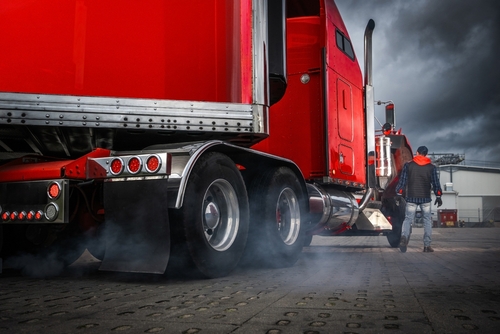
Understanding CDL Requirements: Your Shield Against Negligent Trucking
Under federal law, a Commercial Motor Vehicle (CMV) is any motor vehicle used in interstate commerce to transport property or passengers when the vehicle has a gross vehicle weight rating (GVWR) of 10,001+ pounds. However, CDL requirements kick in at higher weight thresholds. The driver’s license class must meet or exceed the carried weight, so a Class A CDL can haul any weight of CMV.
Washington state follows federal guidelines classifying commercial vehicles into three groups. Group A combination vehicles have a gross combination weight rating (GCWR) of 26,001+ pounds, inclusive of towed units with a GVWR of more than 10,000 pounds. Group B heavy straight vehicles have a GVWR of 26,001+ pounds. Group C vehicles don’t meet Group A or B requirements but are designed to transport 16+ passengers or transport hazardous materials requiring placarding. Each classification requires specific training and testing that attorneys can verify when building your case.
Commercial Driver’s License Laws extend beyond weight requirements. CDL holders must maintain specific endorsements for their vehicle type and cargo. Drivers need passenger endorsements when operating vehicles designed to transport 16 or more passengers, including the driver. Attorneys will investigate whether the truck driver had all required endorsements for their specific vehicle and cargo.
💡 Pro Tip: CDL violations often indicate systemic safety issues within a trucking company. Your attorney should investigate the company’s hiring practices and training records beyond just the individual driver’s credentials.
The CDL Testing Process: What Drivers Must Complete Before Operating Heavy Trucks
Before legally operating a 26,001+ pound commercial vehicle, drivers must complete a rigorous testing process. The CDL skills test has three required parts: vehicle inspection, basic controls (backing exercises), and the road test. Drivers cannot take a skills test until an approved training provider completes their training AND enters course completion, and they’ve met all federal entry level driver training requirements.
- Applicants must wait 14 calendar days after commercial learner’s permit (CLP) issuance before taking the CDL skills test
- Skills test fees in Washington are $175 for truck or passenger vehicles (excluding school bus) for up to two attempts; additional fees apply if you change examiners or need further retests beyond the initial two attempts covered by the fee if you do not pass all three components
- Vehicle inspection testing demonstrates knowledge of critical safety components
- Basic controls testing evaluates backing exercises and maneuvering skills
- Road tests assess real-world driving abilities in traffic conditions
- Taking the test before completing required training may require retaking all components
Understanding CMV versus non-CMV classifications proves crucial when determining liability. For example, a pickup truck with a 7,000-pound GVWR and a 2,000-pound trailer would not qualify as a CMV. However, any vehicle over the 26,001-pound threshold requires proper CDL licensing, and failure to maintain this credential represents negligence that strengthens your injury claim.
💡 Pro Tip: If a driver hasn’t had a CDL for 2+ years, they must retake the skills test. If it’s been 8+ years, additional training requirements apply – critical information for establishing negligence in older drivers returning to commercial driving.
Protecting Your Rights After a Semi-Truck Accident
When a commercial truck driver operating a 26,001+ pound vehicle without proper CDL credentials causes an accident, victims face unique opportunities for compensation. While state laws may have exemptions to CDL requirements for certain vehicle types, these exemptions don’t protect negligent drivers who fail to obtain required licensing. The team at Telaré Law understands how to leverage CDL violations to demonstrate negligence and secure maximum compensation. Their extensive experience with commercial trucking regulations means they know exactly which documents to request and which violations carry the most weight.
Beyond basic licensing violations, CDL requirements include strict standards for alcohol concentration. Driving a CMV with an alcohol concentration of 0.04 or more constitutes driving under the influence – half the limit for regular vehicles. Additionally, a CDL can be revoked for certain criminal convictions and rule violations, information that becomes crucial evidence in personal injury cases.
💡 Pro Tip: Request the trucking company’s driver qualification files immediately after an accident. These files should contain CDL history, training records, and any previous violations that could strengthen your injury claim.
Hidden Dangers: When Trucking Companies Cut Corners on Licensing
Trucking companies face constant pressure to move freight quickly and cheaply, sometimes leading to dangerous shortcuts in driver qualification. The Department of Licensing has stopped processing all non-domicile commercial learner permit (CLP) and non-domicile CDL transactions, highlighting ongoing issues with improper licensing that put Washington residents at risk.
Economic Pressures That Lead to Licensing Violations
The trucking industry’s driver shortage creates temptation for companies to hire inadequately licensed operators. When companies prioritize profits over safety by putting unlicensed drivers behind the wheel, catastrophic accidents become inevitable. Victims often discover patterns of licensing violations throughout a company’s fleet, evidence that may support punitive damages.
💡 Pro Tip: Look for patterns in a trucking company’s safety records through FMCSA’s Safety and Fitness Electronic Records (SAFER) system. Multiple driver violations often indicate systemic problems that strengthen your case.
Special CDL Requirements That Protect Public Safety
Beyond basic weight classifications, Commercial Driver’s License Laws include specific provisions for hazardous materials transport. Any size vehicle that transports hazardous materials requiring federal placarding needs proper CDL credentials, regardless of weight. The regulation defines hazardous materials as materials designated under 49 U.S.C. 5103 and required to be placarded under 49 CFR part 172 subpart F.
Understanding Gross Combination Weight Ratings
Gross combination weight rating (GCWR) calculations often become contentious in accident cases. The GCWR is the manufacturer-specified value on the FMVSS certification label or the sum of the GVWRs/GVWs of the power unit and towed units—whichever produces the highest value. However, the GCWR of the power unit is not used to define a commercial motor vehicle when the power unit is not towing another vehicle. This technical detail matters because improperly calculated weight ratings might mask CDL requirement violations.
💡 Pro Tip: Always photograph the FMVSS certification label and any weight placards on both the truck and trailer after an accident. These prove actual vehicle weights that determine CDL requirements.
Frequently Asked Questions
Common Questions About CDL Requirements and Truck Accidents
Understanding your rights after a commercial truck accident involves navigating complex federal and state regulations.
💡 Pro Tip: Document everything about the truck driver and vehicle immediately after an accident, as CDL status and vehicle weight classifications become harder to verify over time.
Your Legal Options After a Trucking Accident
Victims of commercial truck accidents have specific rights when drivers lack proper licensing.
💡 Pro Tip: Most trucking accident cases settle out of court, but having an attorney who’s prepared for trial often results in better settlement offers from insurance companies.
1. What happens if the truck driver who hit me didn’t have the proper CDL for their vehicle weight?
If a driver lacked proper CDL credentials, this may be considered by the trier of fact as evidence of negligence in Washington state, which can help prove liability, but it does not constitute negligence per se under Washington law. Your attorney can use this violation to demonstrate the trucking company failed in their duty to ensure proper driver qualification, potentially leading to higher compensation.
2. How do CDL requirements in Washington state affect my injury claim?
Washington follows federal CDL requirements while adding state-specific enforcement mechanisms. Violations strengthen your injury claim by establishing clear negligence. If the driver had expired credentials or lacked required endorsements, this evidence helps prove the trucking company’s liability for negligent hiring or supervision.
3. Can I sue the trucking company if their driver had CDL violations?
Yes, trucking companies bear responsibility for ensuring their drivers maintain proper licensing. Under respondeat superior, companies are liable for their employees’ actions while working. If the company knew or should have known about CDL violations, you may have claims for negligent hiring, training, supervision, or retention.
4. What damages can I recover if hit by an improperly licensed commercial truck?
Victims can recover economic damages including medical expenses, lost wages, and property damage. Non-economic damages cover pain, suffering, and reduced quality of life. When CDL violations show gross negligence, punitive damages may also apply.
5. How long do I have to file a lawsuit after a truck accident in Washington?
Washington’s statute of limitations gives you three years from the accident date to file a personal injury lawsuit. However, evidence about CDL violations can disappear quickly, and trucking companies only maintain certain records for limited periods. Contact an attorney immediately to preserve crucial evidence.
Work with a Trusted Semi-Truck Injury Lawyer
Commercial truck accidents involving improperly licensed drivers require immediate legal attention to preserve evidence and protect your rights. The intersection of federal CDL requirements, Washington state regulations, and complex insurance policies creates challenges that demand experienced legal guidance. Understanding weight classifications, endorsement requirements, and testing protocols helps build strong cases, but victims need skilled representation to navigate these technical requirements while recovering from serious injuries.
Don’t let a trucking mishap with an improperly licensed driver go unchecked. Take action now with Telaré Law by your side. Give us a call at 509-461-9156 or contact us to explore your options.