No, truck drivers cannot reliably see cars in all four no-zones. Semi truck blind spots around large commercial vehicles are so extensive that a passenger car can virtually disappear from view. If you drive the highways and intersections of Richland, Washington, understanding these dangerous blind spot areas could be the difference between a safe commute and a life-altering collision. One-third of all crashes between large trucks and cars occur in the no-zone, making this a critical safety topic for every Tri-Cities motorist.
If you or a loved one has been hurt in a no-zone truck accident, Telaré Law is ready to help. Call 509-736-3160 or reach out to our team today to discuss your case.
What Are the 4 No-Zones and Why Do Semi Truck Blind Spots Matter?
The “No-Zone” is the term the Federal Motor Carrier Safety Administration (FMCSA) uses to describe blind spot areas around a truck where crashes are more likely to occur. Every large truck has four primary no-zones: front, back, left side, and right side. These zones exist because large trucks have significant size differences, extensive blind spots, longer stopping distances, and limited maneuverability compared to passenger vehicles.
Many Richland drivers don’t realize how large these blind spots are. A simple FMCSA rule: if you cannot see a truck driver’s face in their mirror, they cannot see you. This means on I-182, Highway 240, or George Washington Way, a car traveling next to a semi may be completely invisible to the driver.
The Front No-Zone
The front blind spot extends roughly 20 feet ahead of a truck’s cab. Cutting in front of a semi and braking suddenly is extremely dangerous because large trucks need up to two football fields to safely stop. A truck traveling at highway speed around Richland cannot stop quickly enough to avoid a collision if a car pulls into this zone.
The Rear No-Zone
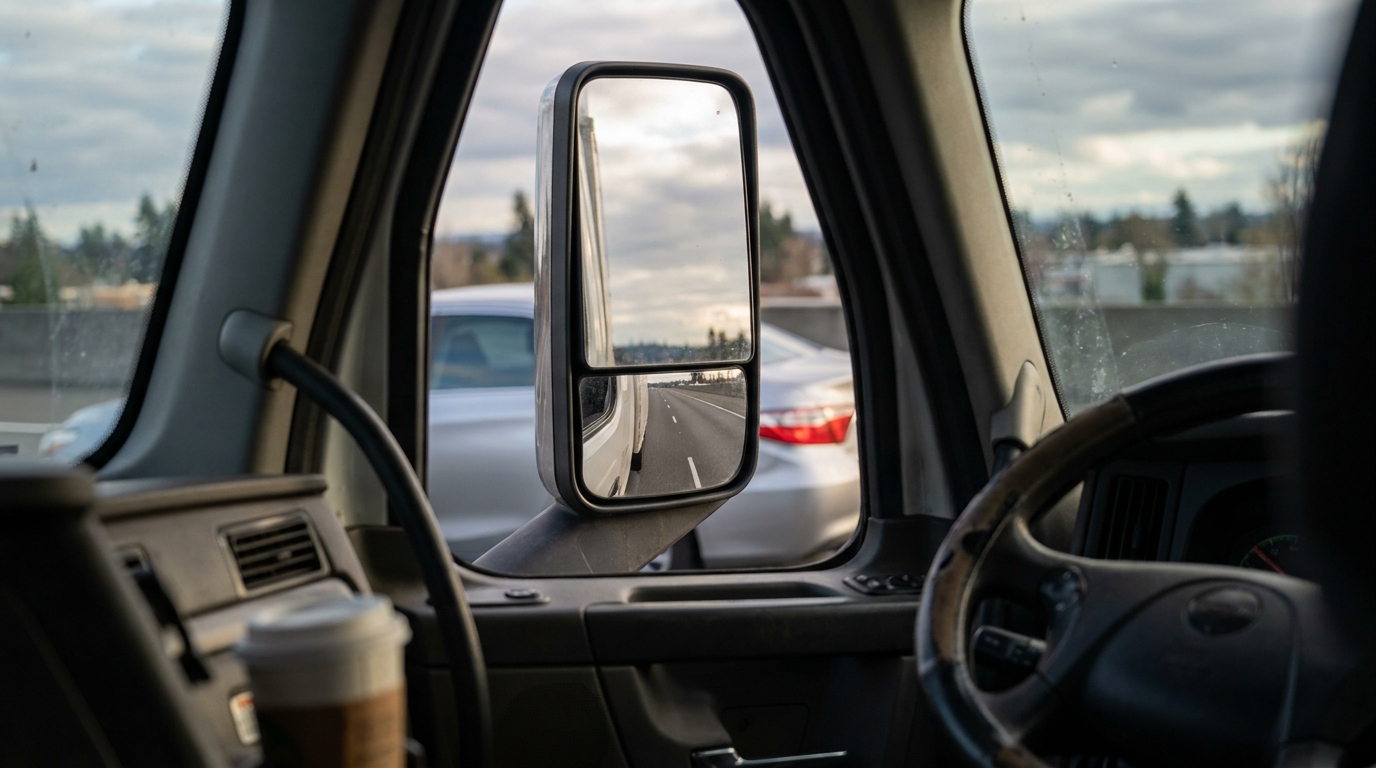
The rear no-zone stretches approximately 30 feet or more behind a truck’s trailer. Unlike passenger cars, most commercial trucks have no interior rearview mirror, relying instead on exterior side-mounted mirrors that do not provide a direct view of the area immediately behind the trailer. Tailgating a semi eliminates your forward visibility and gives the truck driver zero awareness of your vehicle.
The Left-Side No-Zone
The left-side blind spot runs along the truck’s cab and extends about one lane wide. While narrower than the right side, it still presents serious risk. The FMCSA advises drivers to ensure they can see the driver in the mirror before passing.
💡 Pro Tip: When passing a truck on Richland roads, accelerate steadily and move through the left-side no-zone quickly and safely. Never cruise alongside a semi.
The Right-Side No-Zone
The right-side blind spot is the largest and most dangerous of all four no-zones. It extends across multiple lanes and runs the full length of the trailer. Pay close attention when trucks turn right, as they may initially move left before swinging back. This creates especially hazardous situations at Richland intersections with heavy truck traffic.
💡 Pro Tip: Never squeeze between a turning truck and the curb. If you see a semi signaling a right turn, stay well behind it until the turn is complete.
Why No-Zone Truck Accidents in Washington Are So Dangerous
The physics of a truck collision make no-zone accidents among the most catastrophic on our roads. A fully loaded commercial truck can weigh 80,000 pounds, compared to roughly 4,000 pounds for an average passenger vehicle. When a truck driver changes lanes or turns without seeing a car in the no-zone, the results can be devastating.
Inadequate surveillance is a documented cause of these crashes. The Large Truck Crash Causation Study reported that 14 percent of large-truck crashes occurred due to inadequate surveillance by commercial motor vehicle drivers. The FMCSA recommends truck drivers drive defensively by maintaining distance, safe speed, and alertness to compensate for visibility limitations.
| No-Zone Location | Approximate Size | Key Risk |
|---|---|---|
| Front | ~20 feet ahead of cab | Truck cannot stop in time if you cut in |
| Rear | ~30 feet behind trailer | No interior rearview mirror; driver cannot see the area immediately behind the trailer |
| Left Side | One lane, along the cab | Easy to linger unnoticed while passing |
| Right Side | Multiple lanes, full trailer length | Largest blind spot; wide-turn danger |
How Washington Law Applies to No-Zone Truck Accidents in Richland
Washington has specific legal frameworks that apply when a truck driver causes a crash due to blind spot failure. Under RCW 5.40.050, a breach of duty imposed by statute, ordinance, or administrative rule may be considered evidence of negligence, though it doesn’t automatically establish negligence. If a truck driver violates federal safety regulations around surveillance or lane changes, that violation could support your injury claim.
The statute also addresses impaired driving as heightened negligence. RCW 5.40.050 lists driving under the influence as negligence per se. If a truck driver was impaired during a no-zone collision in Richland, this legal standard may significantly strengthen the injured party’s case.
💡 Pro Tip: After any semi-truck collision, preserve evidence. Photographs, dashcam footage, and witness statements can help establish that you were in a no-zone through no fault of your own.
Shared Fault in a Richland Semi-Truck Collision
Washington follows a pure comparative fault system that directly affects no-zone accident claims. Under RCW 4.22.070, fault is allocated among all parties in a personal injury case. If you were partially in a truck’s blind spot, the trucking company’s insurer may argue you share responsibility for the crash.
However, shared fault does not eliminate your right to compensation. Washington’s pure comparative fault framework means even if a jury determines you were partly at fault, your damages are reduced by your percentage of fault rather than barred entirely. There is no threshold that prevents you from bringing a claim. Working with a Richland truck crash attorney who understands FMCSA regulations and Washington negligence law can make a meaningful difference.
Insurance Requirements for Truck Drivers in Washington
Most vehicle operators in Washington must carry liability insurance or proof of financial responsibility under RCW 46.30.020; however, commercial truck drivers whose vehicles are registered with the Washington Utilities and Transportation Commission (WUTC) as common or contract carriers are explicitly exempt from RCW 46.30.020 and are instead subject to a separate, higher insurance framework. In serious no-zone accidents, medical bills and long-term care costs often exceed minimum policy limits, making thorough investigation of all available coverage essential.
How to Protect Yourself in Truck No-Zones on Richland Roads
Roadway safety is a shared responsibility. The FMCSA’s “Our Roads, Our Responsibility” campaign specifically warns drivers to stay out of no-zones around large vehicles.
Practical steps you can take on Richland roads include:
- Pass trucks quickly and never linger beside them
- Maintain a following distance of at least four seconds behind a semi
- Avoid cutting in front of trucks, especially before exits or intersections
- Watch for wide right turns at intersections along major routes like Queensgate Drive or Van Giesen Street
Understanding the hidden dangers of semi-truck blind spots can help you make safer decisions when sharing the road with large trucks. Even cautious drivers can find themselves in a no-zone without realizing it, so awareness is your strongest defense.
💡 Pro Tip: If you’re involved in a truck accident in Richland, request that law enforcement document the truck’s mirror positions and any obstructed sight lines. This evidence can be critical when establishing fault.
What to Do After a No-Zone Truck Accident in Richland
Your first priorities after any truck collision should be medical treatment and evidence preservation. Seek medical attention immediately, even if injuries seem minor. Many truck accident injuries, including traumatic brain injuries and spinal damage, may not present obvious symptoms right away.
Document everything possible at the scene. Take photos of both vehicles, the roadway, traffic signals, and visible damage. Note the truck’s company name and DOT number. Request a copy of the police report. These records build the foundation of a Washington truck accident claim and allow your legal team to investigate FMCSA compliance, driver logs, and maintenance records.
💡 Pro Tip: Washington’s statute of limitations for personal injury claims is generally three years, but certain circumstances may affect that timeline. Courts interpret tolling exceptions narrowly, so don’t delay seeking legal guidance.
Frequently Asked Questions
1. What is a no-zone on a semi-truck?
A no-zone is a blind spot area around a large truck where the driver has limited or no visibility. There are four primary no-zones: front, rear, left side, and right side. Crashes are more likely in these areas because the truck driver may not see smaller vehicles.
2. Can a truck driver be held liable for a blind spot accident in Richland?
A truck driver may be held liable if inadequate surveillance or failure to check blind spots contributed to the crash. Under Washington law, violations of safety regulations can serve as evidence of negligence. Each case depends on its specific facts.
3. What if I was partially at fault for being in a truck’s no-zone?
Washington’s pure comparative fault law under RCW 4.22.070 allows injured parties to recover damages even when they share fault. Your compensation is reduced proportionally, but partial fault doesn’t bar your claim regardless of your percentage of responsibility.
4. How long do I have to file a truck accident claim in Washington?
The general statute of limitations for personal injury in Washington is three years from the date of injury. However, specific circumstances may affect this deadline. Consulting an attorney promptly is strongly recommended.
5. What evidence matters most in a no-zone truck accident case?
Key evidence includes dashcam or surveillance footage, photographs, the truck’s driver logs, maintenance records, and the police report. FMCSA compliance records and electronic logging device data can also help establish whether the truck driver met federal safety standards.
Protecting Your Rights After a Richland Truck Blind Spot Accident
No-zone accidents involving semi-trucks can cause severe, life-changing injuries. Washington law provides clear avenues for injured victims to pursue compensation, but building a strong claim requires prompt action, thorough evidence preservation, and deep understanding of both federal trucking regulations and state negligence law.
If you or a family member was injured in a semi-truck collision in Richland or anywhere in Southeast Washington, Telaré Law is here to fight for the full compensation you deserve. Call 509-736-3160 or contact us now for a confidential conversation about your case.