A tractor jackknife occurs when a semi-truck’s trailer swings outward and folds toward the cab, forming a shape similar to a folding pocket knife. This type of crash can sweep across multiple lanes of traffic in seconds, leaving other motorists with little or no time to react. For drivers and families in Richland, Washington, where commercial truck traffic moves steadily along Interstate 182, Highway 240, and local routes serving the Tri-Cities region, understanding the dangers of a jackknife truck accident is an important step toward protecting your rights after a serious collision.
If you or a loved one suffered injuries in a semi-truck collision in Richland, Telaré Law is ready to help you explore your legal options. Call 509-736-3160 or reach out online to discuss your case.
What Causes a Tractor Jackknife on Richland Roads?
A tractor jackknife generally starts with a loss of traction or braking imbalance between the truck’s cab and its trailer. When the drive wheels lock up or lose grip, the trailer can push forward and swing to one side, causing the rig to fold. Factors like wet or icy roads, sudden braking, improper loading, worn brake components, and driver fatigue all increase the risk. To learn more about how these incidents unfold, read about why truck jackknife accidents happen.
Richland’s geography and traffic patterns create conditions where jackknife events can occur. Seasonal weather changes, construction zones near major interchanges, and the steady flow of freight trucks through the Tri-Cities corridor all contribute. Curves, highway on-ramps, and intersections where trucks must brake suddenly are common trouble spots.
💡 Pro Tip: If you were involved in a Richland Washington truck crash, photograph the scene, the truck’s tires, and any visible road conditions before evidence disappears. Skid marks, road debris, and weather conditions can all help establish what triggered the jackknife.
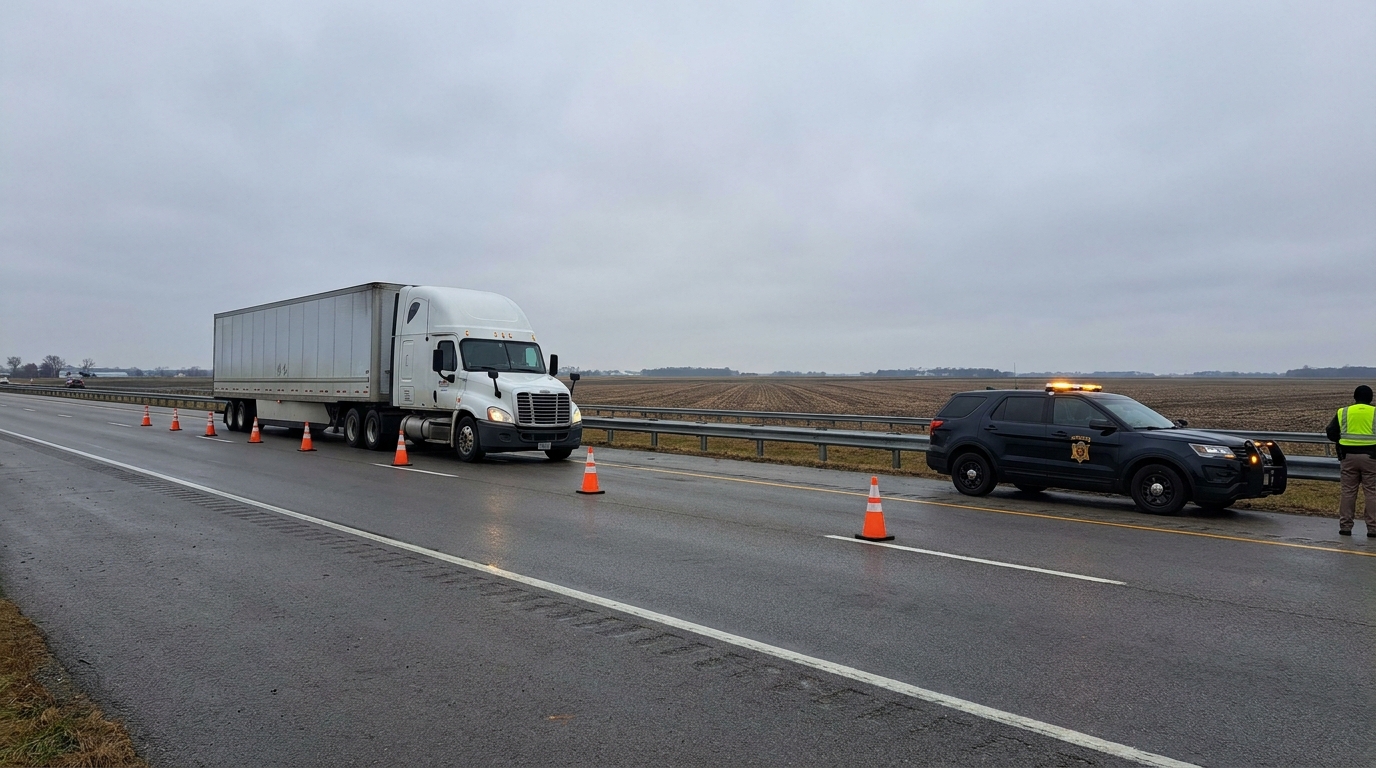
How Dangerous Are Jackknife Crashes? Federal Data Tells the Story
Federal statistics confirm that jackknife crashes are disproportionately deadly compared to other large truck incidents. According to the FMCSA’s data on large trucks in crashes by jackknife occurrence, jackknife events accounted for 3.5% of fatal large truck crashes in 2020, while representing only 0.9% of injury crashes and 1.2% of property-damage-only crashes. That means a jackknife crash is roughly three to four times more likely to be fatal than to result in property damage alone.
In 2020 alone, 169 fatal large truck crashes involved a jackknife event. Of those, 142 involved jackknifing as a subsequent event rather than the initial cause, suggesting that jackknifes often follow an initial collision or loss of vehicle control. This data, drawn from NHTSA’s Fatality Analysis Reporting System (FARS) and Crash Report Sampling System (CRSS), underscores the chain-reaction nature of these crashes.
| Crash Severity | Jackknife Crashes | Percentage of All Large Truck Crashes |
|---|---|---|
| Fatal | 169 | 3.5% |
| Injury | 1,000 | 0.9% |
| Property Damage Only | 4,000 | 1.2% |
Source: FMCSA, 2020 data on large trucks in crashes by jackknife occurrence and crash severity.
💡 Pro Tip: When building a tractor-trailer jackknife injury claim, federal crash data from the FMCSA can help demonstrate to insurers and courts that jackknife events carry an elevated risk of catastrophic harm. Ask your attorney about incorporating this evidence.
Who Can Be Held Liable for a Jackknife Truck Accident in Richland?
Multiple parties may share responsibility when a tractor jackknife injures someone in Richland. Potential defendants can include the truck driver, the trucking company, maintenance providers, cargo loaders, and even parts manufacturers. Washington law addresses how fault is divided among multiple defendants.
Washington’s Rules on Shared Fault
Under RCW 4.22.070, liability among multiple defendants is generally several only, meaning each defendant pays only their proportionate share of damages. However, important exceptions exist. If the trier of fact determines that the injured claimant was not at fault, RCW 4.22.070(1)(b) provides that the defendants against whom judgment is entered become jointly and severally liable for the sum of their proportionate shares of the claimant’s total damages. This means that in a fault-free claimant scenario, any single defendant against whom judgment is entered could be held responsible for the full amount of recoverable damages.
Employer and Agency Liability
Washington law also holds parties liable for the fault of others when they act in concert or when a person was acting as an agent or servant of a party. Under RCW 4.22.070(1)(a), a trucking company may bear full responsibility for its driver’s negligence if that driver was acting as the company’s agent or employee within the scope of employment. This is a critical avenue for victims of jackknife crash events, because individual truck drivers may carry limited personal assets while their employers often have substantial insurance coverage.
💡 Pro Tip: Preserve all evidence as early as possible. Trucking companies must maintain driver logs, maintenance records, and electronic data from the truck’s systems. Under federal regulations, this evidence can be lost or overwritten quickly if you do not act to preserve it.
Proving Negligence After a Tractor Jackknife in Washington
Establishing fault requires showing that a party breached a duty of care and that the breach caused your injuries. Washington law offers several paths to demonstrate negligence in a jackknife truck accident case.
Statutory Violations as Evidence
Under RCW 5.40.050, a breach of a duty imposed by statute, ordinance, or administrative rule is not considered negligence per se, but may be considered by the trier of fact as evidence of negligence. This means a statutory violation does not automatically establish fault, but it gives your case significant weight if the truck driver or carrier violated federal hours-of-service rules, maintenance requirements, or load-securement standards. The statute does recognize limited exceptions where negligence per se still applies, including driving under the influence of intoxicating liquor or any drug, as well as breaches related to electrical fire safety, smoke alarm requirements, and sterilization standards for body art and tattooing.
The Role of Evidence in Jackknife Cases
Physical evidence, electronic logging device (ELD) data, maintenance records, and witness testimony all play critical roles. Because most jackknife events occur as a subsequent event in a crash sequence, reconstructing the timeline is essential. Your legal team should investigate whether brake failure, improper cargo loading, or driver error initiated the chain of events.
💡 Pro Tip: Washington requires all drivers to carry liability insurance or proof of financial responsibility under RCW 46.30.020. Confirm that the trucking company’s insurance information is documented at the crash scene or through the police report.
Time Limits for Filing a Jackknife Crash Legal Claim in Richland
Washington state imposes a three-year statute of limitations on personal injury actions under RCW 4.16.080. This means you generally have three years from the date of the accident to file a lawsuit. Missing this deadline may result in losing your right to recover compensation entirely.
Courts typically interpret exceptions to this deadline narrowly. While tolling provisions may apply in limited circumstances, such as when the injured party is a minor, you should not assume any extension applies to your situation. Acting promptly also helps ensure that critical evidence from the truck, the carrier, and the crash scene remains available.
💡 Pro Tip: Even if the statute of limitations has not expired, insurance companies may use delay against you. Starting your claim early allows your attorney to send spoliation letters that require the trucking company to preserve electronic data and maintenance logs.
What Compensation Can Jackknife Accident Victims Pursue?
Victims of tractor-trailer jackknife injuries in Richland may be entitled to recover damages across several categories. The specific value of any claim depends on the facts, but common categories include:
- Current and future medical expenses, including surgeries, rehabilitation, and long-term care
- Lost wages and diminished future earning capacity
- Pain and suffering
- Loss of consortium for spouses and family members
- Property damage to your vehicle and personal belongings
Because jackknife crashes tend to produce catastrophic injuries, future damages often represent a significant portion of the total claim. Documenting your medical needs thoroughly and working with treating providers to project future care costs can strengthen your case substantially. An experienced truck accident lawyer in Richland can help you build a comprehensive demand.
Frequently Asked Questions
1. What is a jackknife accident?
A jackknife accident happens when a truck’s trailer swings out of alignment with the cab, folding at the hitch point. This creates a V-shape or L-shape that can block multiple lanes of traffic and strike nearby vehicles. The term comes from the way the truck resembles a folding knife.
2. Why are jackknife truck accidents so deadly?
Federal data shows that jackknife events are roughly three to four times more likely to involve fatalities than property-damage-only outcomes. The sheer size and weight of a fully loaded tractor-trailer, combined with the uncontrolled sweeping motion across lanes, leaves other motorists extremely vulnerable.
3. How long do I have to file a claim after a semi-truck injury in Richland, Washington?
Under RCW 4.16.080, Washington generally allows three years from the date of injury to file a personal injury lawsuit. However, specific circumstances may affect your timeline. Consulting with an attorney promptly helps ensure you do not miss critical deadlines.
4. Can I hold the trucking company responsible, not just the driver?
Yes, in many cases. Under RCW 4.22.070(1)(a), a party may be held responsible for the fault of another person when that person was acting as an agent or servant of the party. If the truck driver was operating within the scope of employment, the trucking company may bear full liability.
5. What should I do immediately after a jackknife crash in Richland?
Seek medical attention first, then focus on preserving evidence. Call law enforcement to generate an official report, photograph the scene and all vehicles involved, collect contact information from witnesses, and avoid giving recorded statements to the trucking company’s insurer before speaking with an attorney.
Protecting Your Rights After a Jackknife Truck Accident
A tractor jackknife on a Richland roadway can change your life in an instant. Understanding your legal rights, the applicable deadlines, and the potential sources of liability puts you in a stronger position to pursue the compensation you deserve. Every case depends on its own facts, and the legal process involves many variables, but acting quickly to preserve evidence and seek guidance is always in your best interest.
Telaré Law serves injured individuals and families throughout the Tri-Cities and Southeast Washington. If a jackknife truck accident has affected your life, call 509-736-3160 or contact us today to schedule a consultation about your case.