If you or a loved one was hurt in a crash caused by another driver running a stop sign or ignoring a yield sign in Richland, Washington, understanding what “failure to yield” means under state law is critical to protecting your right to compensation. Under Washington law, failure to yield occurs when a driver does not give the legal right of way to another vehicle, pedestrian, or cyclist as required by statute. These violations are among the most common causes of intersection accidents in the Tri-Cities area, resulting in devastating injuries ranging from broken bones to traumatic brain injuries.
If a failure to yield accident has turned your life upside down, Telaré Law is here to help you understand your legal options. Call 509-736-3160 or reach out to our team today to discuss your case.
How Washington State Defines Failure to Yield Right of Way
Washington’s right-of-way laws are primarily governed by statutes in Chapter 46.61 of the Revised Code of Washington (RCW). The foundational rule is found in RCW 46.61.180(1), which states that when two vehicles approach or enter an intersection from different highways at approximately the same time, the driver on the left must yield the right of way to the vehicle on the right.
This default rule is modified in several important situations. RCW 46.61.180(2) clarifies that the right-of-way rule is modified at arterial highways and as otherwise stated in the chapter. Additional rules may apply depending on the roadway type, whether stop signs or yield signs are present, and whether the driver is making a turn.
Stop Sign Violations Under RCW 46.61.190
When a driver approaches a stop sign, Washington law requires a specific sequence of actions. Under RCW 46.61.190, preferential right of way at intersections may be indicated by stop signs or yield signs as authorized under RCW 47.36.110. A driver must stop at a clearly marked stop line, or if none, before entering a marked crosswalk on the near side of the intersection, or if none, then at the point nearest the intersecting roadway where the driver has a view of approaching traffic, and then yield the right of way to any vehicle in the intersection or approaching on another roadway so closely as to constitute an immediate hazard. Rolling through the sign, even slowly, constitutes a violation.
💡 Pro Tip: If you were hit by a driver who ran a stop sign in Richland, photographs of the intersection, stop sign placement, and skid marks can serve as powerful evidence when building your claim.
Left-Turn Failure to Yield Under RCW 46.61.185
Left-turn accidents are some of the most dangerous collisions on Richland roadways. Under RCW 46.61.185, a driver turning left within an intersection or into an alley, private road, or driveway must yield the right of way to any vehicle approaching from the opposite direction that is within the intersection or so close as to constitute an immediate hazard. The statute’s title reflects the legislature’s concern for protecting pedestrians and cyclists.
Yield Sign Rules and Prima Facie Evidence
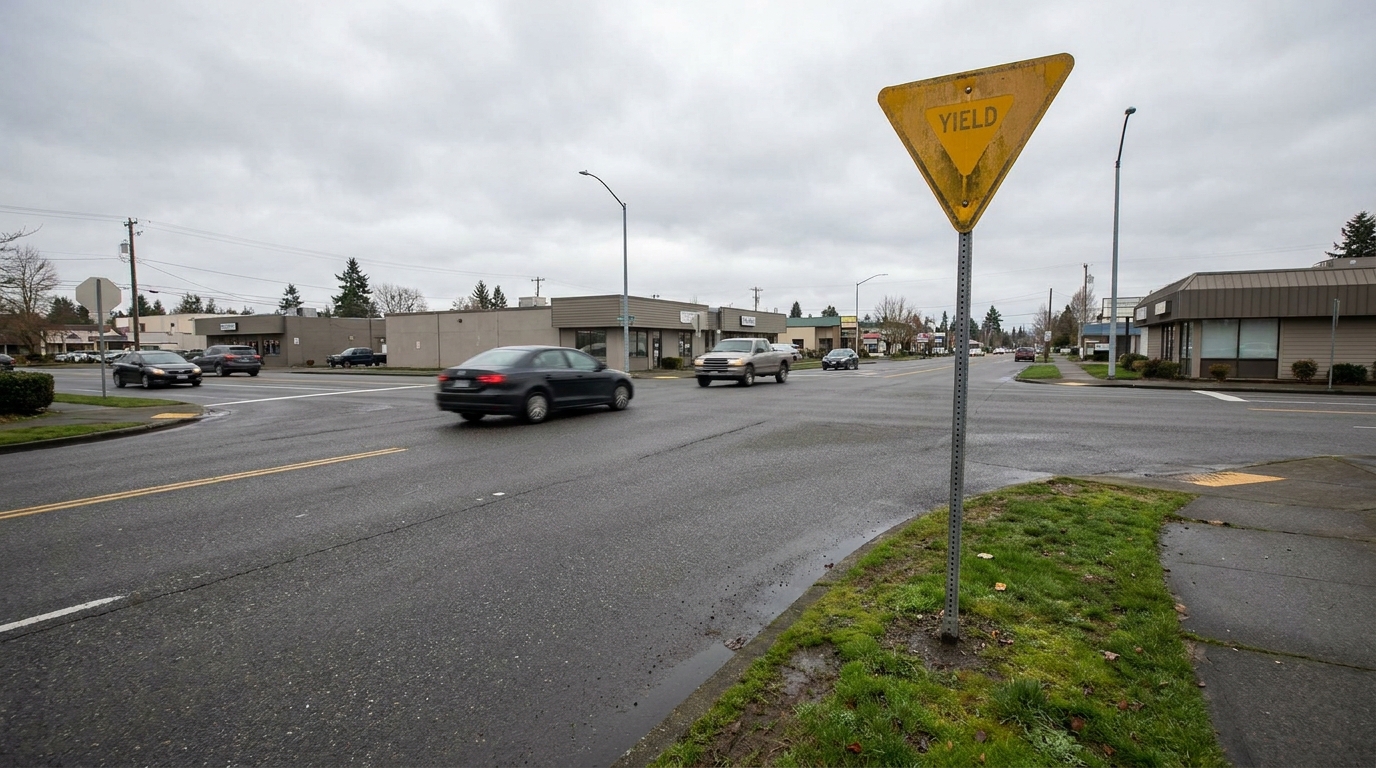
Washington law addresses what happens at yield signs. A driver approaching a yield sign must slow to a reasonable speed and stop if necessary, then yield the right of way to vehicles already in or approaching the intersection. Critically, if a driver passes a yield sign without stopping and is then involved in a collision with a vehicle in the intersection, that collision is deemed prima facie evidence of the driver’s failure to yield right of way. This legal presumption can significantly strengthen a victim’s personal injury claim.
💡 Pro Tip: “Prima facie evidence” means the court presumes the driver was at fault unless they present evidence to overcome that presumption, giving injured victims a meaningful advantage early in a case.
How Failure to Yield Affects Vulnerable Road Users
Washington law provides heightened protections for vulnerable users of public ways, including pedestrians, bicyclists, and others. When a failure to yield violation under RCW 46.61.185 or RCW 46.61.190 involves a vulnerable user, the offending driver faces an additional fine equal to the base penalty assessed under RCW 46.63.110(3). This additional fine generally may not be waived, reduced, or suspended unless the court finds the offender indigent.
The definition of “vulnerable user of a public way” is cross-referenced to RCW 46.61.5259, linking these statutes to broader pedestrian and cyclist safety provisions. The additional fines collected are deposited into the vulnerable roadway user education account created in RCW 46.61.145, funding programs designed to reduce future injuries on Washington roads.
Bicyclists also have unique rights under Washington law. A person operating a bicycle who approaches a stop sign may treat it as a yield sign under subsection (2)(b) of RCW 46.61.190, except at railroad grade crossings and school bus stop signals. Understanding these distinctions matters when determining fault in a crash involving failure to yield.
💡 Pro Tip: If you were walking or cycling when a driver failed to yield to you, the enhanced penalty provisions may serve as additional evidence of the violation’s seriousness when pursuing a personal injury claim.
Why Failure to Yield Is Classified as a Serious Traffic Violation
A failure to yield citation in Washington carries consequences beyond a simple traffic ticket. Under WAC § 308-100-130, failure to yield right of way, as defined by RCW 46.61.180, 46.61.185, 46.61.190, and related statutes, is classified as a “serious traffic violation.” This classification can have significant consequences for a driver’s license, particularly for commercial drivers who may face suspension.
For accident victims, this classification strengthens a negligence claim. When a driver receives a citation for a serious Washington traffic violation like failure to yield, it serves as compelling evidence that the driver breached a legal duty of care, one of the essential elements in any auto accident case in Richland.
| Violation Type | Governing Statute | Additional Penalty for Vulnerable Users |
|---|---|---|
| General failure to yield (intersection) | RCW 46.61.180 | See RCW 46.61.185 and 46.61.190 for vulnerable user fine provisions |
| Left-turn failure to yield | RCW 46.61.185 | Additional fine equal to base penalty |
| Stop sign / yield sign violation | RCW 46.61.190 | Additional fine equal to base penalty |
Building a Strong Claim After a Richland Intersection Accident
Establishing liability in a crash involving failure to yield requires connecting the statutory violation to your injuries. You generally need to prove the other driver violated a right-of-way law, the violation caused or contributed to the collision, and you suffered actual damages. Medical records, police reports citing the violation, accident reconstruction analysis, and witness statements all play important roles.
Washington’s comparative negligence rules may also affect your recovery. Even if the other driver clearly failed to yield, the insurance company may argue you share some fault. Understanding how comparative negligence impacts your settlement is essential because Washington follows a pure comparative fault system, meaning your compensation may be reduced by your percentage of fault but is not eliminated entirely.
💡 Pro Tip: Insurance adjusters often attempt to shift blame onto victims shortly after a crash. Avoid giving recorded statements before speaking with an attorney.
What to Do After a Failure to Yield Crash in Richland
Taking the right steps immediately after an accident can significantly affect your claim’s outcome. Call 911 and seek medical attention, even if your injuries seem minor. Document the scene with photos, collect witness contact information, and request a copy of the police report. These steps help preserve evidence of the other driver’s failure to yield.
Be cautious about early settlement offers from the at-fault driver’s insurance company. Lowball offers rarely account for the full extent of your medical costs, lost wages, pain and suffering, and long-term care needs. An experienced auto accident attorney in Richland can evaluate your claim’s true value and negotiate on your behalf.
💡 Pro Tip: Keep a journal documenting your pain levels, limitations, and emotional impact after the accident. This record can support your claim for non-economic damages.
Frequently Asked Questions
1. What does failure to yield mean in Washington state?
Failure to yield means a driver did not give the legal right of way to another vehicle, pedestrian, or cyclist as required by Washington statutes such as RCW 46.61.180, RCW 46.61.185, or RCW 46.61.190. The specific obligation depends on circumstances, such as whether the driver faced a stop sign, yield sign, or was making a left turn.
2. Can a failure to yield citation help my personal injury case?
Yes, a citation can serve as strong evidence of negligence. A failure to yield violation is classified as a serious traffic violation under WAC § 308-100-130, and a collision after passing a yield sign without stopping is considered prima facie evidence of the driver’s fault.
3. Are there extra penalties if a failure to yield injures a pedestrian or cyclist?
Washington law imposes an additional fine equal to the base penalty when the violation involves a vulnerable user of a public way. This fine generally cannot be waived, reduced, or suspended unless the offender is found indigent.
4. What if the insurance company says I was partly at fault for the accident?
Washington uses a pure comparative negligence system, which means your compensation may be reduced by your percentage of fault but is not eliminated. An attorney can help counter attempts by insurers to unfairly shift blame onto you.
5. How long do I have to file a claim after a failure to yield accident in Richland?
Washington generally imposes a three-year statute of limitations on personal injury claims under RCW 4.16.080, typically beginning on the date of injury, but the applicable deadline may vary depending on your case’s specific facts. Consulting an attorney promptly is important to preserve your rights.
Protecting Your Rights After a Failure to Yield Accident
A failure to yield crash can leave you facing mounting medical bills, lost income, and lasting pain. Washington law provides clear rules that hold negligent drivers accountable, from the basic right-of-way requirements in RCW 46.61.180 to the enhanced penalties for harming vulnerable road users. Understanding these laws is the first step, but navigating the insurance and legal process on your own can be overwhelming while recovering.
If you or a family member was injured in a Richland intersection accident caused by another driver’s failure to yield, Telaré Law is ready to fight for the full compensation you deserve. Call 509-736-3160 or contact us today for a conversation about your case.