
Image Source: Pexels
In the state of Oregon, pedestrians have some of the strongest protections of any road user. From required yields at crosswalks to distracted-driving prohibitions and even reduced speed limits near pedestrian zones, there’s plenty in place to protect people traveling on foot. Yet when a driver violates those protections and hits a pedestrian, the first move insurance companies often make is to question what the pedestrian was doing wrong that resulted in them getting hit.
Sadly, this is all too often the reality of pedestrian accident claims. In many cases, the pedestrian clearly has the right of way, and yet must still fight to be compensated for injuries that can be life-altering or even fatal.
Here at Telaré Law, our team of legal experts knows Oregon’s pedestrian protection laws better than anyone, and we use these as the foundation of every pedestrian accident claim. It’s common for insurers to attempt to shift the blame onto individuals who were injured with no vehicle to protect them by suggesting they were “distracted,” that they “darted out,” or were somehow otherwise at fault. In all of our client cases, we push back on this rhetoric, using witness statements, scene reconstruction, and evidence from the scene to paint a more vivid and accurate picture of what actually happened.
Oregon’s Pedestrian Protection Laws – and Why They Matter for Your Claim
Before looking at what the driver did wrong, it helps to understand exactly what Oregon’s legal basis for liability is. This is ultimately the guiding basis for your entitlement to compensation.
The Crosswalk Stop-and-Remain-Stopped Requirement
According to Oregon law, drivers must stop and remain stopped for a pedestrian crossing in a marked or unmarked crosswalk. The vehicle must be stationary when the pedestrian is in both the driver’s lane and the adjacent lane.
A pedestrian is considered to be crossing as soon as any part of their body, wheelchair, cane, or bicycle moves into the crosswalk with the intent to proceed. To be considered as “crossing,” they do not legally have to be fully in the lane. Some insurers use this to argue that a pedestrian “darted out” or “wasn’t visible.” However, any driver who fails to stop is in direct violation of the “stop and remain stopped” statute, and their actions can be evidence of negligence in a case.
Oregon’s Distracted Driving Law
It is against the law to use a handheld mobile device while driving in the state of Oregon. Using a handheld device, texting, or even operating a GPS with your hands while driving is classified as a distraction, and distracted driving is one of the top causes of accidents.
If a driver was operating a handheld device at the time of impact, then this violation creates a separate basis for negligence. Here at Telaré Law, we subpoena phone records and request evidence of dashcam footage to establish distraction as a contributing cause. This is a huge contributor to liability, and can actually result in the potential for you to be entitled to claim further damages.
School Zone and Reduced-Speed Areas
Oregon State imposes reduced speed limits in school zones and near marked crosswalks, as lower vehicle speed directly reduces pedestrian fatality rates. If a driver exceeds those limits when they hit a pedestrian, they are not only speeding, but are also in violation of a law that is specifically designed to protect the pedestrian they struck.
The speed at which a vehicle hits a pedestrian is also in correlation with how severe the injury they experience may be, with faster vehicles leading to worse injuries. Reducing speed limits helps to bring down the rate of fatalities and serious injuries in pedestrian accidents.
Oregon’s Modified Comparative Negligence Rule
Oregon State follows a modified comparative negligence rule. Under this Oregon law, a pedestrian who bears some responsibility for the incident, such as crossing against a signal, can still actually recover damages. These damages are reduced by the same percentage of fault they were considered to be at, and they are eligible to recover these damages, so long as they do not exceed 50% fault.
Because of this, insurers regularly make attempts to inflate pedestrian fault, pushing the fault percentage up in order to avoid or reduce payouts. At Telaré Law, we challenge those calculations with in-depth scene reconstruction, signal timing data, and expert testimonies to ensure fault percentage is not being over-inflated. This way, we can help our clients receive the compensation they actually deserve.
Where Pedestrian Accidents Happen in Oregon – and Why Location Is Evidence
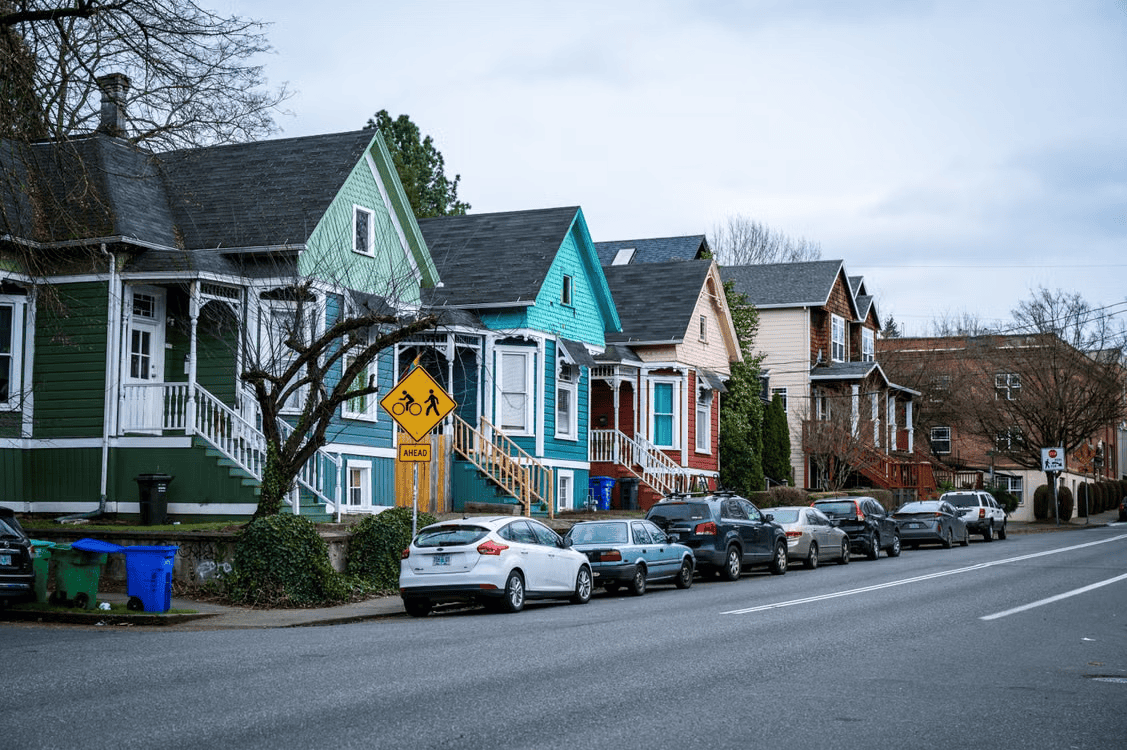
Image Source: Pexels
The location of a pedestrian crash is not just context. It is important evidence. The area in which the collision took place — be it a marked crosswalk, an unmarked intersection, a parking lot, or even near a driveway — actually determines which laws apply, what the driver was legally required to do, and what documentation exists.
Pedestrian accidents happen in some places more commonly than others. Locations often seen in these types of collisions include:
- Marked crosswalks and signalized intersections: Drivers focused on finding a gap in fast-moving oncoming traffic when making a turn may overlook a pedestrian crossing in the adjacent crosswalk. Similarly, when checking for oncoming traffic from the left during a right-turn-on-red, they may hit a pedestrian crossing from the right.
- Unmarked crosswalks and mid-block locations: These areas lack traffic control signals and frequently feature higher speed vehicles, so pedestrian accidents in these locations are common. Drivers may have delayed reaction times due to the unpredictable, unmarked crossings and visual obstructions nearby, such as parked cars, or a lack of lighting.
- Parking lots and private property: Parking lots and private property areas are full of hazards that frequently result in pedestrians being struck. There is also limited visibility due to other vehicles in the area, many of which may be parked very close to one another. Backing out and reversing, as well as carelessness with speed, and a lack of traffic regulations on private properties, can all contribute to these accidents.
- Rural roads and highway shoulders: These areas are highly dangerous for pedestrians because of excessive vehicle speeds, a lack of pedestrian infrastructure, and poor visibility.
- School zones and residential streets: School zones are usually chaotic with young children running around. Pair this with driver distractions, inadequate infrastructure, and other external hazards, and it’s no surprise that pedestrian accidents become so common in places where people live and go to school.
No matter where you were when struck by a vehicle, there were likely a number of different factors at play that must be taken into account when making a claim. All of these areas pose huge threats when it comes to pedestrian accidents, and many different types of injuries are common with this type of collision, no matter where they were sustained.
Common Pedestrian Accident Injuries
Being in a collision as a pedestrian can cause the most severe and life-changing injuries. Because victims in these accidents don’t have a vehicle or protective equipment, they often absorb the full impact of the collision. The injuries caused by this impact are often more catastrophic than in many other types of car accidents:
- Traumatic brain injury: This can be caused by the impact of the vehicle hitting the pedestrian, or by the pedestrian’s head hitting the sidewalk or road surface. Common types of traumatic brain injuries include concussions, contusions and hemorrhages, skull fractures, and even penetrating injuries due to flying debris.
- Fractures and orthopedic injuries: Major fractures and broken bones are a common result of pedestrian accidents, with many victims coming away from collisions with multiple broken bones or fractures. These often include damage to the legs, arms, pelvis, and ribs.
- Spinal cord and nerve damage: Spinal cord damage is, unfortunately, a common result in pedestrian accidents. Spinal cord injuries can be caused by areas of the spine or neck being bent or compressed when hit and flung by a vehicle, and breaks in either of these areas can lead to more severe spinal cord injuries, which can result in paralysis or even death.
- Internal and soft tissue injuries: Internal injuries such as internal bleeding, organ damage, chest injuries, or injuries to soft tissue such as bruises, deep cuts, whiplash, and sprains are all common in pedestrian accidents.
- Psychological trauma: The psychological impact of being struck by a vehicle can be just as damaging long-term as many physical injuries that can be sustained. Trauma-related stress disorders and psychological issues related to life-altering injuries are not uncommon.
Many of these injuries can be debilitating, and in some cases, life-threatening, affecting victims and their families for years afterward.
Who is Liable in an Oregon Pedestrian Accident?
After being hit by a vehicle, many victims initially believe that the driver is automatically at fault. In many cases, this is typically the case, but in other situations, a second or third party’s negligence may have contributed to the conditions that caused the crash. Each additional liable party potentially means additional insurance coverage, and therefore, a larger amount that can be recovered for damages. Some potential liable parties may include:
- The driver: The driver is the primary liable party in most pedestrian crashes. They can be responsible for traffic law violations, distracted driving, impairment, and failure to yield.
- The driver’s employer: In some situations, the driver’s employer may also hold some responsibility. If the driver was working at the time of the incident, vicarious liability may extend to the employer and their commercial insurance policy.
- The vehicle manufacturer: In cases where an accident was caused by an issue with the vehicle itself, such as brake failure or defective sensors, a product liability claim may be made to the manufacturer, depending on various factors such as the vehicle’s age, etc.
- A government entity: Should you have been involved in an incident where broken or missing infrastructure contributed to the collision, such as a failed crosswalk signal, an inadequate or obscured warning sign, a missing sidewalk, or a poorly designed intersection, then the city, county, or state may be responsible for a share of the liability. It must be noted that these claims require prompt action, as they require a 180-day notice, as per the Oregon Tort Claims Act.
- A property owner: If the crash occurred on, or adjacent to, a private property, then premises liability may apply in the case that the property’s design or maintenance created hazardous conditions for pedestrians.
The dedicated team of legal experts at Telaré Law investigates all potential parties before concluding who is responsible for the accident. An incomplete liability investigation leaves recoverable compensation on the table, and we firmly believe that all of our clients looking to recover on a personal injury claim should get the compensation they deserve.
What to Do After a Pedestrian Accident

Image Source: Pexels
If you have been involved in a collision as a pedestrian and have been injured, there are some steps you should be sure to follow immediately to ensure that you are taking responsibility for both your physical health and financial well-being. These steps include the following:
-
- Get medical attention immediately: Even if you feel fine, some injuries, such as concussions and internal bleeding, don’t present symptoms right away. Getting medical attention should be the first thing you do after a pedestrian accident, no matter what. Medical records can also aid in establishing your injury timeline for the claim, which can be a huge advantage in cases where injuries lead to long-term complications or issues.
- Call the police: Even if you feel fine or don’t want to cause a fuss, contacting the police and filing a report is incredibly important. This report will become a foundational document in your case.
- Document the scene: If you’re able to, it’s a good idea to get as much evidence of the scene at the time of the incident as possible. Photographs of vehicle positions, road conditions, signage, signal timing, and your injuries can all help play a part in strengthening your case.
- Get witness information: If anyone saw the collision take place, it is imperative to get their names and contact details for witness statements to support your claim.
- Contact an Oregon pedestrian accident lawyer: You should get in touch with an accident and injury lawyer who knows Oregon’s pedestrian laws well.
When you contact us early, our team at Telaré Law will be sure to take immediate action. We ensure to quickly send preservation letters for traffic camera and dashcam footage. In many cases, important evidence can be overwritten and lost within 30-72 hours after the incident has taken place, so we work quickly to get this secured.
We also take over insurer communication immediately, preventing victims from accidentally giving statements that may be used against them. This way, our clients can focus on their treatment and recovery.
Pedestrian Accidents and Wrongful Death Claims in Oregon
One of the worst outcomes in a pedestrian accident is a death that could’ve been easily prevented. Families in these cases can pursue legal action through a wrongful death lawsuit that can help them earn financial compensation for the loss their family endured because of the death.
Oregon’s wrongful death statute requires claims to be brought by the personal representative of the deceased’s estate, for the benefit of the surviving family members. Recoverable damages include funeral and medical expenses, lost financial support provided by the deceased, and the spouse’s and children’s losses of society, companionship, and services.
It must be noted that the filing timeline of a wrongful death claim is different from personal injury claims (generally three years). If a government entity is involved, it will create a requirement for an Oregon Tort Claims Act notice.
If you’re mourning a loved one lost to a pedestrian accident, Telaré Law is happy to assist you in any wrongful death claim you intend to pursue. We apply the same thorough, investigative approach to every case we work on, through full liability documentation, damages projection, and, when warranted, litigation.
Contact Telaré Law for Pedestrian Accidents in Oregon
Pedestrian accident cases are some of the most difficult ones we handle at Telaré Law. Our goal is not to rush grieving families, those suffering from severe injuries, or overwhelmed victims through a process. Instead, we aim to ensure that their legal rights are being protected whilst they focus on what matters most.
We offer free consultations, with no obligation, and should you choose to work alongside us, there is no fee unless Telaré Law wins. Our services are available statewide across Oregon. To get started, call us at (509) 736-3160.
Frequently Asked Questions About Oregon Pedestrian Accident Claims
Does Oregon Law Require Drivers to Stop for Pedestrians at All Crosswalks?
Yes. Under ORS 811.028, Oregon drivers must stop and remain stopped for a pedestrian crossing in a marked or unmarked crosswalk when the pedestrian is in the driver’s lane or the adjacent lane. Every intersection in Oregon has a legal crosswalk, even without painted lines. A pedestrian is “crossing” as soon as any part of their body or mobility device enters the crosswalk with the intent to proceed. A driver who strikes a pedestrian at a crosswalk has, in most cases, violated this statute — which is evidence of negligence — and Telaré Law challenges insurers who claim the pedestrian “wasn’t in a crosswalk.”
What If the Pedestrian Was Crossing Against the Signal or Outside a Crosswalk?
Oregon’s modified comparative negligence rule (ORS 31.600) means a pedestrian who shares some fault can still recover — reduced by their share — as long as that share does not exceed 50 percent. A pedestrian found 30 percent at fault can still recover 70 percent of the total damages. Insurers will try to assign as much fault as possible, because pushing the pedestrian past 51 percent ends the claim. Telaré Law challenges those assignments with signal timing data, physical evidence, and reconstruction.
What If the Driver Who Hit Me Fled the Scene?
Hit-and-run pedestrian accidents are more common than most people realize. If the driver cannot be identified, the victim’s own auto insurance — specifically uninsured motorist (UM) coverage, which Oregon requires — may apply even though the victim was on foot. Telaré Law investigates all available coverage in hit-and-run cases and, when possible, works with law enforcement evidence to help identify the vehicle or driver. Recovery is often still achievable.
How Long Do I Have to File a Pedestrian Accident Lawsuit in Oregon?
Oregon’s personal injury statute of limitations is generally two years from the date of the accident (ORS 12.110) — shorter than in some neighboring states. The timeline shortens further when a government entity is involved, because the Oregon Tort Claims Act requires a formal notice within 180 days. More immediately, traffic camera footage is typically overwritten within 30 to 72 hours. Calling Telaré Law as soon as possible protects the evidence that often determines the outcome.
Can I Sue the City or County If a Broken Signal or Missing Sidewalk Contributed to the Accident?
Potentially yes. If infrastructure failure contributed — a broken pedestrian signal, inadequate lighting, an unmarked high-speed crossing, or a missing sidewalk that forced foot traffic into the roadway — the responsible government entity may share liability. Government claims in Oregon follow the Oregon Tort Claims Act, with a 180-day notice deadline. This angle needs to be evaluated immediately, not treated as an afterthought.
What If the Driver Was Uninsured?
Oregon requires drivers to carry liability and uninsured motorist coverage, but not all comply. If the at-fault driver has no coverage or inadequate coverage, your own uninsured/underinsured motorist (UM/UIM) policy may apply — even as a pedestrian who was not in a vehicle. Telaré Law reviews every available policy before concluding that coverage is insufficient.
My Loved One Was Killed in a Pedestrian Accident. Do We Have a Claim?
Yes. Oregon’s wrongful death statute (ORS 30.020) allows the personal representative of the estate to bring a claim for the benefit of surviving family members — including the spouse, children, and parents — for losses such as financial support, funeral expenses, and loss of society and companionship. The deadlines differ from personal injury claims, and government involvement creates shorter notice windows. Telaré Law handles these claims and can advise surviving family members on their rights during a free, no-obligation consultation.