Why Fentanyl Screening Could Matter in Washington Truck Hydroplaning Accidents
Key Takeaways: A proposed federal rule published September 2, 2025 would add fentanyl and norfentanyl to DOT drug testing panels for commercial drivers. If finalized, this could affect evidence available after serious truck crashes in Washington. Washington requires carriers to follow federal testing rules and penalizes employers who knowingly let drivers who tested positive continue safety-sensitive work. In hydroplaning crashes, weather may explain conditions but not necessarily excuse unsafe speed, poor judgment, or possible impairment. If carriers skipped required testing or ignored violations, those facts could strengthen claims against both driver and company.
A proposed federal rule change could reshape how injured people investigate serious truck crashes in Richland, Washington. The U.S. Department of Transportation published a 2025 proposal to add fentanyl and norfentanyl to workplace drug testing under 49 C.F.R. Part 40, affecting DOT-regulated sectors including commercial trucking if finalized. For families dealing with devastating collisions on wet Southeast Washington highways, this proposal may affect what evidence exists, what carriers should have known, and whether companies failed to remove impaired drivers before life-changing wrecks.
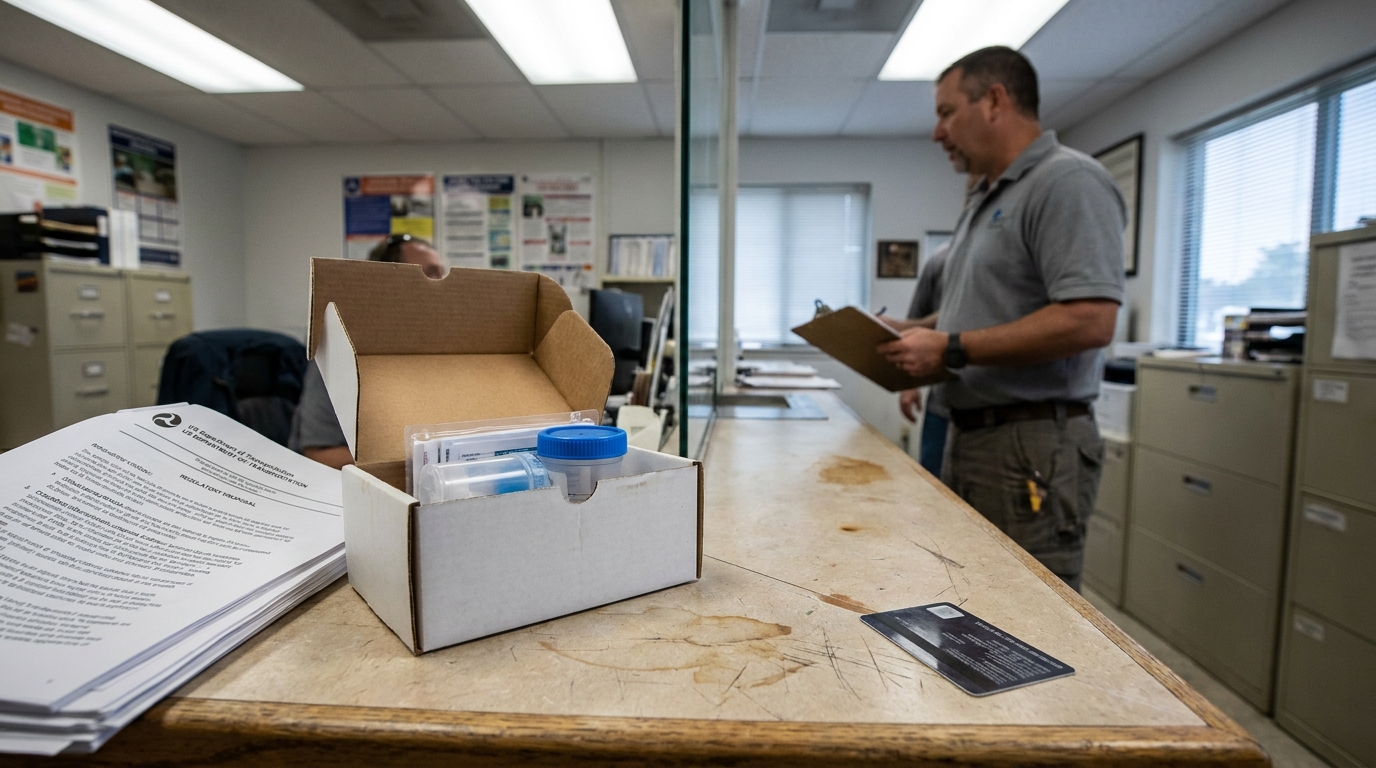
The federal proposal has real litigation implications
The proposal is formal regulatory action published September 2, 2025 as document 2025-16720 at 90 Federal Register 42363-42381, under RIN 2105-AF26. It proposes adding fentanyl and norfentanyl to DOT drug testing panels while addressing morphine cutoff levels and marijuana nomenclature updates.
Plaintiff-side investigations often turn on what rules required at crash time. If DOT finalizes broader commercial driver drug screening including fentanyl, counsel investigating opioid truck crash liability would examine whether carriers implemented required procedures, whether positive results were missed or ignored, and whether post-crash evidence was preserved. In a serious Semi-Truck Injury in Richland/Washington, those details may help establish impaired truck driver negligence rather than allowing a “bad weather” defense.
Washington law already puts trucking companies on notice
Washington does not let motor carriers ignore federal testing duties. State law requires carriers to comply with 49 C.F.R. Part 382 and imposes civil penalties when employers with actual knowledge of positive drug or alcohol tests allow drivers to continue safety-sensitive functions. A readable version appears in Washington’s motor carrier compliance statute.
That state-law hook can become important in civil litigation after catastrophic crashes. The question often extends beyond whether a driver used substances to whether the trucking company drug policy was compliant, enforced, and acted upon when warning signs appeared. When carriers fail to maintain compliant programs or knowingly leave positive drivers on the road, those facts may support broader negligence theories against the company itself.
What the existing testing framework requires
Federal trucking regulations require multiple testing layers throughout a driver’s employment. FMCSA describes six categories: pre-employment, post-accident, random, reasonable suspicion, return-to-duty, and follow-up. Readers can review this structure through the FMCSA page on required CDL drug and alcohol tests.
These categories create paper trails that may become evidence after wrecks. Pre-employment files may show whether drivers were cleared before driving. Random testing records may reveal whether employers maintained lawful programs. Return-to-duty and follow-up records may show whether drivers previously violated drug rules and whether carriers properly restored them to safety-sensitive work.
Why post-crash testing can become a turning point
Post-accident testing is mandatory in specific crash scenarios: after any human fatality and in certain injury or disabling-damage crashes when the commercial driver receives a citation. The existence or absence of post-crash tests can become a major evidentiary issue in substance abuse truck accident cases.
This issue may shape entire investigations. If a family is told a tractor-trailer simply hydroplaned, counsel may still need to determine whether the crash met testing criteria, whether the carrier documented its decisions, and whether any delay affected ability to detect drug use. In truck hydroplaning accidents, weather may be part of the story, but impairment can affect speed selection, reaction time, and judgment on slick pavement.
A Richland scenario shows how these cases may unfold
Imagine a family driving near Richland during heavy rain when a loaded semi loses control, crosses lanes, and causes a chain-reaction collision. The trucking company suggests the event was unavoidable because the highway was wet. A survivor is hospitalized with multiple fractures, and a passenger faces uncertain long-term neurological prognosis.
Days later, the family learns the commercial driver may have had prior substance-related issues. If investigation shows the carrier failed to maintain a compliant testing program, skipped required testing, ignored positive results, or returned the driver to duty without completing required processes, the case may look very different from a routine weather-loss narrative.
Weather may explain conditions, but not necessarily fault
Rain and standing water do not excuse unsafe trucking decisions. The legal question is often whether the driver and carrier acted reasonably under conditions. Trucks may hydroplane because of excessive speed for conditions, delayed braking, worn tires, poor load handling, fatigue, distraction, or impairment.
Evidence preservation matters early. Injured people may need driver qualification files, drug testing records, dispatch communications, onboard data, inspection records, and post-crash investigative materials. Weather defenses can sound persuasive initially but may weaken when underlying records suggest preventable truck driver impairment claims or other safety failures.
The return-to-duty process may reveal prior violations
A positive test does not simply disappear. Under the DOT framework, drivers who test positive must complete a return-to-duty process with a qualified substance abuse professional and pass a directly observed test before resuming driving. If this process was skipped or handled improperly, carriers may face significant scrutiny.
For plaintiffs, this matters two ways. First, it may show the company put a driver back behind the wheel without satisfying regulatory safeguards. Second, it may support arguments that the company had prior notice of risk and failed to protect the public. These issues can be particularly important where defenses claim the collision was a sudden loss-of-control event rather than the result of impaired truck driver negligence.
Washington enforcement tools add pressure after suspected drug-related crashes
Washington law gives law enforcement authority when commercial driver impairment is suspected. Under the state’s implied consent framework, a person driving a commercial motor vehicle in Washington is deemed to have consented to breath testing for alcohol, and officers with reasonable grounds to believe a driver was under the influence of a drug may seek blood tests. Refusal can trigger CDL disqualification proceedings, reviewable in Washington’s commercial implied consent statute.
This can affect the evidence landscape. If a commercial driver refused testing, was subject to disqualification proceedings, or faced drug-related criminal allegations, those facts may lead to additional records and investigative avenues.
What injured families should watch for after suspected impairment crashes
The most important early issue is often whether critical records are preserved before they disappear. Trucking cases can involve overlapping federal regulations, state statutes, carrier policies, and third-party records. Delays may make it harder to secure data, testing documentation, video, or maintenance evidence.
Families should be cautious about simple explanations offered too soon. A crash labeled as hydroplaning or driver error may still involve deeper questions about commercial driver drug screening, supervision, or prior violations. Plaintiff investigations may focus on:
- Whether pre-employment and random testing was completed
- Whether required post-accident tests were performed
- Whether the driver had prior positive tests or return-to-duty history
- Whether the carrier knowingly kept a positive driver in safety-sensitive service
Readers comparing related impairment issues may find useful context in this discussion of FMCSA zero-tolerance policy questions.
Why the 2025 proposal could affect 2026 litigation strategy
Even before a final rule takes effect, a proposal can signal where compliance obligations are heading. The 2025 DOT action proposed adding fentanyl and norfentanyl to testing panels, and the comment period closed October 17, 2025 after 109 public comments were submitted. For lawyers handling DOT drug testing panel 2026 issues, this means watching both final rulemaking status and dates of any crash, testing event, or carrier compliance failure.
Timing matters because applicable duties may depend on when the collision occurred. Legal analysis may differ if a crash happened before a final fentanyl-testing rule became effective, after implementation deadlines passed, or during a period when a carrier had independent notice through state law and existing federal testing obligations.
Building a stronger plaintiff-side case after truck hydroplaning accidents
Serious truck cases are built on records, not assumptions. Medical documentation, life-care needs, lost earning capacity, and pain-related damages remain central, but liability proof usually requires rigorous investigation into the driver, carrier, and regulatory backdrop. In truck hydroplaning accidents, liability issues may include speed for conditions, maintenance defects, loading practices, and possible impairment.
Many injured people look for counsel with substantial commercial trucking litigation experience. If your family is evaluating a crash involving possible drug use, weather defenses, or missing safety records, a truck hydroplaning accidents lawyer may assess what evidence should be preserved and what regulatory issues may affect the claim.
How Does This Impact Me?
What does the fentanyl testing proposal mean for my injury case?
It may matter if impairment is suspected and the trucking company’s compliance is in dispute. A proposal alone does not prove negligence, but it can highlight what carriers may be required to do if the rule is finalized and what evidence may exist. If a crash involved possible opioid use, your case may turn on testing records, prior violations, and whether the company followed applicable rules.
If the truck hydroplaned, can impairment still be part of the case?
Yes. Wet roads may explain how control was lost but not necessarily why the truck was traveling too fast, braking too late, or being operated by a driver whose judgment was compromised. The core question is often whether the crash was preventable with safe driving and lawful carrier oversight.
What evidence should I try to preserve after a suspected impairment crash?
Start with evidence you can control and move quickly on the rest. Keep photographs, medical records, discharge papers, wage-loss information, insurance correspondence, and witness contact information. A formal preservation effort may also seek driver logs, testing records, ECM data, dash footage, maintenance files, dispatch records, and post-crash investigation materials.
Can the trucking company be liable even if only the driver used drugs?
Potentially, yes, if facts show independent negligence by the company. Carriers may face exposure if they failed to maintain compliant testing programs, ignored positive results, skipped required testing, or allowed drivers to continue safety-sensitive work despite actual knowledge of violations. This analysis is fact-dependent, and Washington’s regulatory framework can provide useful evidence.
What this news could mean for families in Richland
This proposed fentanyl-testing change matters because it shines a brighter light on a risk that may already exist in serious trucking cases. When semi-truck crashes are blamed on rain, standing water, or loss of traction, the full story may still involve substance use, poor company oversight, or missed regulatory red flags. For injured people and grieving families in Richland, Washington, the key takeaway is that federal drug-testing developments and Washington carrier duties can intersect in ways that may materially affect liability, evidence, and claim value.