Understanding Liability When a Semi-Truck Strikes a Bridge in Richland
Key Takeaways: A bridge strike occurs when an overheight commercial vehicle collides with an overpass or elevated structure. Liability in Richland turns on Washington’s negligence principles, statutory duties, and comparative fault rules. Under RCW 46.44.110, drivers operating vehicles illegally are liable for resulting damage, and fault may extend to the trucking company, vehicle owner, loading company, or equipment manufacturer. Washington sets a 14-foot maximum legal height under RCW 46.44.020, and violations serve as strong evidence of negligence. Government agencies can be held responsible, but immunity applies where clearance is at least 14 feet or proper signs are posted. Washington’s pure comparative fault system allows injured victims to recover compensation even when partly at fault, with damages reduced proportionally.
A bridge strike happens when a tall commercial vehicle collides with an overpass or elevated structure because it exceeds available vertical clearance. When a loaded tractor-trailer hits a bridge in Richland, consequences can include falling debris, secondary collisions, and catastrophic injuries to nearby drivers and passengers. Liability for these incidents generally turns on negligence, statutory duties, and how fault is divided among contributing parties, and injured victims often have the right to pursue compensation from multiple responsible parties.
If you or a loved one were hurt in an overheight truck crash, the team at Telaré Law is ready to help. Call us at 509-736-3160 or reach out through our online contact page to discuss what happened and how Washington law may apply.
How Bridge Strike Truck Accident Liability Works in Washington
Bridge strike truck accident liability in Washington begins with the principle that those who operate vehicles unlawfully or carelessly must answer for the harm they cause. Under RCW 46.44.110, a person operating a vehicle on a public highway is liable for all damages a bridge or elevated structure sustains as a result of illegal operation. While that statute addresses damage to the structure, personal injury claims are pursued under Washington’s common-law negligence principles, which require proving duty, breach, causation, and damages.
Washington also defines “fault” in deliberately broad terms. Under RCW 4.22.015, fault includes negligent or reckless acts and omissions, strict tort liability, and product liability claims. This means a truck bridge strike injury claim may reach beyond the driver to include the trucking company for negligent hiring or supervision, a cargo loading company for an improperly measured load height, or a manufacturer of defective height-measurement equipment.
💡 Pro Tip: After a bridge strike, request that the trucking company preserve electronic logging device data, dispatch records, and load documentation in writing immediately. These records can disappear quickly.
Who May Be Held Responsible After an Overheight Truck Crash
More than one party may share responsibility for a commercial truck bridge crash in Richland. Although Washington generally abolished joint and several liability under RCW 4.22.070 and allocates fault proportionally, it still recognizes joint and several liability in limited situations. Identifying every potentially liable party is central to building a claim. The following parties commonly appear in these cases:
- The truck driver, for failing to confirm adequate clearance.
- The trucking company, for negligent hiring, training, supervision, or route planning.
- The vehicle owner or lessee, who may bear responsibility even without driving.
- A cargo or loading company, for creating an unlawful overheight condition.
- An equipment manufacturer, where defective measurement tools contributed to the crash.
Washington law specifically addresses situations where the driver is not the owner. Under RCW 46.44.110, when an operator moves a vehicle with the owner’s express or implied permission, the owner and operator are jointly and severally liable for resulting damage. RCW 46.44.120 provides that the owner or lessee is responsible for size and weight violations even when not driving.
Why Commercial Vehicle Status Strengthens a Claim
A semi-truck involved in a Richland bridge strike is almost always a “commercial motor vehicle” under state law. RCW 46.25.010 defines a commercial motor vehicle to include those with a gross combination weight rating of 26,001 pounds or more, those designed to carry 16 or more passengers, or those used to transport hazardous materials. This classification subjects the vehicle and operator to heightened standards, including commercial driver’s license requirements and federal motor carrier safety regulations.
Licensing details can also become evidence. Under RCW 46.25.080, a commercial driver’s license must identify the class of vehicle the driver is authorized to operate, along with any endorsements or restrictions. If a driver operated outside their license classification or lacked a required endorsement, that fact may serve as additional evidence of negligence.
The Negligence Standard and Washington’s Height Rules
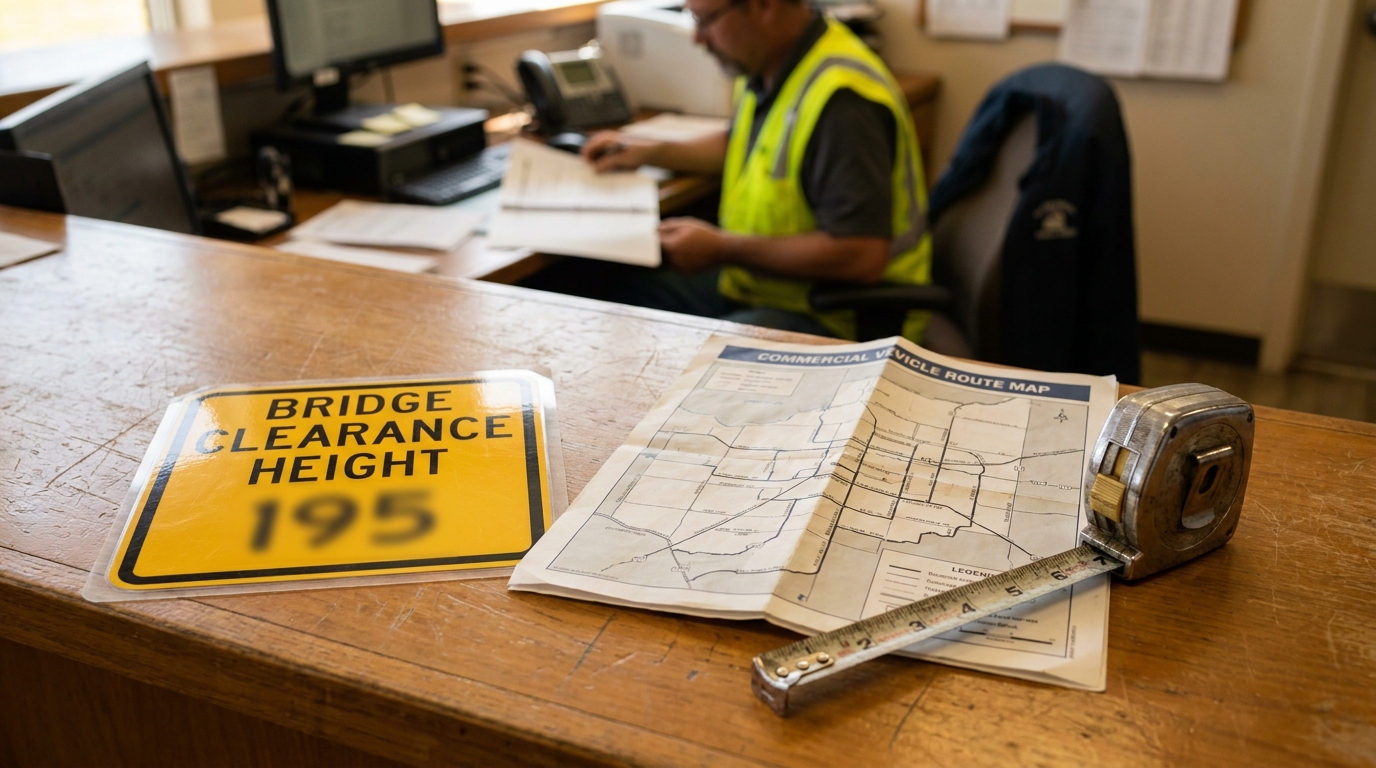
Washington sets a maximum legal vehicle height of 14 feet, and exceeding it is unlawful. RCW 46.44.020 states that it is unlawful for any vehicle, with or without a load, to exceed a height of 14 feet. The statute makes clear that meeting legal limits does not relieve an operator from exercising due care in determining that sufficient vertical clearance is provided.
Permitted moves above 14 feet carry their own clearance duties. Under WAC 468-38-070, moves involving height must account for the ability to clear overhead obstructions such as bridges, underpasses, and signs. That regulation places the burden on the permit applicant to check or prerun the route and arrange safe maneuvers or detours, because permit issuance does not guarantee a clear route. You can review the state’s route clearance requirements for overheight loads for the precise language.
Violating a posted height restriction is powerful evidence. Under RCW 5.40.050, a breach of a duty imposed by statute, ordinance, or administrative rule is not negligence per se in most situations, but the trier of fact may consider it as evidence of negligence. If a driver ignored an overheight warning sign before a bridge strike, that violation can strongly support a claim. Washington law under RCW 47.48.010 also authorizes state, county, and city authorities to restrict road and bridge use based on height, which gives posted restrictions legal force.
💡 Pro Tip: Photograph all warning signs, clearance postings, and the bridge itself as soon as it is safe. Documenting what the driver should have seen helps connect the violation to the injury.
For a deeper explanation of how these collisions happen and the engineering and signage issues involved, our overview of what causes bridge strikes provides helpful background.
When the State May Share or Avoid Liability
Government entities are sometimes liable for bridge strikes, but Washington law also shields them in defined circumstances. Under RCW 46.44.020, no liability attaches to the state, county, city, or town for damage caused by a structure over a highway where vertical clearance is 14 feet or more, or where proper impaired-clearance signs are posted on lower structures.
Where immunity does not apply, the state can still be sued. Under RCW 4.92.090, Washington waives sovereign immunity and may be held liable for damages arising from its tortious conduct to the same extent as a private person or corporation. If the Department of Transportation failed to maintain adequate signs or properly maintain bridge infrastructure on a state highway, it may be named as a party, subject to strict administrative claim procedures under RCW 4.92.100 and 4.92.110.
| Potentially Liable Party | Common Theory of Liability |
|---|---|
| Truck driver | Failure to exercise due care on clearance |
| Trucking company | Negligent hiring, supervision, route planning |
| Owner or lessee | Statutory responsibility for violations |
| Loading company | Creating an unlawful overheight load |
| State agency | Inadequate signage or maintenance, subject to immunity limits |
Comparative Fault and Your Right to Recover Compensation
Washington follows a pure comparative fault system, which protects injured claimants even when they share some blame. Under RCW 4.22.005, any contributory fault chargeable to a claimant reduces their compensatory damages proportionally but does not bar recovery entirely. You can review the framework for pure comparative fault rules to see how proportional reduction works.
This system allows fault to be allocated across several parties. In a semi-truck bridge collision liability case in Washington, responsibility might be divided among the driver, the trucking company, and a loading contractor. Because outcomes depend heavily on specific facts, pursuing every responsible party generally increases when an attorney investigates the full chain of conduct that led to the crash.
💡 Pro Tip: Avoid giving a recorded statement to an insurer before speaking with counsel. Comparative fault arguments often rely on early statements taken out of context.
If you are searching for a dedicated semi-truck injury lawyer in Richland, working with a local team familiar with these statutes can help preserve evidence and protect your right to full compensation.
Frequently Asked Questions
1. Can I sue more than one party after a Richland bridge strike?
Yes, in many cases multiple parties may be liable. Because Washington defines fault broadly under RCW 4.22.015, a claim may include the driver, the trucking company, the vehicle owner, and a loading company.
2. Does exceeding the 14-foot height limit automatically prove negligence?
Not automatically. Under RCW 5.40.050, a statutory violation is generally not negligence per se, but a jury may consider it as evidence of negligence, which can significantly support a claim.
3. What if I was partly at fault for my injuries?
You may still recover compensation. Washington’s pure comparative fault rule under RCW 4.22.005 reduces damages by your share of fault but does not bar recovery.
4. Can the State of Washington be held liable?
Sometimes, but immunity rules apply. RCW 46.44.020 shields agencies where clearance is 14 feet or more or proper signs are posted, while RCW 4.92.090 allows suits for tortious conduct outside those protections.
5. How quickly should I act after a bridge strike injury?
You should act promptly. A three-year statute of limitations generally applies to personal injury claims, and separate government claim filing requirements and waiting periods can apply, so timely legal guidance is important.
Moving Forward After an Overheight Truck Collision
Liability for a bridge strike in Richland depends on careful application of Washington’s negligence principles, height regulations, and comparative fault rules. Responsibility may extend across the driver, the trucking company, the vehicle owner, a loading contractor, or in limited circumstances a government agency. Because these cases are fact-dependent and supporting evidence can disappear quickly, understanding your rights early can make a meaningful difference in protecting your claim.
If you were injured in a truck bridge strike, the team at Telaré Law is here to listen and explain your options. Call 509-736-3160 today or send us a message through our confidential contact form to take the next step toward recovery.