The Narrow Window That Can Decide a Richland Truck Crash Case
Key Takeaways: Federal regulation 49 C.F.R. § 382.303 requires motor carriers to test truck drivers for alcohol as soon as practicable after a qualifying crash. If testing isn’t administered within two hours, carriers must document why; attempts must stop at eight hours for alcohol (32 hours for controlled substances). This narrow window exists because alcohol metabolizes quickly, so delayed testing can understate impairment at impact. Washington reinforces the federal duty through RCW 46.32.110 and RCW 81.04.530, with penalties for noncompliance, while RCW 46.25.120 allows officers to pursue testing that can lead to CDL disqualification under RCW 46.25.090. Injured people generally have three years under RCW 4.16.080 to file suit, creating a stark mismatch between hours and years. Carrier documentation of testing failures may become discoverable evidence, and prompt spoliation letters can preserve logs, ECM data, and hospital toxicology.
When a semi-truck collides with a passenger vehicle in Richland, federal regulations give motor carriers a very short period to test the driver for alcohol. Under 49 C.F.R. § 382.303, alcohol testing after a qualifying crash should occur as soon as practicable, with the carrier’s obligation ending at eight hours. The most persuasive impairment evidence in your case may be created, or permanently lost, before you leave the emergency room.
If you or a loved one was hurt in a collision with a commercial tractor-trailer, Telaré Law can move quickly to demand preservation of testing records, driver logs, and carrier files. Call 509-736-3160 or contact us now to discuss what happened and what evidence may still be recoverable.
What 49 CFR 382.303 Post-Accident Testing Actually Requires
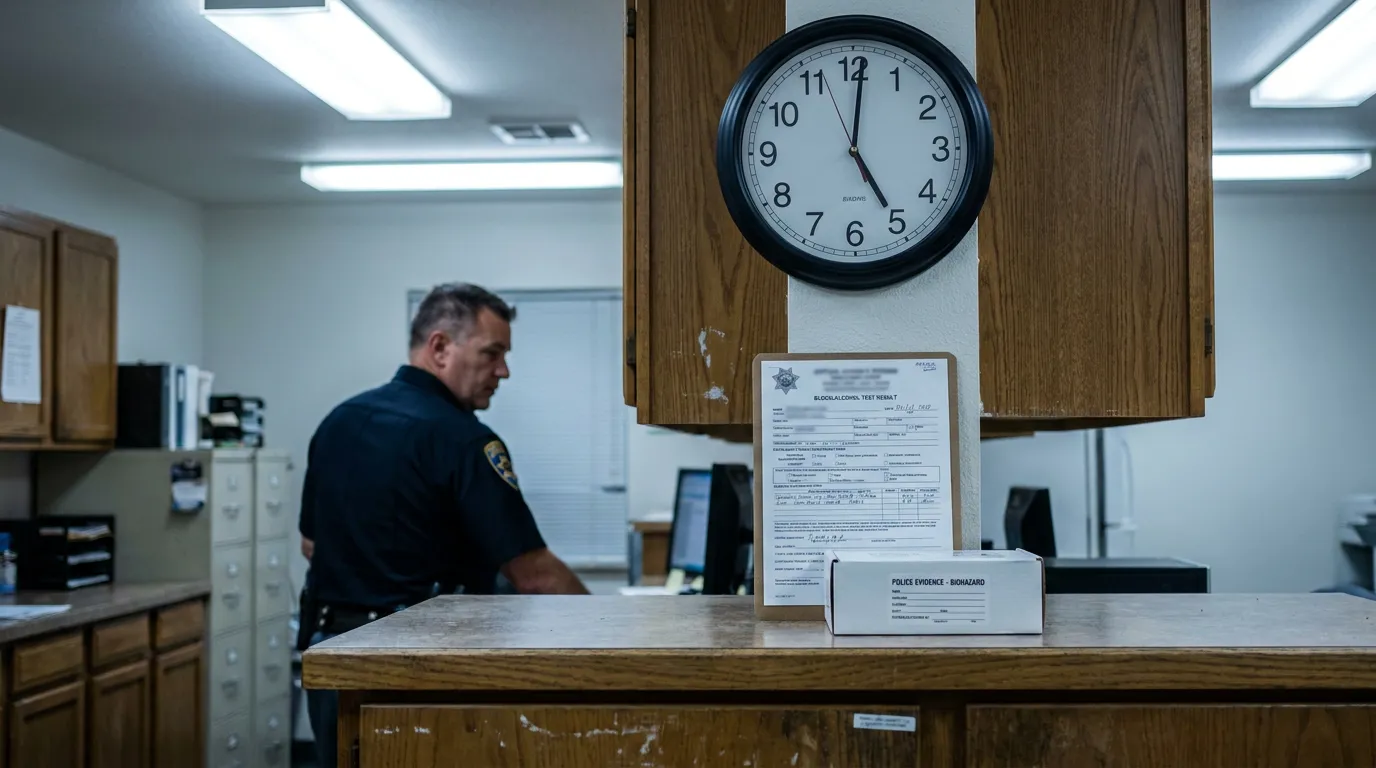
Federal law places the testing duty on the motor carrier, not the injured person. Under 49 C.F.R. § 382.303, carriers must test drivers for alcohol as soon as practicable following a qualifying crash. If testing hasn’t occurred within two hours, carriers must document why, and if not administered within eight hours, they must cease attempts and document the reason. Drivers must remain available for testing; leaving without testing may be treated as refusal. Controlled substance testing allows up to 32 hours, which is why alcohol evidence often disappears first.
Not every crash triggers testing. The rule applies when collisions involve a fatality, or when the driver receives a citation for a moving violation arising from the crash and the crash results in bodily injury requiring immediate medical treatment away from the scene or disabling damage requiring a tow. Testing isn’t required where driver performance can be completely discounted as a contributing factor in limited situations. Whether a particular Richland collision meets these thresholds is fact-dependent.
Why Time Destroys Alcohol Evidence
Alcohol metabolizes, making crash evidence timing a scientific problem, not just paperwork. Blood alcohol concentration generally falls after absorption is complete, so a test taken six hours late may show results well below what existed at impact. Retrograde extrapolation testimony can help estimate concentration at crash time, but this analysis depends on assumptions that opposing parties frequently challenge, and courts do not uniformly admit it.
Documentation gaps may create their own evidence. When carriers fail to test within the deadline, they must record the reason, and that record may become discoverable. Explanations range from legitimate hospital delays to unexplained silence, and courts may view these situations very differently.
How Washington Law Reinforces the Federal Deadline
Washington writes Part 382 into state law. Under RCW 46.32.110, motor carriers must comply with federal regulations in 49 C.F.R. Part 382 governing controlled substances and alcohol use and testing. This statute, located within Washington’s motor vehicle code (Chapter 46.32 RCW), is the primary provision incorporating the federal testing mandate, and RCW 81.04.530 under the Utilities and Transportation Commission title may impose additional or parallel penalty provisions.
Those statutes carry financial consequences. RCW 81.04.530 authorizes penalties up to $1,500, plus up to $500 per noncompliant driver, and an additional $1,500 where a carrier allows a driver who tested positive to continue safety-sensitive functions. These provisions are enforced by state agencies and do not create a private right of action, but such proof may inform how a jury views carrier safety practices.
Implied Consent and Officer-Directed Testing
Law enforcement has separate authority to capture impairment evidence quickly. Under RCW 46.25.120(1) and (4), drivers of commercial vehicles in Washington are deemed to have given consent to breath testing, and officers with reasonable grounds may obtain blood tests pursuant to a search warrant, valid waiver, exigent circumstances, or other legal authority. This police-side testing is legally distinct from DOT testing and follows its own procedures.
Results at or above regulatory thresholds may trigger administrative action. RCW 46.25.120(5) and (6) provide that if a test discloses alcohol concentration of 0.04 or more or any measurable THC concentration, the department shall disqualify the driver under RCW 46.25.090. Disqualification generally runs not less than one year for a first violation, and not less than three years if transporting placarded hazardous material. This administrative process is separate from civil lawsuits and does not compensate injured people.
The Three-Year Gap Between the Crash and the Courtroom
Washington gives most injury victims three years, while carriers have eight hours. Under RCW 4.16.080(2), actions for injury to person or property must generally be commenced within three years of accrual. This covers bodily injury, property damage, and wrongful death claims, though accrual rules can differ.
Chapter 4.16 RCW contains narrow tolling and discovery exceptions. Provisions addressing minority under RCW 4.16.190, defendant absence under RCW 4.16.180, and fraud discovery under RCW 4.16.080(4) may alter deadlines in limited circumstances. These exceptions have no effect on the eight-hour federal testing obligation, and claims against governmental entities involve separate administrative requirements under Chapter 4.92 or 4.96 RCW.
| Clock | Length | Who It Binds |
|---|---|---|
| Post-crash alcohol testing | Documentation required after 2 hours; attempts cease at 8 hours | Motor carrier |
| Post-crash controlled substance testing | Generally up to 32 hours | Motor carrier |
| CDL disqualification, first offense | Not less than 1 year | Driver |
| Civil injury and property damage suit | 3 years, subject to exceptions | Injured claimant |
💡 Pro Tip: Ask someone you trust to photograph the scene, note the tow company, and write down whether the driver received a citation. Those three details often help determine whether the testing obligation was triggered at all.
Steps That Protect Impairment Evidence After a Collision
Preservation often begins with a written demand, not a phone call. A prompt spoliation letter can put carriers on notice that testing records, dispatch logs, electronic control module data, and personnel files must be retained. Without that notice, routine retention policies may lawfully overwrite critical data.
Practical steps that frequently matter include:
- Requesting the collision report and any officer report referencing test results
- Identifying the tow operator and preserving the tractor and trailer before repairs
- Documenting whether a DOT test occurred, was refused, or was never attempted
- Securing hospital blood draw records, which sometimes exist even when no DOT test was performed
- Preserving surveillance or dashcam footage from nearby businesses
Impairment is not limited to alcohol. Prescription opioids, synthetic drugs, and fatigue can all contribute to driver impairment. A proposal that could expose impaired truck drivers through expanded fentanyl testing illustrates how required testing panels may change, though proposals don’t take effect unless adopted.
Comparative Fault and Why Test Results Shape Recovery
Washington follows pure comparative fault. Under RCW 4.22.005, a claimant’s contributory fault doesn’t bar recovery but proportionately reduces damages. RCW 4.22.070(1) requires the trier of fact to determine the percentage of fault attributable to every entity that caused damages, with percentages totaling one hundred percent. Evidence of a positive alcohol test may meaningfully shift allocation toward the driver and, through vicarious liability or negligent hiring theories, potentially toward the carrier.
The absence of a test can cut both ways. Carriers often argue that no test means no impairment, while injured claimants may argue that failure to test deprived everyone of the truth. Whether any adverse inference or spoliation remedy is available depends on the court’s assessment of culpability and prejudice. A 49 cfr 382.303 post-accident testing lawyer can evaluate which theory the record may support.
💡 Pro Tip: If you were transported by ambulance, request your own hospital records early. Toxicology performed for treatment purposes is sometimes the only chemical evidence that survives.
Frequently Asked Questions
1. Does the eight-hour rule mean my case is over if no test was done?
Not necessarily. A missing test makes proving impairment harder, but liability may rest on hours-of-service violations, maintenance failures, distraction, or unsafe speed. Outcomes depend on the full evidentiary record.
2. Can I demand that the trucking company test the driver?
No. The obligation under 49 C.F.R. § 382.303 falls on the motor carrier, though law enforcement may independently pursue testing under RCW 46.25.120.
3. Is the CDL disqualification the same as my injury claim?
No. Disqualification under RCW 46.25.090 is an administrative consequence imposed on the driver’s commercial privilege. It’s separate from civil lawsuits and doesn’t provide compensation to crash victims.
4. How long do I have to file a Washington truck crash lawsuit?
RCW 4.16.080 generally provides three years for personal injury and property damage claims, subject to accrual rules and narrow exceptions. Claims involving public entities carry additional procedural requirements.
5. What if the driver refused testing?
Refusal may include disqualification of not less than one year under RCW 46.25.090, and DOT refusal is generally treated like a positive test under federal rules. Whether refusal is admissible in civil cases depends on applicable evidence rules and facts presented.
Acting Quickly Preserves What the Law Cannot Recreate
The eight-hour alcohol test window exists because impairment evidence disappears on its own schedule. Washington reinforces that federal duty through RCW 46.32.110 and RCW 81.04.530, backs it with disqualification consequences under RCW 46.25.090, and generally gives injured people three years under RCW 4.16.080 to bring suit. This mismatch between hours and years is why early investigation matters.
If a commercial truck collision has upended your family, the team at Telaré Law is ready to listen and begin protecting the record. Reach us at 509-736-3160 or schedule a free consultation to learn what steps may still be available in your situation.
Disclaimer: This content is for informational purposes only and is not legal advice. Every case is unique, and results may vary. Consult an attorney about your specific circumstances.