The Paper Trail Inside Every Semi-Truck on I-182
Key Takeaways: A DVIR (driver vehicle inspection report) is a federally required record under 49 CFR 396.11 documenting truck and trailer defects at day’s end, with carriers certifying repairs before dispatch. In Richland semi-truck cases, it reveals what carriers knew about mechanical problems before crashes. Since 2014, property-carrying drivers need not submit reports when no defects exist, and a 2020 rule extended the same exemption to passenger-carrying vehicles, but spotless paperwork followed by sudden failures may indicate careless inspections. Washington imposes civil penalties for moving out-of-service vehicles, permits direct action against carriers and insurers, and uses proportionate fault rules. While injury lawsuits have a three-year deadline, urgent federal retention periods for inspection records demand immediate preservation efforts.
A DVIR is a federally required record where commercial drivers document truck and trailer defects affecting safe operation. Under 49 CFR 396.11, drivers must prepare written reports when defects are discovered, covering brakes, steering, tires, lighting, coupling devices, and emergency equipment. Carriers must certify that safety-related defects were repaired, or that repair was unnecessary, before the vehicle returns to service. In a Richland semi-truck injury case, this document can reveal whether a carrier knew about mechanical problems yet dispatched the truck anyway.
If you or a loved one were hurt in a tractor-trailer collision in Benton County, the maintenance file may already be at risk. Telaré Law helps injured people in the Tri-Cities preserve inspection records quickly. Call 509-736-3160 or request a free consultation now.
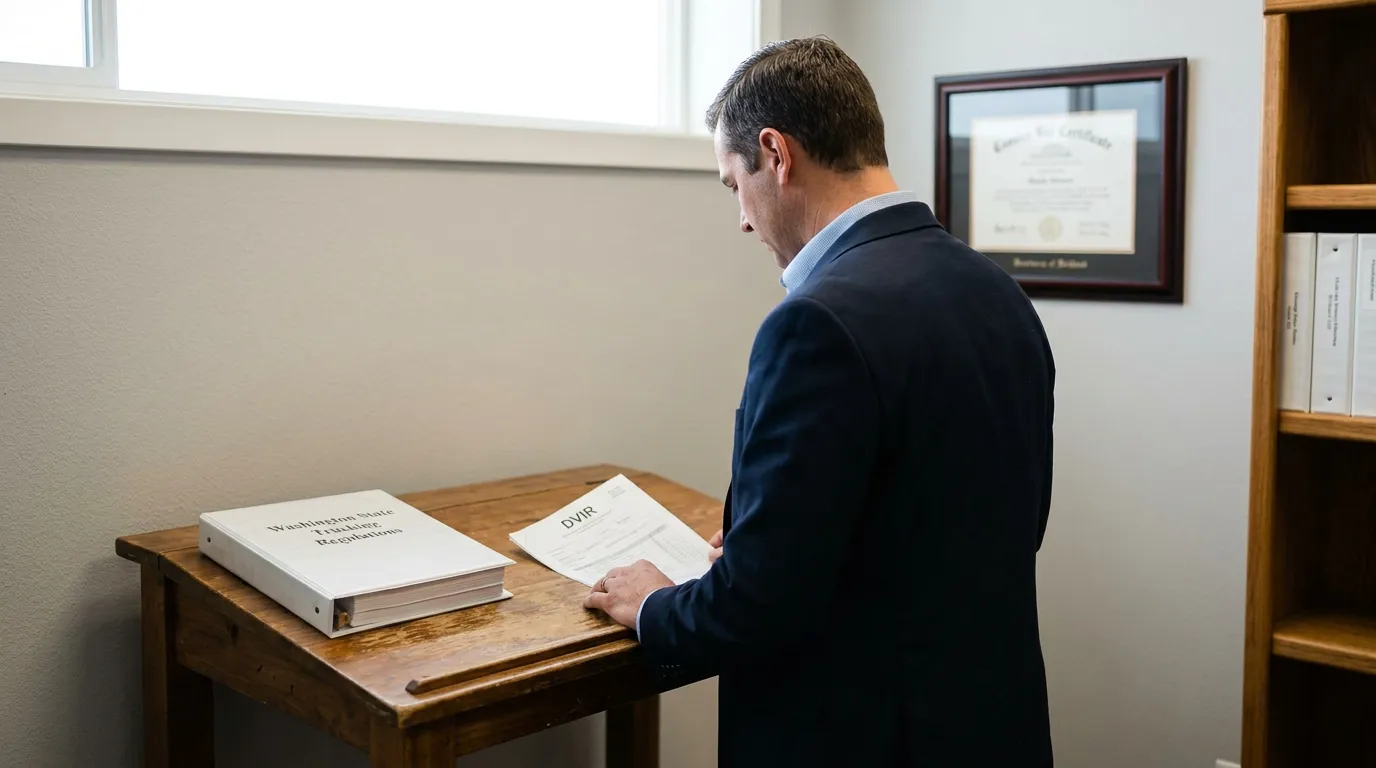
What the 49 CFR 396.11 DVIR Actually Requires
The regulation creates a daily, driver-generated safety record. At each day’s end, drivers must report defects discovered during operation. Neither property-carrying nor passenger-carrying CMV drivers are required to submit a report when no defects exist, though many carriers collect “no defect” reports as policy. When defects are reported, carriers must certify repairs before re-dispatching.
Two features make this rule valuable as negligence evidence. First, reports are created contemporaneously by the person closest to the equipment, limiting after-the-fact revision. Second, certification requirements pull management into the chain of responsibility, a carrier signing off on unrepaired defects creates its own documentary admission.
Pre-Trip and Post-Trip Inspections Are Not the Same Thing
Pre-trip inspections verify launch safety; post-trip reports document what went wrong during operation. Under 49 CFR 392.7, drivers must satisfy themselves that specific parts and accessories are in good working order before operating a commercial motor vehicle. Separately, under 49 CFR 396.13, drivers must review the last DVIR and confirm that any required repairs were made before operating the vehicle. Post-trip documents often prove more revealing in litigation, capturing problems that emerged under load, heat, or grades between Richland and the Blue Mountains.
Why “No Defects” Reports Still Matter
Clean DVIRs aren’t automatically good news for defense. When carriers’ records show weeks of spotless reports followed by catastrophic brake or tire failures, paperwork may suggest careless inspections, bulk signing, or no inspections at all. Analysis depends on the carrier’s stated policies alongside repair invoices, electronic control module data, and roadside inspection history.
The Records That Travel With the DVIR
Inspection reports rarely tell the whole story. Thorough investigations pursue:
- Annual and periodic inspection reports
- Repair orders, parts invoices, and vendor work tickets
- Driver qualification files and complaint reports
- Roadside inspection and out-of-service history
- Telematics, ECM downloads, and dashcam footage
💡 Pro Tip: Photograph the tractor number, trailer number, and USDOT number at the scene if safe. These identifiers help counsel target the correct maintenance file.
How Washington Law Punishes Ignored Out-of-Service Defects
Washington layers civil penalties on the federal inspection scheme. Under RCW 46.32.100, Washington State imposes varying civil penalties for out-of-service violations: a motor carrier operating after being placed out of service faces a penalty of up to $11,000 per violation, reflecting a state-recognized safety duty beyond federal paperwork obligations.
Employer penalties escalate sharply. RCW 46.32.100 imposes penalties of at least $2,750 but not more than $25,000 on employers who knowingly allow or require operation under out-of-service orders. Missing or withheld inspection documentation isn’t neutral in Washington truck injury claims. Whether violations support negligence theories remains fact-dependent and subject to admissibility rulings.
Washington also disqualifies commercial drivers. RCW 46.25.090(1)(g) disqualifies drivers for at least one year when causing fatalities through negligent CMV operation, including vehicular homicide. These proceedings are separate from civil lawsuits, and outcomes don’t automatically control each other.
Suing the Carrier and Its Insurer Directly
Washington recognizes direct action against permitted carriers and their sureties. Under RCW 46.72.060, persons injured by careless, negligent, or unlawful acts of permitted carriers or their agents have causes of action against principals and sureties or insurers, with full amounts recoverable against principals. DVIRs documenting ignored defects may establish the “careless or negligent” conduct element.
This widens available coverage. Catastrophic injuries often exceed single policies. An experienced Richland truck accident lawyer can identify which carriers, brokers, or maintenance vendors belong in the case.
Fault Allocation When Several Companies Share the Blame
Washington uses proportionate fault. Under RCW 4.22.070(1), triers of fact determine each entity’s percentage of total fault causing claimant damages, totaling one hundred percent. Missing or falsified reports may implicate drivers, carriers, and repair shops, each receiving its own share.
Evaluated entities exceed named defendants. Fault is assessed for claimants, defendants, third-party defendants, released entities, and entities with other defenses, but not workers’ compensation immune employers under Title 51 RCW. Vicarious liability applies separately, preserving agency-principle responsibility.
| Scenario | General Effect Under RCW 4.22.070 |
|---|---|
| Fault-free injured motorist | Defendants jointly and severally liable for proportionate shares |
| Injured motorist assigned fault | Liability generally several, proportional to percentage |
| Co-defendants seek reallocation | Contribution rights per RCW 4.22.040-.060 |
Joint and several liability proves decisive in trucking cases. RCW 4.22.070(1)(b) provides that when injured parties are fault-free, defendants against whom judgment enters are jointly and severally liable for their combined proportionate shares. Where small maintenance contractors are underinsured, this rule may preserve fuller recovery paths.
Deadlines That Quietly Decide Whether Records Survive
Washington generally allows three years to file personal injury lawsuits. RCW 4.16.080 covers injury actions not otherwise enumerated. Different periods apply to wrongful death and government claims, so operative deadlines should be confirmed.
The records clock is far more urgent. Federal rules require DVIR retention for only about three months, with maintenance files kept roughly one year while vehicles remain in service. Preservation letters demanding inspection reports, ECM data, and files are typically sent within days. Attorneys monitoring federal developments, including the FMCSA truck maintenance records notice, move fastest on these demands.
Tolling Exists, but Courts Read It Narrowly
Chapter 4.16 RCW contains limited tolling provisions. RCW 4.16.190 addresses tolling for minors or those under legal disability when causes accrued, subject to statutory extension limits. Washington courts interpret exceptions narrowly. Tolling doesn’t apply automatically, and separate government claim-filing requirements may apply.
💡 Pro Tip: Send nothing to the trucking company’s adjuster before preserving the maintenance file. Early recorded statements often lock in details before DVIR history is known.
Frequently Asked Questions
1. Who can request trucking company DVIRs after crashes?
Injured parties obtain documents through pre-suit preservation demands and formal discovery once cases are filed. Carriers generally aren’t obligated to hand them over on individual request, making early legal involvement critical.
2. What happens if DVIRs were destroyed or never created?
Absence can become a case issue, though neither property-carrying nor passenger-carrying CMV drivers are required to file a report when no defects exist. Courts may consider evidence of improper destruction, but spoliation remedies depend on preservation demand timing, preservation duties, and judicial discretion.
3. Does federal regulatory violation automatically prove negligence in Washington?
Generally no. Violations of 49 CFR 396.11 or state penalty provisions may evidence standard-of-care issues, but claimants must still prove duty, breach, causation, and damages under Washington law.
4. Can I recover if partly at fault for the collision?
Often yes. Washington’s comparative fault system under RCW 4.22.005 generally reduces recovery by claimant percentages rather than barring claims outright, subject to RCW 4.22.070 allocation rules.
5. How soon should maintenance files be requested after Richland collisions?
As soon as possible. Retention periods for inspection documents are short, and waiting can leave nothing to preserve despite unexpired three-year filing deadlines.
Putting the Inspection Record to Work for Your Family
A driver vehicle inspection report is a small document with potentially outsized influence. It may show what carriers knew, when they knew it, and whether anyone acted before commercial vehicle defects turned into catastrophic collisions on Highway 240 or I-182. Washington’s penalty statutes, direct-action provisions, and fault allocation rules give that paperwork real legal weight, but evidence must be secured before retention periods quietly erase it.
If a semi-truck has upended your family’s life, the team at Telaré Law is ready to review your case, pursue maintenance records, and seek compensation for medical care, future needs, and lost earning capacity. Call 509-736-3160 or schedule your free case review today.
Disclaimer: This content is for informational purposes only and is not legal advice. Every case is unique, and results may vary. Consult an attorney about your specific circumstances.