When a Trailer’s Missing Underride Bar Becomes Evidence in Your Injury Case
Key Takeaways: A missing rear impact guard may support a Richland semi-truck claim when the equipment failure is tied to the injuries through proof of causation. Federal rule 49 C.F.R. § 393.86 requires rear impact guards on most trailers with a gross vehicle weight rating of 10,000 pounds or more manufactured on or after January 26, 1998, and sets measurable height and width standards. Trailers manufactured before that date remain subject to a separate, less demanding provision. Certain trailers, including pole, pulpwood, low chassis, special purpose, wheels-back, and road construction controlled horizontal discharge vehicles, are exempt, so verifying the trailer’s configuration, manufacture date, and GVWR comes first. Washington enforces these federal standards through RCW 46.32.085 and RCW 46.37.005, while RCW 4.22.015 treats negligent omissions as fault subject to causal proof. Under Washington’s pure comparative fault rule, partial blame reduces but does not bar recovery, and most personal injury claims must be filed within three years under RCW 4.16.080(2). Because guards are often repaired or replaced quickly, early photographs, measurements, and preservation demands can be significant.
A missing rear impact guard may support a Richland semi-truck claim. Federal safety rules require most large trailers to carry a rear guard designed to reduce underride risk during rear-end collisions. When that guard is absent, damaged, or improperly mounted, the equipment failure may become significant evidence of truck accident negligence, subject to proof that the defect causally contributed to the injuries.
If you or a loved one were hurt in an underride collision in the Tri-Cities, the team at Telaré Law is ready to investigate the trailer, maintenance file, and carrier’s inspection records before evidence disappears. Call 509-736-3160 or contact us now to discuss what happened.
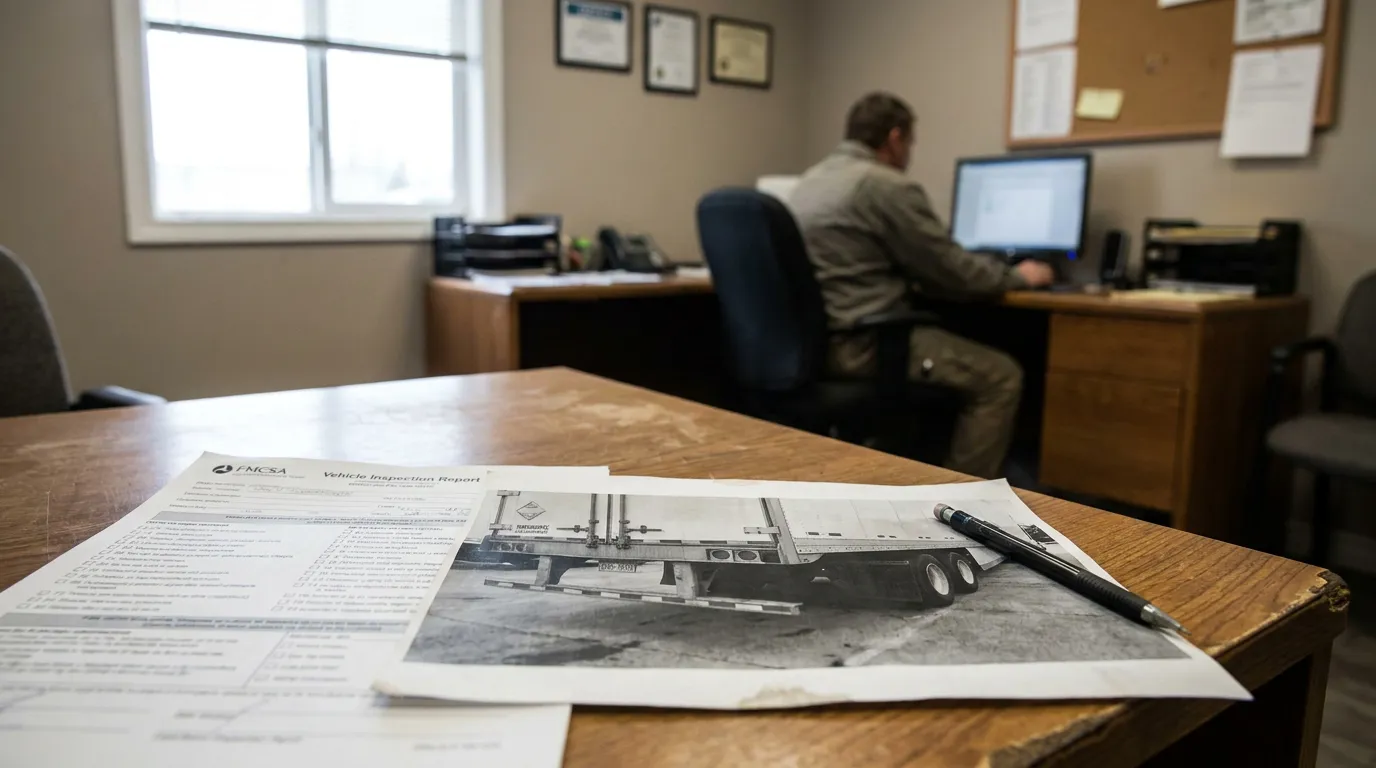
What the Federal Rear Guard Rule Actually Requires
The controlling federal regulation is 49 C.F.R. § 393.86, which mandates rear-end protection on most heavy trailers. Under 49 C.F.R. § 393.86(a)(1), each trailer and semitrailer with a gross vehicle weight rating of 10,000 pounds or more, manufactured on or after January 26, 1998, must be equipped with a rear impact guard meeting the federal motor vehicle safety standard. Trailers manufactured before that date are addressed separately under § 393.86(b), which imposes a less detailed rear-end protection requirement.
The rule sets concrete dimensions that help prove noncompliance. Under 49 C.F.R. § 393.86(a)(2)-(a)(3), the guard’s bottom must not exceed 22 inches from the ground, and the horizontal member must extend to within 4 inches of the vehicle’s side extremities. These measurements allow investigators to document whether a guard was missing, mounted too high, or too narrow to protect the corners where many underride impacts occur.
Why the Numbers Matter After a Crash
Early measurements can determine whether a trailer equipment violation is provable. Guards bend, tear away, or get replaced during post-crash repairs, and a carrier’s duty to preserve evidence generally depends on whether litigation is reasonably foreseeable. A prompt written spoliation letter, photographs of the rear frame, and a preserved copy of the post-crash inspection report may make the difference between speculation and documented FMCSA violation evidence.
Exemptions That Can Defeat a Rear Guard Absence Theory
Not every trailer without a rear guard is out of compliance. Under 49 C.F.R. § 393.86(a), the following categories are generally excluded:
- Pole trailers and pulpwood trailers
- Low chassis vehicles and special purpose vehicles
- Wheels-back vehicles
- Road construction controlled horizontal discharge trailers
- Trailers transported in driveaway-towaway operations
Even when an exemption applies, the claim may survive. General negligence principles, loading practices, lighting and conspicuity requirements, speed, and lane positioning may still support liability depending on the facts. A careful review of the trailer’s configuration, manufacture date, and GVWR is usually the first step in evaluating underride liability.
How Washington Law Makes a Federal Standard Enforceable in Richland
Washington bridges the federal rule into state enforcement through its commercial motor carrier safety statute. Under RCW 46.32.085(1), the State Patrol shall adopt rules at least as rigorous as the federal motor carrier safety regulations at 49 C.F.R. Parts 40 and 380 through 397, including vehicle equipment and safety standards, vehicle inspection and corrective actions, and assessed penalties. That statutory adoption may allow a Washington claimant to frame a missing rear impact guard as both a federal and a state violation, though the statute itself does not create a private right of action.
A second statute reinforces the point. RCW 46.37.005 authorizes the chief of the State Patrol to adopt federal standards relating to motor vehicles issued under the National Traffic and Motor Vehicle Safety Act of 1966. Read together, these provisions may support an argument that federally mandated safety hardware reflects the recognized standard of care for tractor-trailers on Richland roads.
Operating an Unsafe Vehicle Under Washington Law
Washington separately addresses returning a damaged commercial vehicle to the highway while unsafe. Under RCW 46.32.070, when a vehicle required to be inspected becomes damaged or deteriorated so that it is unsafe for operation on Washington public highways, it is unlawful for the owner or operator to cause the vehicle to be operated upon a public highway upon its return to service unless the owner or operator presents the vehicle for inspection of equipment within twenty-four hours after its return to service. A trailer that lost its rear guard in a prior incident and went back on the road without timely inspection may fit this theory.
Building a Negligence Case Around a Missing Rear Impact Guard
Washington’s fault definition is broad enough to capture equipment omissions. RCW 4.22.015 defines “fault” to include acts or omissions that are in any measure negligent or reckless toward the person or property of the actor or others, or that subject a person to strict tort liability or liability on a product liability claim. Under RCW 4.22.015, the legal requirements of causal relation apply to both fault and contributory fault. A carrier’s failure to equip or maintain required rear-end protection may be treated as an omission, but the claim still requires proving that the absent guard causally contributed to the underride injuries.
Context helps juries understand how heavily regulated trailer equipment is. Washington already imposes rear-facing equipment mandates: under RCW 46.37.070(1), after January 1, 1964, every motor vehicle, trailer, semitrailer, and pole trailer shall be equipped with two or more stop lamps meeting the requirements of RCW 46.37.200, except that passenger cars manufactured or assembled prior to January 1, 1964, shall be equipped with at least one such stop lamp. Against that backdrop, an absent underride bar may read as a notable lapse rather than a technicality. Learning how underride crashes happen often helps families understand why these injuries are so severe.
💡 Pro Tip: Ask your attorney to request the trailer’s annual inspection reports, driver vehicle inspection reports (DVIRs), and repair invoices for the 12 months before the crash. Patterns of deferred maintenance frequently matter more than a single inspection.
| Proof Point | Typical Source |
|---|---|
| Guard present or absent | Scene photos, tow yard inspection, police report |
| Guard height and width | Physical measurement against 22-inch and 4-inch standards |
| Maintenance history | DVIRs, annual inspections, repair invoices |
| Exemption status | Trailer VIN, manufacture date, GVWR plate |
| Carrier compliance record | Roadside inspection and violation history |
Comparative Fault and Compensation in a Semi-Truck Crash Claim
Washington follows pure comparative fault, so partial blame does not necessarily end a case. RCW 4.22.005 provides that contributory fault diminishes proportionately the amount awarded as compensatory damages but does not bar recovery. If a defense argues the motorist was speeding or following too closely, a documented rear guard absence may still support meaningful underride injury compensation, reduced by the claimant’s assigned percentage.
Insurance availability shapes the practical value of a claim. Washington’s minimum liability limits for private passenger vehicles are $25,000 per person, $50,000 per accident, and $10,000 for property damage under RCW 46.29.090(1). Interstate motor carriers are subject to substantially higher federal minimum financial responsibility requirements, and identifying every potentially responsible party, including the trailer owner or maintenance contractor, may expand available recovery. A 49 CFR 393.86 rear impact guard lawyer can help map those layers early.
Deadlines You Cannot Afford to Overlook
Most Richland semi-truck injury claims are governed by a three-year limitations period. Under Washington’s three-year filing deadline at RCW 4.16.080(2), actions for injury to the person or rights of another must be commenced within three years. If the trailer or guard was defective, a product liability theory is governed by RCW 7.72.060(3), which applies a three-year period running from discovery of the harm and its cause.
Exceptions such as tolling or delayed discovery are generally interpreted narrowly and should not be assumed to apply automatically. Claims involving a government entity may carry separate administrative claim-filing prerequisites. Because a misread deadline can bar a claim entirely, prompt consultation is generally the safest course.
Frequently Asked Questions
1. Does a missing guard automatically mean the trucking company is liable?
Not necessarily. A regulatory violation may support a negligence theory, but Washington law requires proof of causation under RCW 4.22.015. Courts and juries evaluate whether the absent guard actually contributed to the injuries.
2. What if the trailer was built before 1998?
The detailed mandate in 49 C.F.R. § 393.86(a)(1) applies to trailers manufactured on or after January 26, 1998. Older trailers fall under the separate provision in § 393.86(b), so the manufacture date should be verified from the VIN plate.
3. How do I prove the guard was noncompliant rather than just damaged?
Measurements against the 22-inch height and 4-inch side extremity standards, combined with maintenance records and pre-crash inspection reports, may help distinguish a preexisting defect from crash damage. Preserving the trailer is often critical.
4. Can I recover if I was partly at fault?
Potentially yes. Under RCW 4.22.005, contributory fault generally reduces recovery proportionately rather than barring it. The final apportionment depends on the evidence presented.
5. What should my family do in the first week?
Seek medical care, request the collision report, photograph the vehicles if possible, and send a preservation demand to the carrier. Early legal guidance is advisable.
Turning an Equipment Failure Into Accountability
A missing rear impact guard may be more than a maintenance oversight. Federal regulation sets measurable standards, Washington statutes adopt those standards for carriers operating here, and state fault principles may allow an omission to serve as the basis for liability when causation is established. Success depends on preserved evidence, verified exemption status, and timely filing.
If you are weighing your options after an underride collision, the attorneys at Telaré Law can review the trailer records and explain what your case may involve. Call 509-736-3160 or schedule a consultation to get started.
Disclaimer: This content is for informational purposes only and is not legal advice. Every case is unique, and results may vary. Consult an attorney about your specific circumstances.