Understanding the Settlement Clock After Your Richland Crash
Key Takeaways: Settlement timing after a demand letter in Richland depends on monitoring the insurer’s response while watching legal deadlines that protect your claim. Washington law requires insurers to act in good faith, but there is no fixed statutory deadline forcing acceptance or rejection. Timing ranges from weeks for straightforward cases to months for disputed or catastrophic ones. Injury severity, disputed fault, and multiple insurers all slow the pace. Crucially, negotiations do not pause the statute of limitations, most auto accident injury claims must be filed within three years under RCW 4.16.080. Washington’s pure comparative fault rule can reduce but not bar recovery, and multi-party contribution rules frequently extend negotiations.
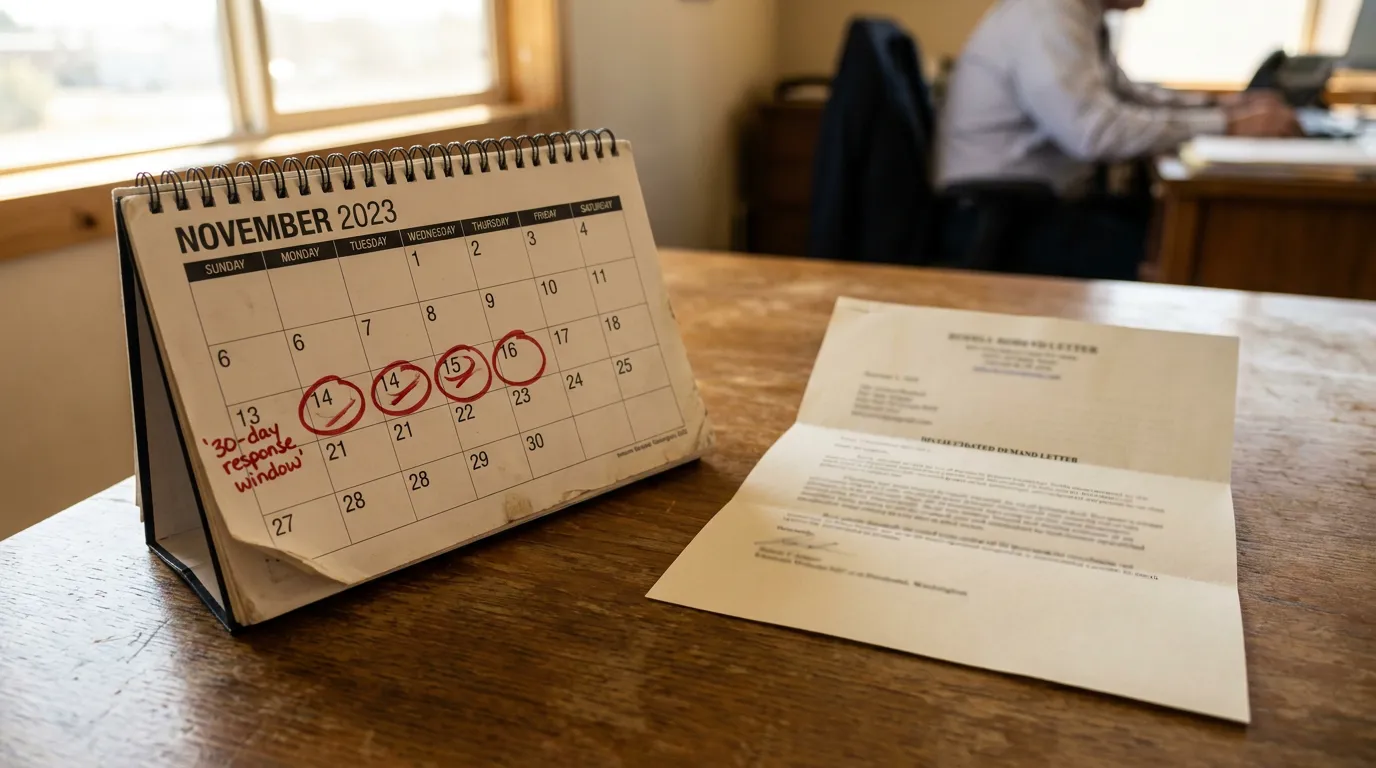
Tracking a settlement after a demand letter comes down to knowing the legal deadlines that frame your case and monitoring how the insurer responds. After you send a demand letter in a Richland auto accident case, the insurer reviews your medical records, evaluates liability, and responds with acceptance, denial, or a counteroffer. This process typically takes several weeks to months, depending on injury complexity, the number of parties involved, and whether the insurer negotiates in good faith. The most important thing to understand is that negotiations do not pause the underlying legal deadlines controlling your right to sue.
If you were injured in a collision and want help tracking your claim, the team at Telaré Law is ready to review your situation. Call us at 509-736-3160 or reach out through our online contact form to discuss your next steps.
💡 Pro Tip: Keep a dated log of every letter, email, and phone call with the adjuster. A clear paper trail helps document delay and supports a bad-faith argument if the insurer stalls.
Why Good Faith Shapes the Response Timeline
Washington treats insurance as a business affected by the public interest, which sets the tone for how quickly and honestly an insurer must respond. State law requires all parties in an insurance matter to act with good faith, abstain from deception, and practice honesty and equity, as codified in the Washington insurance good-faith statute at RCW 48.01.030. Washington courts have recognized this duty is nondelegable for insurers, and a breach can support bad-faith and Consumer Protection Act claims.
That good-faith duty does not mean an insurer must respond overnight. Washington law shows insurers operate under defined windows rather than open-ended timelines. For example, under RCW 48.102.110(2), an insurer must respond to a request for verification of coverage no later than thirty calendar days after receiving it. While this provision arises in a different context, it illustrates that multi-week response windows are common in Washington claim handling.
How Long After Demand Letter Can I Expect Settlement
There is no fixed statutory deadline forcing an insurer to accept or reject a demand by a certain date, so timing varies. When people ask how long after demand letter can I expect settlement, the realistic range spans from a few weeks for straightforward cases to many months for disputed or catastrophic claims. Several factors drive the pace, including injury severity, disputes over fault, and whether multiple insurers are involved.
Complex cases involving traumatic brain injury, spinal cord injury, or multiple vehicles generally take longer to resolve. These claims often require additional medical documentation, accident reconstruction, and expert input to establish full damages value. The following factors commonly affect how long a Washington injury claim process takes:
- The clarity of liability and available evidence
- The number of at-fault parties and separate insurance policies
- Whether your treatment has stabilized so damages can be fully calculated
- Whether the insurer disputes causation or the amount of damages
- Whether court approval of a settlement is required
💡 Pro Tip: Avoid settling before you reach maximum medical improvement. Once you accept a settlement, you generally cannot reopen the claim for injuries that worsen later.
The Deadlines That Frame Every Negotiation
The single most important concept in tracking a settlement timeline is that negotiations do not stop the statute of limitations. Washington’s controlling limitations chapter, RCW Chapter 4.16, establishes that legal actions can only be commenced within the periods provided after the cause of action has accrued. Settlement talks after a demand letter do not pause these deadlines, so a claim can quietly expire while you wait for an adjuster to respond.
For most auto accident injury claims, the deadline is three years. Under the Washington personal injury limitations statute, RCW 4.16.080 requires that actions for injury to the person or rights of another be commenced within three years. The same statute distinguishes claim types: under RCW 4.16.080(3), an action on a contract or liability not in writing also falls under the three-year period, while written contracts are governed by a six-year period under RCW 4.16.040.
Certain claims follow a discovery rule, but courts interpret these exceptions narrowly. For fraud-based claims, RCW 4.16.080(4) provides that the cause of action is not deemed to have accrued until the aggrieved party discovers the facts constituting the fraud. This can delay when a clock starts, but you should never assume a discovery rule or tolling automatically applies to your situation.
| Situation | General Timeframe |
|---|---|
| Insurer coverage verification response | Within 30 calendar days (RCW 48.102.110(2)) |
| Itemized damages statement after defense request | Within 15 days (RCW 4.28.360) |
| Advance notice before finalizing a release | 5 days’ written notice (RCW 4.22.060(1)) |
| Filing a personal injury lawsuit | Generally within 3 years (RCW 4.16.080) |
How Fault Rules Influence Settlement Value
Washington follows a pure comparative fault rule, which affects both how much your claim is worth and how willing each side is to settle. Under RCW 4.22.005, contributory fault diminishes the compensatory damages you recover proportionately, but it does not bar recovery entirely. That means even a mostly at-fault claimant may still negotiate a meaningful settlement after a demand letter, subject to narrow statutory limits.
In cases with more than one at-fault party, the law requires fault to be apportioned among all involved entities. Under RCW 4.22.070(1), the trier of fact determines the percentage of total fault attributable to every entity that caused the claimant’s damages, and those percentages must sum to one hundred percent, including the claimant, defendants, third-party defendants, and released parties.
Contribution rules can slow multi-party negotiations. Under RCW 4.22.040, a settling party may seek contribution only if the other party’s liability has been extinguished by the settlement and the amount paid was reasonable at the time. These dynamics explain why claims with several insurers often take longer to resolve. A knowledgeable Richland car accident lawyer can help you understand how apportionment affects your negotiation leverage.
💡 Pro Tip: Ask the adjuster to explain, in writing, any percentage of fault they assign to you. A vague fault allocation is often a sign the insurer is anchoring a lowball offer.
What Happens If the Case Moves to Litigation
If demand-letter negotiations stall, filing suit becomes the next step, and Washington procedure adds its own timeline. Under RCW 4.28.360, a personal injury complaint pleads a general prayer for damages rather than a specific dollar amount, but after a defendant’s request, the plaintiff must serve an itemized statement of special and general damages within fifteen days.
Settlement can also involve a court reasonableness step. Under RCW 4.22.060, when a settlement is submitted for approval, a hearing must be held on the reasonableness of the amount to be paid. In addition, RCW 4.22.060(1) requires a party who has entered into such an agreement to give five days’ written notice of the reasonableness hearing to all other parties and the court.
💡 Pro Tip: Filing a lawsuit does not end settlement talks. Many cases settle after suit is filed, and litigation deadlines often motivate insurers to make more serious offers.
Practical Steps for Monitoring Your Claim
Staying organized is the best way to keep a demand letter response in Washington on track. Confirm that the insurer received your demand, set calendar reminders for follow-ups, and document every communication. Understanding the difference between a civil statute of limitations and any separate administrative deadline is important, because these operate independently.
Knowing when to escalate protects your rights. If an insurer ignores reasonable follow-up or offers far below documented damages, that pattern may support further action. For a deeper walkthrough of these steps, our discussion of the Richland settlement timeline offers additional context on what to expect after you send a demand.
Frequently Asked Questions
1. How long after demand letter can I expect settlement in a typical Richland case?
There is no fixed statutory response deadline, but many auto accident claims resolve within weeks to several months. Complex or catastrophic cases take longer due to additional documentation and negotiation requirements.
2. Does sending a demand letter pause the statute of limitations?
No. Under RCW Chapter 4.16, negotiations do not stop the limitations clock, and most personal injury claims must be filed within three years under RCW 4.16.080. Waiting without tracking the deadline is risky.
3. Can I still recover if I was partly at fault for the crash?
Generally, yes. Under RCW 4.22.005, Washington’s comparative fault rule reduces your recovery in proportion to your fault but does not bar it, subject to narrow statutory exceptions.
4. What happens if the insurer never meaningfully responds?
If negotiations stall, filing a lawsuit may become necessary. Under RCW 4.28.360, you plead a general damages prayer and later provide an itemized statement within fifteen days if the defense requests it.
5. Why do multi-party claims take longer to settle?
When several parties share fault, RCW 4.22.070 requires apportionment among all entities, and contribution rules under RCW 4.22.040 add negotiation complexity. Coordinating multiple insurers naturally extends the timeline.
Keeping Your Richland Settlement on Track
Tracking a settlement after a demand letter means balancing the insurer’s response window against the firm legal deadlines that protect your claim. In many cases, a reasonable response takes weeks to months, comparative fault shapes the value, and the three-year limitations period under RCW 4.16.080 remains the hard boundary that negotiations cannot extend. Staying organized and understanding these rules helps you avoid costly delays and recognize when an offer falls short.
You do not have to manage this process alone. The attorneys at Telaré Law can help you monitor your claim, respond to lowball offers, and prepare your case for trial if the insurer refuses to pay fairly. Call 509-736-3160 or complete our secure contact form today to protect your right to full and fair compensation.