Understanding the 15-Working-Day Rule for Richland Crash Victims
Key Takeaways: In Washington, once you submit a fully completed proof of loss, an insurer must accept or deny your auto accident claim within 15 working days under the state’s Unfair Claims Settlement Practices rule. The clock starts when your proof of loss is complete, not on the day of the crash, and written proof is generally due within 90 days of the loss. Acceptance of a claim differs from a finalized settlement, so timing after a demand letter depends on negotiations. Washington’s pure comparative fault system reduces but does not bar your compensation based on your percentage of blame. The insurer’s response deadline is separate from the three-year statute of limitations for filing a lawsuit, which runs independently during negotiations. Keeping dated records and understanding these overlapping timelines helps Richland drivers protect their rights and hold insurers accountable.
If you filed an auto claim after a wreck in the Tri-Cities, you likely want to know exactly when the insurer must respond. Under Washington’s Unfair Claims Settlement Practices rule, within fifteen working days after receipt by the insurer of fully completed and executed proofs of loss, the insurer must notify the first party claimant whether the claim has been accepted or denied.
Telaré Law helps injured drivers hold insurers to these timelines. If an adjuster is stalling on your Richland auto accident claim, reach out to the team at Telaré Law, call us at 509-736-3160, or send a message through our online case review form to discuss your next steps.
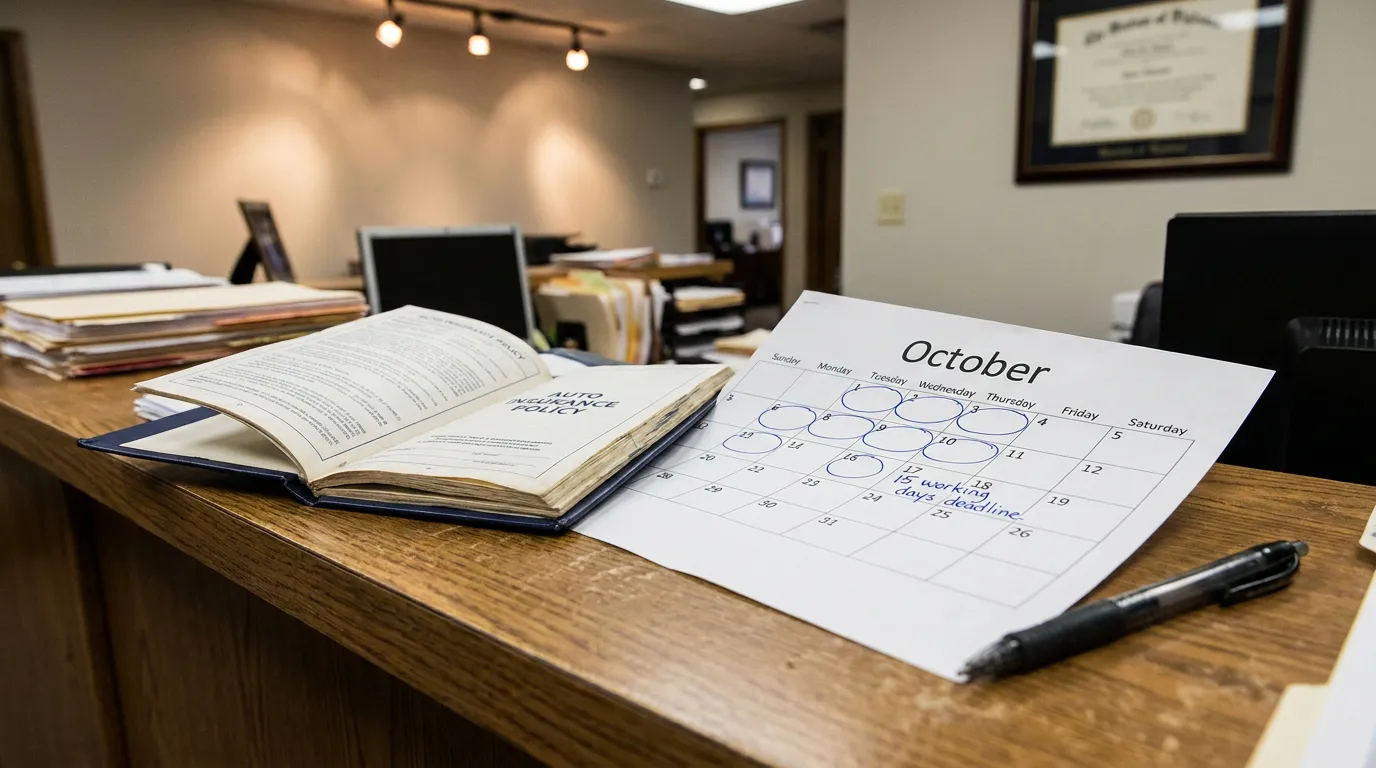
When the 15-Working-Day Clock Actually Starts
The deadline does not begin the day of your crash; it begins when you submit a complete proof of loss. An insurer cannot be held to the 15-day window until it has the necessary documentation. Understanding proof of loss Washington timing is central to any injury claim Richland residents pursue.
Washington law sets an outer boundary for submitting that proof. Under Washington’s proof-of-loss statute, RCW 48.20.102 provides that written proof of loss is generally due within 90 days after the date of loss for disability and similar first-party coverages. Missing that window does not automatically invalidate a claim if it was not reasonably possible to comply, as long as proof is furnished as soon as reasonably possible and, absent legal incapacity, no later than one year from when proof was otherwise required.
💡 Pro Tip: Keep dated copies of everything you send to the insurer, including medical bills, repair estimates, and the proof-of-loss form. A clear paper trail proves exactly when the 15-working-day clock should have started.
What Counts as a Completed Proof of Loss
A proof of loss is the sworn statement and supporting documentation that establishes the nature and extent of your damages. For a car crash, this includes documentation of bodily injury and vehicle property damage. Washington’s injury statute of limitations under RCW 4.16.080(2) covers an action for taking, detaining, or injuring personal property, or for any other injury to the person or rights of another not hereinafter enumerated.
If the Insurer Is Slow to Send Forms
You are not powerless if the insurer delays the paperwork you need. Under RCW 48.20.092, after you give notice of a claim, the insurer must furnish the forms it normally uses for proofs of loss. If the insurer does not provide those forms within 15 days of receiving your notice, you are generally deemed to have met the proof-of-loss requirement by submitting written proof of the occurrence and the character and extent of the loss within the policy’s filing time. This protection helps Richland Washington claimants trigger the insurer’s decision deadline even when the company delays.
💡 Pro Tip: If forms have not arrived, send your own written proof describing the crash, your injuries, and your losses. This may satisfy the requirement and start the insurer’s response clock.
How Long After Demand Letter Can I Expect Settlement
How long after demand letter can I expect settlement is one of the most common questions injured drivers ask, and the answer depends on several moving parts. A demand letter is not the same as a formal proof of loss, though the two often overlap in practice. Once a complete proof of loss is on file, the insurer generally faces the 15-working-day window to accept or deny, but accepting a claim differs from finalizing a full car accident settlement Richland victims can agree to.
The 15 working days governs the insurer’s decision to accept or deny, not the final dollar figure. After acceptance, negotiations over the value of medical care, lost income, and non-economic harm can continue. The acceptance decision is bounded by regulation, while the negotiation timeline is fact-dependent and varies widely.
A denial in Washington cannot be vague. The claims-handling rule requires that a denial reference the specific policy provision, condition, or exclusion relied upon, and if the insurer needs additional time it must notify the claimant. Reviewing the state’s claims settlement regulation, WAC 284-30-380, can help you understand what a proper insurer claim decision Washington response should contain.
💡 Pro Tip: If an adjuster asks for “one more document” repeatedly, ask in writing which specific item is missing and why. Vague or repeated requests may be delay tactics rather than a genuine need.
How Fault Affects What an Insurer Owes
The amount an insurer ultimately pays turns heavily on how fault is assigned among everyone involved. Washington uses a structured approach when more than one party contributed to a crash, directly shaping both the accept-or-deny decision and the eventual payout.
When multiple parties share blame, Washington generally applies joint and several liability on an indivisible claim, subject to statutory exceptions. Under RCW 4.22.030, except as otherwise provided in RCW 4.22.070, if more than one person is liable to a claimant on an indivisible claim for the same injury, death or harm, the liability of such persons shall be joint and several.
How Comparative Fault Reduces Your Recovery
Washington follows a pure comparative fault system, meaning your own share of blame reduces your recovery but does not erase it. Under RCW 4.22.005, any contributory fault chargeable to the claimant diminishes proportionately the amount awarded as compensatory damages for an injury attributable to the claimant’s contributory fault, but does not bar recovery; this rule applies whether or not under prior law the claimant’s contributory fault constituted a defense. An adjuster evaluating an accept or deny claim Richland decision will often weigh your percentage of fault early.
A fact-finder must assign every at-fault party a share that adds up to the whole. Under the comparative fault statute, RCW 4.22.070 provides that in all actions involving fault of more than one entity, the trier of fact shall determine the percentage of the total fault attributable to every entity which caused the claimant’s damages; the sum of the percentages shall equal one hundred percent.
Key factors that commonly influence how a claim is valued include:
- Each party’s assigned percentage of fault under Washington’s comparative negligence rules
- The completeness and timing of your proof of loss
- The strength of medical records and documentation supporting causation
- Whether multiple vehicles or defenses complicate liability
The Claim Deadline Is Not Your Lawsuit Deadline
It is critical to separate the insurer’s response clock from the deadline to file a lawsuit. These two timelines are governed by different rules and serve different purposes.
Washington sets a three-year statute of limitations for most personal injury lawsuits, including car crash claims. RCW 4.16.080 generally provides three years from the injury date to file most personal injury suits. Courts interpret exceptions narrowly, and any tolling or delayed-discovery argument may apply only in limited circumstances.
Settlement negotiations with an insurer do not pause that three-year lawsuit deadline. The litigation clock runs independently of insurer claim-handling obligations. An accepted claim or ongoing talks will not stop the statute of limitations from expiring. If you are unsure how these separate deadlines apply, review how long you have to report a crash in Richland and speak with counsel promptly.
💡 Pro Tip: Calendar your three-year lawsuit deadline the moment you begin a claim, and treat it as fixed. Waiting for an insurer to “finish” negotiating can quietly consume the time you need to protect your rights in court.
Frequently Asked Questions
-
Does the 15 working days include weekends and holidays?
No, the regulation counts working days rather than calendar days. Weekends and recognized holidays generally do not count toward the deadline, so the actual calendar time may be longer than fifteen days.
-
What happens if the insurer needs more time to decide my claim?
The insurer may extend its review, but it must notify you rather than going silent. A proper response should also cite specific policy language if the claim is ultimately denied.
-
Is acceptance of my claim the same as receiving a settlement?
No, accepting a claim and paying a full settlement are separate steps. An insurer can accept liability while still negotiating the value of your damages. That is why the answer to how long after demand letter can I expect settlement often extends beyond the initial acceptance decision.
-
Can my own fault stop me from recovering anything?
Generally no, because Washington uses pure comparative fault. Under RCW 4.22.005, your recovery is reduced by your percentage of fault but is not barred entirely. The outcome depends on how fault is assigned in your specific case.
-
Where can I find trustworthy Washington legal information on my own?
Public, nonprofit legal resources are a good starting point. The statewide public legal information library at Washington Law Help organizes guidance by topic, including a dedicated vehicles section. It offers general information rather than legal advice, so individualized questions still call for a consultation.
Protecting Your Recovery After a Tri-Cities Crash
The 15-working-day rule gives Richland drivers real leverage, but only if you understand how the deadline is triggered and how it fits within Washington’s broader claims and litigation framework. A complete proof of loss starts the insurer’s response clock, comparative fault shapes what you may recover, and the three-year lawsuit deadline runs on its own separate track. Because outcomes depend on the specific facts of each collision, general rules should never be mistaken for individualized advice.
When an insurer delays, lowballs, or denies without a clear basis, having knowledgeable counsel matters. To discuss your injury claim with the team at Telaré Law, call 509-736-3160 or request a consultation through our contact page so you can protect your rights before critical deadlines pass.