When Wet Roads Meet Worn Equipment: Reading FMCSA’s July 2026 Records Notice
Key Takeaways: A new July 2026 Federal Register notice on carrier maintenance recordkeeping has sharpened how attorneys investigate truck hydroplaning accidents in Richland, Washington. Under Washington law, properly authenticated inspection and repair logs can become central evidence of truck crash negligence. Comparative fault rules govern how liability is divided among carriers, drivers, and maintenance providers. Injured people generally have three years to bring a personal injury claim, though exceptions are interpreted narrowly. Preserving commercial vehicle maintenance evidence early can protect a plaintiff injury claim before records disappear. Every case turns on its own facts, so timely legal guidance matters.
A recent FMCSA maintenance records notice has drawn close attention from attorneys who represent injured people across Southeast Washington. The July 2026 Federal Register notice touches how motor carriers document inspection, repair, and upkeep, and that documentation frequently decides who is held responsible when a loaded tractor-trailer loses traction on a rain-slicked highway. For anyone hurt in a semi-truck collision near the Tri-Cities, this development is more than regulatory housekeeping. It shapes the evidence that can prove why a crash happened and who should pay for the harm that followed.
Why Carrier Recordkeeping Sits at the Center of Truck Injury Cases
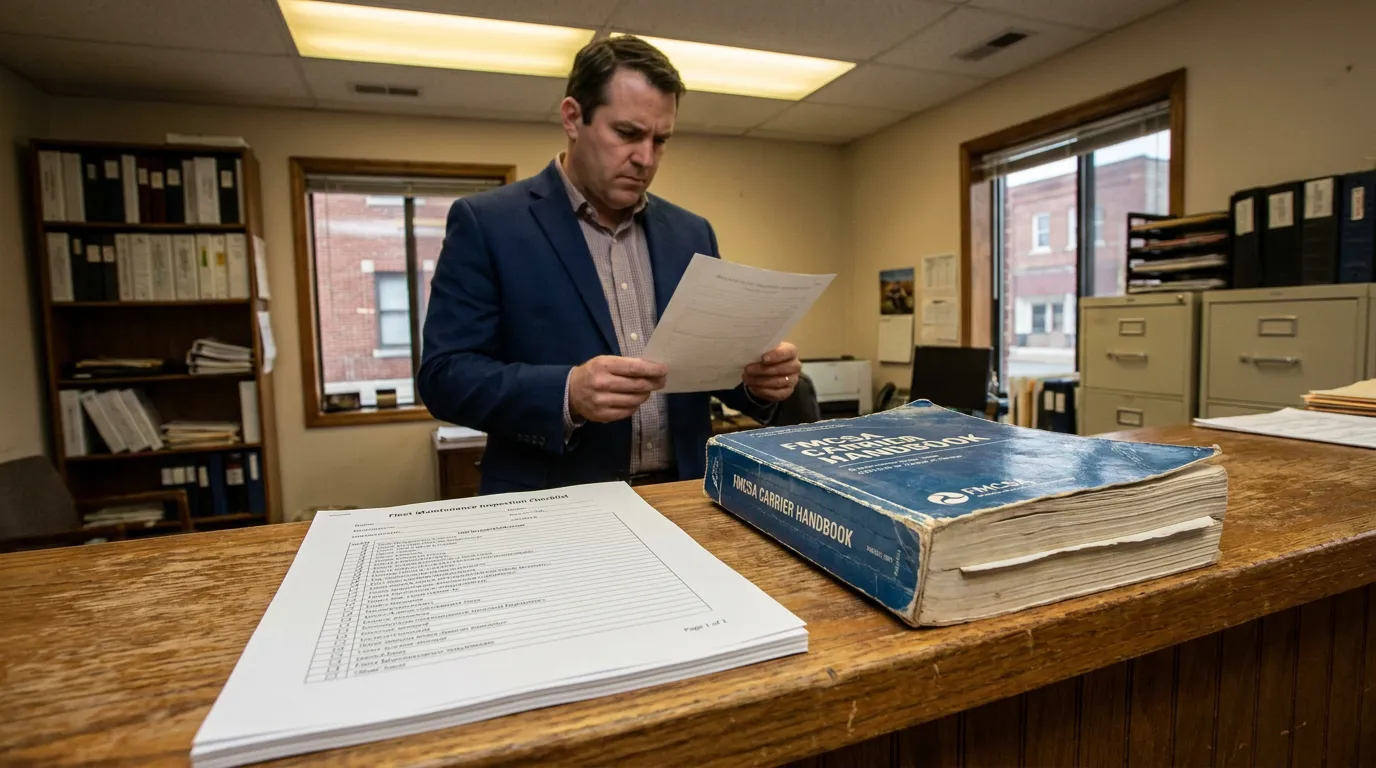
Maintenance records tell the story that a damaged truck cannot tell on its own. In Washington, business and public records may be admitted at trial as recognized exceptions to the hearsay rule when properly authenticated, and duplicates are generally admissible to the same extent as originals, which is why inspection and repair logs can carry real weight. These documents can show whether brakes were serviced on schedule, whether tires were rotated or replaced, and whether a carrier deferred repairs that later contributed to a loss of control.
Washington divides responsibility using a comparative fault framework rather than an all-or-nothing rule. Chapter 4.22 RCW defines fault and directs how a trier of fact allocates a percentage to each entity that caused a claimant’s damages, with the total summing to one hundred percent. That structure matters because a carrier’s failure to maintain its fleet can be assigned its own share of fault, separate from the driver’s conduct or road conditions.
How Maintenance Failures Translate Into Legal Fault
Statutory definitions give attorneys a concrete framework for arguing carrier negligence. RCW 4.22.015 defines “fault,” and the statute governing the determination of each party’s percentage of fault lists the entities whose conduct may be compared, including defendants, third-party defendants, and released or immune parties. In a trucking case, that can mean the motor carrier, the driver, and an outside maintenance provider are all evaluated together.
Joint and several liability remains available in narrow circumstances under Washington law. Under RCW 4.22.070, several liability is the default, but when a claimant bears no fault of their own, the defendants against whom judgment is entered may be jointly and severally liable for the sum of their proportionate shares. This exception can significantly affect recovery when maintenance evidence establishes that a carrier’s neglect, and not the injured person, caused the wreck.
A Rainy Highway 240 Scenario That Feels Too Familiar
Picture a family driving home on Highway 240 during a heavy autumn downpour. A fully loaded semi ahead of them hydroplanes across the lane line, and the resulting collision leaves a parent with spinal injuries, mounting medical bills, and months away from work. In the days that follow, the family has no idea whether the truck’s tires were bald or whether a brake repair had been quietly postponed.
This is precisely where carrier recordkeeping becomes decisive for a plaintiff injury claim. If maintenance logs later reveal worn tires or deferred brake service, those documents can help connect the carrier’s decisions to the crash. Truck hydroplaning accidents often look like simple weather events at first, yet the underlying cause may trace back to equipment that a diligent carrier should have addressed.
Families in this situation are usually managing far more than paperwork. They are coordinating surgeries, arranging long-term care, and absorbing lost income while trying to understand their rights. Understanding how maintenance evidence fits into a case can bring some clarity during an overwhelming time, and it explains why a Richland truck accident attorney moves quickly to demand records before they are altered or discarded.
Preserving Evidence Before the Window Closes
Timing drives nearly every strategic decision in a truck injury case. Washington’s RCW 4.16.080 sets a three-year limitations period for most personal injury and property damage actions, generally measured from the date of injury. Because that clock can run out while a family is focused on recovery, attorneys often act early to preserve the proof that supports liability.
Certain narrow provisions can affect when a claim accrues, but they are not automatic. RCW 4.16.080(4) provides that a fraud claim is not deemed to accrue until the aggrieved party discovers the facts constituting the fraud, which can matter if maintenance records were concealed. Courts interpret discovery and tolling exceptions narrowly, so no injured person should assume an extension applies to their situation.
The Records Attorneys Typically Pursue
A focused evidence request usually targets several categories of commercial vehicle maintenance evidence. Gathering these materials early helps establish proximate cause and preserves options before deadlines lapse. Common targets include:
- Truck inspection repair records and daily driver vehicle inspection reports
- Tire replacement, rotation, and tread-depth logs
- Brake service and deferred-maintenance documentation
- FMCSA maintenance filings and compliance history
- Driver logs and hours-of-service data tied to the crash date
Government administrative claim deadlines can differ sharply from civil limitations periods. Where a public entity or ferry operation is involved, statutes such as RCW 47.60.250 impose their own filing requirements and time limitations for damage claims. Distinguishing these deadlines from the general three-year civil rule is essential, because missing an administrative deadline can bar a claim entirely.
How the July 2026 Notice Fits a Broader Safety Picture
The July 2026 Federal Register notice reflects continuing federal attention to carrier maintenance documentation. For plaintiff-side attorneys, the practical takeaway is that well-kept records cut both ways: they can exonerate a careful carrier or expose a negligent one. That is why counsel who investigate these cases pay close attention to how recordkeeping obligations evolve.
Washington’s own statutes signal a strong public interest in commercial vehicle safety. State law disqualifies a commercial driver for at least one year for serious offenses, including causing a fatality through negligent operation of a commercial motor vehicle, and financial responsibility rules require owner’s policies to cover liability arising out of the ownership, maintenance, or use of a vehicle. These provisions reinforce why maintenance evidence is relevant both to liability and to identifying available coverage.
Reading regulatory updates alongside state law helps injured people understand the full landscape. For a deeper look at how federal changes intersect with state claims, readers can review this analysis of FMCSA’s June 2026 rules. Comparing successive federal notices can reveal patterns in how carriers are expected to document upkeep.
How Does This Impact Me?
Does the July 2026 Notice Change My Deadline to File?
The notice does not itself change Washington’s civil limitations period. Most personal injury claims must generally be commenced within three years of the injury under RCW 4.16.080, and that rule operates independently of federal recordkeeping notices. Because exceptions are limited and fact-specific, it is wise to confirm your deadline promptly.
What Does Maintenance Evidence Mean for My Case?
Maintenance records can help establish whether carrier negligence contributed to your crash. Properly authenticated inspection and repair logs may support an argument that worn tires or deferred brake service played a role in a loss of control. Whether they ultimately affect your case depends on the specific facts and how the evidence is preserved.
Can a Trucking Company Blame Me for the Crash?
Under Washington’s comparative fault system, a carrier may argue you share some responsibility. A state survey of comparative negligence laws shows how allocation rules vary nationally, and Washington assigns each entity a percentage of fault. Under Washington’s pure comparative negligence rule, your own conduct may reduce your recovery in proportion to your share of fault, though that determination rests with the trier of fact.
What Should I Do Next After a Semi-Truck Crash?
Preserving evidence early is generally one of the most protective steps available. Seeking medical care, documenting your injuries, and requesting that carrier records be preserved can all matter. Speaking with counsel who investigates FMCSA and maintenance records can help you understand your options before deadlines pass.
Who Can Be Held Responsible in a Trucking Case?
Responsibility may extend beyond the driver to the carrier and outside maintenance providers. RCW 4.22.030 and RCW 4.22.040 address the nature of liability and rights of contribution among multiple defendants. The right combination of defendants depends on the facts your investigation uncovers.
Protecting Your Rights After a Washington Truck Crash
The July 2026 records notice underscores a lesson plaintiff-side attorneys already know well: documentation often determines accountability. In truck hydroplaning accidents across Richland and the surrounding Tri-Cities, inspection logs, tire histories, and FMCSA filings can transform a confusing crash into a provable case of truck crash negligence. Because limitations periods run and records can vanish, prompt action generally protects an injured person’s options.
Every case ultimately turns on its own facts, and this article is general information rather than individualized legal advice. If you or a loved one was hurt in a semi-truck collision, the team at Telaré Law can review how these developments may affect your situation. Call 509-736-3160 or reach out to our team today to discuss your options and the steps that may help preserve important evidence.