The First 72 Hours After a Semi-Truck Collision in Richland Can Make or Break Your Claim
A semi-truck collision in Richland, Washington, can leave victims overwhelmed, but the steps you take in the first 72 hours may determine the strength of your entire injury claim. While Washington law under RCW 4.16.080 gives you three years to file a personal injury lawsuit, critical evidence like black box data, electronic logging device (ELD) records, driver logs, and surveillance footage can vanish within days. Skid marks fade, witnesses forget details, and trucking companies move quickly to protect their interests. The clock begins ticking the moment the crash occurs.
If you or a loved one suffered injuries in a truck wreck in Richland WA, Telaré Law is ready to help you protect your rights. Call 509-736-3160 or reach out to our team today to discuss your case.
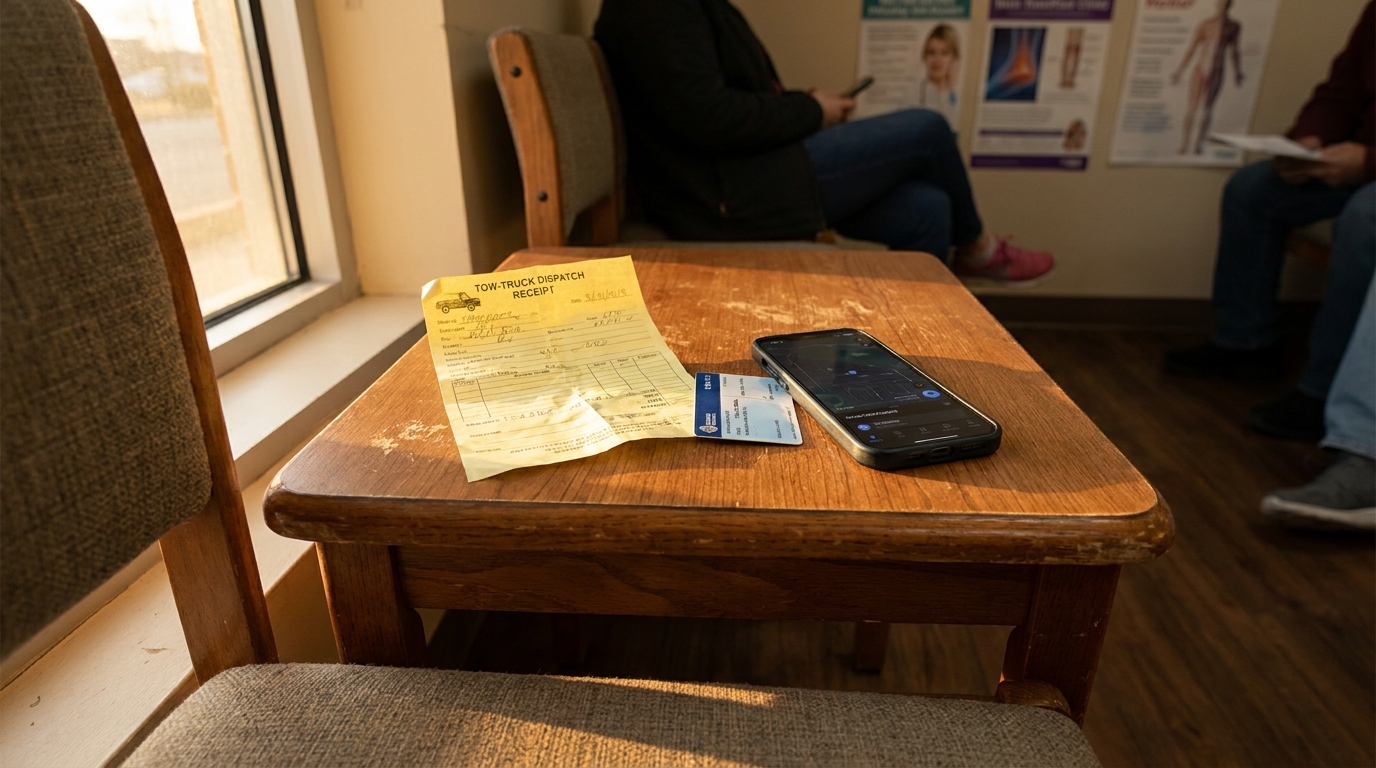
Why Truck Accident Evidence Preservation Starts Immediately
Evidence in a semi-truck crash case is uniquely time-sensitive compared to a standard car accident. Commercial trucks generate massive amounts of regulatory data, including ELD records, pre-trip inspection logs, hours-of-service compliance records, and drug and alcohol testing results. Under WA RCW § 46.32.085(1), Washington requires the state patrol to adopt rules for commercial motor vehicles as rigorous as federal regulations at 49 C.F.R. Parts 40 and 380 through 397. These federal standards govern driver training, controlled substance testing, hours of service, vehicle inspection, and driver qualifications.
Trucking companies and their insurers often dispatch rapid-response teams to crash scenes within hours. Their goal is to gather facts that protect the company, not the victim. Key records may be overwritten, lost, or legally destroyed under standard retention policies. Photographs of the scene, witness contact information, and your written recollection should be gathered as soon as safely possible.
💡 Pro Tip: Use your phone to photograph everything at the scene if physically able: vehicle damage, road conditions, traffic signals, debris fields, and visible injuries. Time-stamped photos carry significant weight in establishing fault.
Steps to Take at the Crash Scene and in the Days That Follow
Your first priority after a semi-truck collision in Richland is always medical attention, but certain legal steps should follow closely. Even if injuries seem minor, internal injuries and traumatic brain injuries may not present symptoms for hours or days. Seeking medical evaluation creates a documented record linking your injuries to the crash.
Secure the Official Accident Report
Washington law requires drivers involved in accidents resulting in injury, death, or property damage meeting the minimum threshold to file a written report within four days. Under WA RCW § 46.52.030, this driver report goes to the chief of police if the crash occurred within an incorporated city or town, or to the county sheriff or Washington State Patrol if outside incorporated cities. Law enforcement officers investigating the crash must also submit their own independent report under WA RCW § 46.52.070(1)-(3). These reports capture detailed information including location, circumstances, persons and vehicles involved, insurance information, and whether any driver was distracted.
Understand What the Report Can and Cannot Do
The accident report itself generally cannot be used as direct evidence at trial, but it still plays a vital role in your claim. Under WA RCW § 46.52.080, a certificate confirming whether a report was filed can prove compliance with reporting requirements. Injured victims, their attorneys, and their insurers are entitled to receive disclosed information from the report, including names, addresses, license plate numbers, vehicle descriptions, and the date, time, and location of the crash.
💡 Pro Tip: Request a copy of the accident report as soon as available. Confirm that both the driver report and officer’s investigator report were submitted within required timeframes.
Document Your Injuries and Expenses From Day One
Keep a detailed record of every medical visit, prescription, and out-of-pocket cost starting from the day of the crash. This includes emergency room visits, imaging, follow-up appointments, physical therapy, and any assistive devices. Lost wages and reduced earning capacity should also be tracked. This documentation forms the foundation of your damages calculation.
How Washington’s Comparative Fault System Affects Your Claim
Washington follows a pure comparative fault system under RCW 4.22.005, meaning your recovery is reduced in proportion to your percentage of fault but is not barred entirely. The trier of fact determines the percentage of fault attributable to every entity that caused your damages, as outlined in RCW 4.22.070(1). This includes the truck driver, trucking company, maintenance providers, and potentially you as the injured party.
This is precisely why the first 72 hours matter so much. Photographs, witness statements, and official reports gathered early can prevent the trucking company from shifting improper blame onto the victim.
| Evidence Type | Why It Matters | Risk of Loss |
|---|---|---|
| Black box / ELD data | Shows speed, braking, hours driven | May be overwritten in days |
| Driver drug/alcohol test results | Proves or disproves impairment | Testing window is extremely short |
| Surveillance footage (nearby businesses) | Captures the collision itself | Often recorded over within 48-72 hours |
| Skid marks and debris | Shows point of impact and force | Weather and traffic erase quickly |
| Witness statements | Corroborates your version of events | Memory fades rapidly after the event |
💡 Pro Tip: Ask nearby businesses if they have exterior cameras that may have captured the collision. Many overwrite footage on short cycles, so a request within the first day or two can make a critical difference.
What Negligence Looks Like in a Richland Truck Crash Case
Under RCW 46.61.525, negligent driving occurs when a person operates a motor vehicle in a manner that is both negligent and endangers or is likely to endanger any person or property. Washington law defines “negligent” as the failure to exercise ordinary care. A Kennewick truck accident lawyer can investigate whether the truck driver violated hours-of-service rules, failed a required vehicle inspection, or operated the truck while fatigued or impaired.
Negligent driving in the second degree is classified as a traffic infraction under RCW 46.61.525(1)(c) and carries a $250 penalty. A citation for negligent driving can serve as supporting evidence in your civil injury claim. Establishing that the truck driver received a citation, failed to comply with federal safety regulations, or violated Washington motor carrier rules strengthens your case.
💡 Pro Tip: Do not assume that because a truck driver was not criminally charged, you lack grounds for a civil claim. The burden of proof in a civil case is lower, and regulatory violations alone may support a finding of negligence.
Understanding the Statute of Limitations and Why You Should Not Wait
Washington’s statute of limitations for personal injury claims arising from a truck crash is three years under RCW 4.16.080. This deadline generally runs from the date of the crash. However, in limited circumstances, the discovery rule may apply, meaning the clock starts from the date you discovered or reasonably should have discovered your injury. Courts interpret these exceptions narrowly, so victims should not rely on tolling without consulting an attorney.
Three years may sound generous, but building a strong semi-truck injury claim in Richland requires early action. The strongest cases are built on evidence preserved in the first hours and days, not months later when key records have been lost. You can explore more about protecting your rights after a crash on our truck accident resource page.
💡 Pro Tip: Even if unsure whether you want to pursue legal action, consulting an attorney within the first week allows you to send a spoliation letter to the trucking company, legally requiring them to preserve all relevant evidence.
How a Kennewick Truck Accident Lawyer Can Help in the First 72 Hours
An experienced attorney can take immediate steps that victims are often unable to handle while recovering. Within the first 72 hours, a lawyer can send evidence preservation demands to the trucking company, request ELD data and driver qualification files, obtain the official police report, identify and interview witnesses, and begin investigating potential regulatory violations.
Your attorney can also help you avoid common early mistakes that could weaken your claim. Giving a recorded statement to the trucking company’s insurer without legal guidance may result in admissions used against you.
Frequently Asked Questions
1. How long do I have to file a truck accident lawsuit in Washington State?
Under RCW 4.16.080, you generally have three years from the date of the crash to file a personal injury lawsuit. In limited circumstances, the discovery rule may extend this deadline, but courts apply these exceptions narrowly. Waiting to preserve evidence can severely weaken your claim regardless of the filing deadline.
2. Can I still recover compensation if I was partially at fault for the truck crash?
Yes. Washington’s pure comparative fault system under RCW 4.22.005 allows you to recover damages even if you share some fault. Your total recovery will be reduced by your percentage of fault. For example, if you are 20 percent at fault and your damages total $500,000, your recovery would be $400,000.
3. What evidence should I prioritize preserving after a semi-truck crash in Richland?
Focus on time-sensitive evidence first. This includes photographs of the scene and vehicles, surveillance footage from nearby businesses, witness contact information, ELD and black box data from the truck, and driver drug and alcohol testing records. Many of these records can be lost or overwritten within days.
4. Is the police accident report admissible as evidence in my truck injury case?
The accident report itself is generally not admissible as direct evidence at trial under WA RCW § 46.52.080. However, a certificate confirming the report was filed can prove compliance with reporting requirements. The report provides valuable factual details your attorney can use to build your case.
5. What federal regulations apply to truck drivers involved in crashes in Washington?
Washington requires the state patrol to adopt rules for commercial motor vehicles as rigorous as federal regulations under 49 C.F.R. Parts 40 and 380 through 397, as mandated by WA RCW § 46.32.085(1). These cover driver training, hours of service, drug and alcohol testing, vehicle inspection, and hazardous materials handling. Violations of these standards may serve as evidence of negligence.
Protect Your Claim by Acting Now
The first 72 hours after a semi-truck crash in Richland are not about rushing to file a lawsuit, they are about preserving the evidence that will make your lawsuit strong when you do file. From securing official accident reports and witness statements to demanding that the trucking company retain ELD data and inspection records, every early action builds toward the full compensation you deserve for medical bills, lost income, pain and suffering, and future care needs.
If you were injured in a truck crash in Richland or the surrounding Tri-Cities area, Telaré Law is here to guide you through every step. Call 509-736-3160 or contact us now to start protecting your claim today.