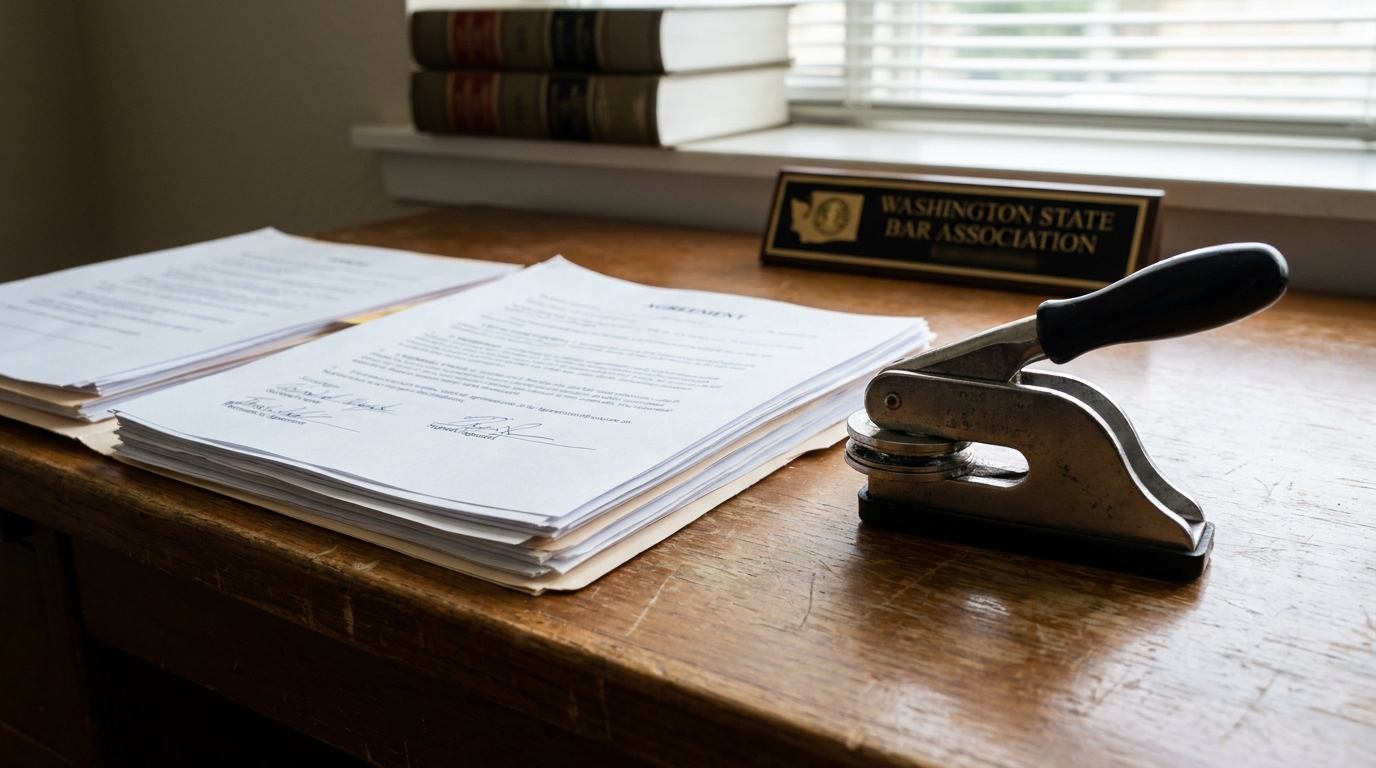
Understanding the Moment a Richland Mediation Turns Into a Deal You Can Enforce
Key Takeaways: In Washington, mediation becomes binding when all parties sign a written settlement agreement. Until that signature, discussions remain confidential and privileged under Chapter 7.07 RCW, and you can generally walk away. Once everyone signs, RCW 7.07.050(1)(a) removes the privilege and the document becomes enforceable as a contract. The Uniform Mediation Act controls most Richland auto accident mediations referred or agreed to on or after January 1, 2006. Protection depends on what the signed document says, so careful drafting and attorney review of release language, payment terms, and scope are critical. For injury victims, the biggest risk is signing before the full extent of injuries and future damages is known.
Mediation generally becomes a binding contract in Washington at the moment all parties sign a written settlement agreement. Up until that signature, your conversations at the mediation table are generally private and protected. Once everyone signs, that document steps outside the confidentiality shield and can be enforced in court. For someone injured in a Richland crash, this distinction can mean the difference between a negotiation you can walk away from and a deal you are legally bound to honor.
If you are weighing a settlement after a collision and want clarity on your rights, the team at Telaré Law is ready to help. You can call our office at 509-736-3160 or reach out through our Richland injury consultation page to discuss your situation before you sign anything.
Why the Question of Enforceability Matters After a Crash
The question of whether mediation is binding sits at the heart of every settlement decision. Many people assume that talking through a dispute with a neutral mediator commits them to something. In reality, mediation is a structured, confidential negotiation, and you generally retain the freedom to reject terms until you put your name on a written agreement. That freedom lets you evaluate medical bills, future care needs, and lost income before locking yourself in.
Washington treats mediation as a confidential process by design. The state protects mediation communications across multiple contexts, reflecting a policy of encouraging candid discussion. Confidentiality allows parties’ candor to the impartial mediator for informed valuation and possible settlement. Understanding this backdrop helps injury victims see why the signed agreement, not the discussion, is the binding event.
💡 Pro Tip: Treat everything you say in mediation as a settlement negotiation, not a final commitment. The leverage you preserve by withholding your signature until terms are fair is one of your strongest tools.
Is Mediation Legally Binding in Personal Injury Cases?
Mediation itself is not automatically binding, but a signed mediation settlement agreement generally is. Under Washington’s Uniform Mediation Act, mediation communications are privileged, but there is no privilege for a mediation communication that is in an agreement evidenced by a record signed by all parties, as set out in RCW 7.07.050(1)(a). The act of signing converts a private negotiation into a legally enforceable contract.
The statute draws a clean line between conversation and contract. While the mediation discussion stays confidential, a written settlement signed by all parties can be presented to a court to prove and enforce the settlement. You can review the full list of exceptions to mediation privilege directly in the statute. This is the moment the car accident mediation reaches its binding point.
Because so much turns on the signed record, the wording of that document deserves careful attention. A settlement that is vague about scope, payment timing, or release of future claims can create disputes long after mediation ends. Having a knowledgeable advocate review the language matters. The question of whether mediation is legally binding in personal injury cases is answered by the signature, but the protection you receive depends on what that signed document says.
How Washington’s Uniform Mediation Act Applies to Auto Claims
Chapter 7.07 RCW governs virtually every modern auto accident mediation in Richland. The Uniform Mediation Act governs a mediation pursuant to a referral or an agreement to mediate made on or after January 1, 2006. Under RCW 7.07.903, if all parties agree in a signed record, the chapter also governs a mediation pursuant to an earlier referral or agreement. If your crash is being mediated today, this is the framework that controls privilege and enforceability.
The Act reaches your mediation in several common situations. Washington injury mediation rules under RCW 7.07.020(1) typically apply when one of these scenarios is present:
- A court, administrative agency, or arbitrator orders or refers the parties to mediate.
- The parties and mediator agree in a record showing an expectation that communications will be privileged.
- The parties use someone who holds themselves out as a mediator or a service that provides mediation.
Most Richland car accident mediations qualify under at least one of these criteria. That means the rules on enforceability and confidentiality in Chapter 7.07 RCW will generally apply to your case. Notably, if the parties agree in advance in a signed record that all or part of a mediation is not privileged, the privileges under RCW 7.07.030 through 7.07.050 do not apply to that portion.
💡 Pro Tip: Ask early how your mediation was initiated. Whether it came through a court referral or a private agreement can affect which confidentiality protections attach to your discussions.
What Makes a Signed Settlement Hold Up in Court
A written settlement generally binds the parties once it is signed and reflects mutual understanding of the terms. Washington applies ordinary contract principles to settlement agreements: a settlement is treated as a contract, and a clear, written agreement signed by all parties is generally enforceable when it reflects a meeting of the minds on the material terms. This echoes the broader rule that the binding event is the signature, not a verbal nod at the table.
Older mediations may fall under a different statute, so timing matters. For mediations referred or agreed to before January 1, 2006, the former RCW 5.60.070 governed mediation privilege and excluded a written settlement agreement signed by the parties from the privilege. Mediations on or after that date are governed by Chapter 7.07 RCW. The consistent thread is that a signed written settlement agreement loses its confidential shield and can be enforced as a contract.
Disputes often arise over what was actually agreed. When parties leave mediation believing they had a deal but never reduced it to a signed writing, enforcement becomes difficult. Courts consider whether a record signed by all parties exists. Because outcomes depend on the specific facts and the document itself, careful drafting protects your recovery.
| Stage of Mediation | Generally Binding? | Why |
|---|---|---|
| Verbal discussion at the table | No | Communications are privileged and confidential |
| Tentative terms, unsigned | No | No signed record exists yet |
| Written agreement signed by all parties | Yes | Falls outside privilege; enforceable as a contract |
Common Challenges Injury Victims Face Before Signing
The biggest challenge is signing too soon, before the full scope of your injuries is known. Catastrophic injuries such as traumatic brain injury or spinal cord damage may require long-term care that is hard to value early. Once you sign a binding settlement, you generally cannot reopen it to seek more. This is why pacing the process and documenting damages thoroughly is so important.
A related challenge is pressure to accept a quick, low number. Insurers sometimes present an initial figure that does not reflect the true cost of your recovery. Before you treat any offer as final, it is worth consulting a lawyer about whether the amount accounts for future medical needs and lost earning capacity. A signed agreement is hard to undo, so the evaluation should happen first.
💡 Pro Tip: Keep a running file of medical records, treatment plans, and expense estimates. A well-documented damages picture strengthens your position before you consider signing an enforceable mediation agreement.
How a Richland Attorney Supports the Mediation Process
An attorney helps ensure the signed agreement reflects what you genuinely intended. Skilled review can catch ambiguous release language, unclear payment terms, or provisions that waive rights you did not mean to surrender. A firm with extensive experience handling Tri-Cities collision claims can also prepare your case for trial if the other side refuses to offer fair compensation. Working with a Richland crash mediation attorney gives you guidance tailored to your case.
Advocacy in mediation still centers on proving liability and damages. Even in a negotiated setting, the strength of your evidence on negligence, causation, and the full value of your losses shapes the terms you can secure. Outcomes depend on the specific facts, and no result can be guaranteed, but thorough preparation generally improves your negotiating position.
Frequently Asked Questions
1. Is mediation legally binding in personal injury cases in Washington?
Mediation discussions are not binding, but a written settlement signed by all parties generally is. Under RCW 7.07.050(1)(a), there is no privilege for an agreement evidenced by a record signed by all parties, making that signed document enforceable as a contract.
2. When does mediation become enforceable in WA?
Enforceability generally attaches when all parties sign a written settlement agreement. Before that signature, the negotiation remains a confidential, non-binding discussion under Chapter 7.07 RCW.
3. Can I change my mind after a mediation session?
Yes, as long as you have not signed a written agreement. Once you sign a record reflecting the agreed terms, you are generally bound, so timing your signature carefully is important.
4. Does the Uniform Mediation Act apply to my car accident mediation?
It generally applies if your mediation was referred or agreed to on or after January 1, 2006. RCW 7.07.020 describes the scenarios where the chapter applies, including court referrals and the use of a professional mediator.
5. What should a signed mediation agreement include?
It should clearly state the terms, the compensation, and that the parties understand and agree. The agreement should be in writing, signed by the parties or their representatives, and any structured or installment payment terms should be spelled out.
Bringing It All Together Before You Sign
The binding point in any Washington mediation is generally the signed written agreement, not the conversation that produced it. For Richland auto accident victims, this means your mediation discussions generally stay confidential while you evaluate your options, and your signature transforms the outcome into an enforceable contract. Understanding this distinction, along with how Chapter 7.07 RCW governs privilege and enforceability, helps you protect your recovery and avoid committing to terms before you are ready.
Before you put your name on any settlement, make sure the terms truly reflect the full extent of your losses. The team at Telaré Law is ready to review your situation and help you move forward with confidence. Call us at 509-736-3160 or contact us now through our Tri-Cities case review form to discuss your auto accident mediation today.