US-395 cuts through the heart of Kennewick, carrying a heavy mix of commuter traffic, commercial trucks, and travelers passing through the Tri-Cities region. For local drivers, this highway presents daily hazards ranging from high-speed collisions to complex multi-vehicle pileups at signalized intersections. The combination of traffic volume, road design, and dangerous driver behaviors makes US-395 one of the most dangerous road in Washington stretches for Kennewick residents. If you have been injured in a Highway 395 Kennewick crash, understanding why this corridor is so risky can help you protect your rights and pursue the compensation you deserve.
If you or a loved one has been hurt in a US-395 accident, Telaré Law is ready to help. Call 509-736-3160 or reach out to our team today to discuss your case.
What Makes US-395 the Most Dangerous Road in Washington for Local Drivers?
Several factors converge to make this highway uniquely hazardous in the Kennewick area. US-395 transitions between a high-speed rural highway and an urban arterial as it passes through town, creating sudden speed differentials that catch drivers off guard. Signalized intersections along the corridor force left-turn conflicts, and WSDOT-funded research has confirmed that drivers respond differently to various signal phasing sequences, contributing to collision risk at these very types of intersections. The highway also serves as a major freight route, meaning passenger vehicles regularly share lanes with large commercial trucks.
Traffic volume alone does not explain the danger. Driver behavior plays a central role. Washington’s Target Zero program has identified impaired driving, speeding, unrestrained occupants, and distracted driving as the key behaviors contributing to highway fatalities and serious injury collisions statewide. Each of these behaviors is amplified on a corridor like US-395, where high speeds meet congested intersections and drivers must make split-second decisions.
💡 Pro Tip: After any collision on US-395, request a copy of the Police Traffic Collision Report (PTCR). WSDOT’s crash data comes directly from these law enforcement reports, and they serve as authoritative primary evidence when building an injury claim.
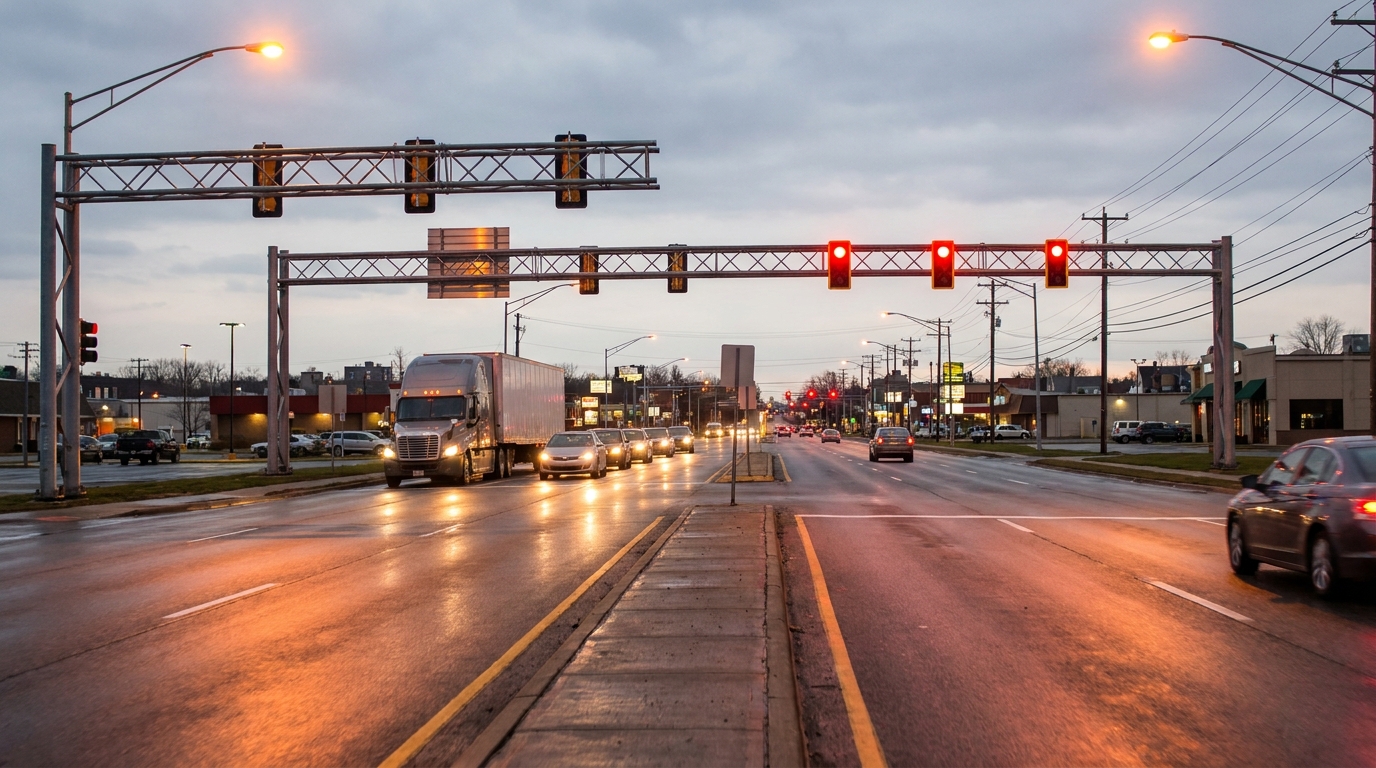
Key Hazards Along the US-395 Kennewick Corridor
Left-Turn Conflicts at Signalized Intersections
Left-turn movements at signalized intersections are among the most dangerous maneuvers on US-395. WSDOT-funded research through the Transportation Research and Education Center (TRAC) evaluated the safety and operational impacts of different left-turn phasing strategies using crash data, video, and survey information. The findings confirmed that signal design directly affects collision rates, and intersections along US-395 in Kennewick feature exactly these types of conflict points.
Pedestrian and Bicycle Exposure in Urban Segments
Where US-395 passes through urban Kennewick, pedestrians and cyclists face elevated risk. TRAC research on highway design and safety has specifically analyzed collisions involving pedestrians and bicyclists on main street highways across Washington State. Segments of US-395 that function as a main street through Kennewick fall squarely within this category, making pedestrian safety a serious concern for the community.
💡 Pro Tip: If you were hit as a pedestrian or cyclist on US-395, your claim may involve different insurance considerations than a standard vehicle collision. Washington law requires all drivers to carry minimum liability insurance, but pedestrian and bicycle injury cases often require additional investigation to identify all available coverage.
Truck Traffic and Multi-Vehicle Collisions
The presence of semi-trucks on US-395 increases both the severity and complexity of crashes. Large commercial vehicles need significantly more stopping distance, create dangerous blind spots, and cause catastrophic injuries when collisions occur. Multi-vehicle accidents are particularly common on this corridor, and they raise difficult questions about fault allocation. You can learn more about the overlooked causes of semi-truck accidents on Highway 395 to better understand these risks.
How Washington Crash Data Reveals US-395 Danger Patterns
WSDOT maintains a comprehensive crash data portal that provides valuable insight into collision trends on highways like US-395. The portal contains 10 full years, plus the current year of Washington crash data, all sourced from Police Traffic Collision Reports completed by law enforcement officers throughout the state. WSDOT also offers detailed crash history reports for specific locations, which means US-395 segments near Kennewick can be researched individually to identify problem areas.
This data matters for injured drivers because it can establish patterns. If a particular intersection or stretch of US-395 has a documented history of SR-395 collisions in Kennewick, that evidence may support claims related to road design, inadequate signage, or failure to address known hazards. Crash data analysis, combined with accident reconstruction, can strengthen a personal injury case significantly.
| US-395 Hazard Factor | Why It Matters for Injury Claims |
|---|---|
| Left-turn signal conflicts | May indicate intersection design deficiency |
| High truck traffic volume | Increases collision severity and multi-party liability |
| Speed transitions (rural to urban) | Contributes to rear-end and broadside crashes |
| Pedestrian/cyclist exposure | Raises questions about crosswalk and signal adequacy |
| Distracted/impaired driving | Establishes clear negligence by at-fault driver |
💡 Pro Tip: Washington’s Target Zero program aims to eliminate traffic deaths and serious injuries on all Washington roadways by 2030. If a known dangerous intersection on US-395 has not been improved despite documented crash history, this may be relevant to your case.
Understanding Fault and Liability After a US-395 Accident
Washington follows a pure comparative fault system under RCW 4.22.005, which directly affects how much compensation an injured driver can recover. Under this framework, your damages are reduced by your percentage of fault, but you are not barred from recovery regardless of how high your share of fault may be. For example, if you are found 20 percent at fault in a US-395 crash, your total award would be reduced by that same 20 percent. Note, however, that under RCW 5.40.060, intoxication can serve as a complete defense if the injured person was intoxicated, that intoxication was a proximate cause of the injury, and the injured person was more than 50 percent at fault.
How Fault Is Determined in Multi-Vehicle Crashes
Under RCW 4.22.070, the trier of fact determines the percentage of fault attributable to each party involved. This is particularly important in multi-vehicle accidents on US-395, where several drivers, a trucking company, or even a government entity responsible for road maintenance may share liability. Under this statute, liability is several by default, meaning each at-fault party is generally liable only for their proportionate share of damages rather than the entire amount, though limited exceptions for joint liability exist when parties act in concert or in an agency relationship.
What Washington’s Insurance Requirements Mean for Your Claim
Washington state requires all drivers to carry minimum liability insurance under state law. This mandatory coverage provides a baseline of protection, but minimum policy limits are often insufficient to cover serious injuries like traumatic brain injuries, spinal cord damage, or amputations. In many Kennewick auto accident cases on US-395, injured victims need to pursue additional coverage through underinsured motorist policies or claims against multiple liable parties.
💡 Pro Tip: Do not accept the first settlement offer from an insurance company after a US-395 accident. Insurers frequently extend lowball offers before the full extent of injuries is known. Medical documentation over weeks or months often reveals the true cost of your recovery.
Deadlines That Could Affect Your Kennewick Injury Claim
Washington state sets a statute of limitations for personal injury actions under RCW 4.16.080. This means drivers injured in US-395 accidents near Kennewick generally have a limited window from the date of the collision to file a lawsuit. Missing this deadline can permanently bar your right to seek compensation, regardless of how strong your case may be.
While limited exceptions may exist, courts interpret tolling provisions and discovery rules narrowly. Do not assume that an extension will automatically apply to your situation. If a government entity is potentially liable for road design or maintenance failures on US-395, a separate administrative tort claim notice must be filed before a lawsuit can be commenced (under RCW 4.92 for state entities or RCW 4.96.020 for local governments). This notice must be presented within the same three-year statute of limitations period that applies to personal injury claims, and a mandatory 60-day waiting period must elapse after filing before suit can be initiated; the administrative claim deadline is not shorter than the standard statutory period, though the 60-day waiting requirement creates practical urgency to file the notice well before the limitations deadline expires. Consulting with an experienced Kennewick auto accident attorney early protects your ability to pursue every available avenue of recovery.
💡 Pro Tip: Even if you are unsure whether you have a viable claim, documenting your injuries, preserving evidence, and seeking legal guidance within the first few weeks after a crash on US-395 can make a significant difference in the strength of your case.
Frequently Asked Questions
1. Why are there so many Washington highway accidents on US-395 near Kennewick?
US-395 combines high-speed traffic, heavy commercial truck use, and multiple signalized intersections with left-turn conflicts. These factors, paired with dangerous driving behaviors like speeding, impairment, and distraction, create conditions that lead to frequent and severe collisions along this corridor.
2. Can I recover compensation if I was partially at fault for a US-395 crash?
Yes. Under Washington’s pure comparative fault system outlined in RCW 4.22.005, you may still recover damages even if you share significant responsibility. Your total compensation will be reduced by your percentage of fault as determined by the trier of fact. However, if intoxication was a proximate cause of your injury and you are found more than 50 percent at fault, recovery may be barred under RCW 5.40.060.
3. How long do I have to file a claim after a car accident on US-395 in Kennewick?
Washington law under RCW 4.16.080 sets a statutory deadline for personal injury actions. However, certain circumstances may involve shorter deadlines, particularly if a government entity is involved. Acting promptly and consulting an attorney helps ensure you do not miss any applicable filing deadline.
4. What evidence should I gather after a Tri-Cities dangerous roads collision?
Obtain the Police Traffic Collision Report, photograph the scene and your injuries, collect contact information from witnesses, and seek medical attention immediately. WSDOT crash data and intersection history reports can also support your case by documenting known hazards at the location of your accident.
5. What driver behaviors cause the most serious accidents on US-395?
Washington’s Target Zero program identifies impaired driving, speeding, unrestrained occupants, and distracted driving as the primary behaviors contributing to fatal and serious injury collisions on Washington’s roadways, including US-395 through Kennewick.
Protecting Your Rights After a US-395 Collision
US-395 remains one of the most dangerous road in Washington corridors for Kennewick drivers due to its unique combination of traffic patterns, intersection design, and the prevalence of high-risk driver behaviors. Whether you are dealing with a multi-vehicle pileup, a truck collision, or an intersection crash, understanding Washington’s pure comparative fault laws and acting within the applicable deadlines can make the difference between a fair recovery and a denied claim. Every case depends on its specific facts, and the sooner you take action, the stronger your position.
If you were injured in a US-395 accident, Telaré Law can help you understand your options and fight for the compensation you deserve. Call 509-736-3160 or contact us now for a consultation.