Why A Washington Truck Accident Lawyer Is Watching The FMCSA Broker Fight
Key Takeaways: Trucking industry groups are pressing federal regulators after a broker liability ruling opened the door to negligent carrier selection claims. For injured victims in Richland and across Southeast Washington, the shift matters because it may expand the pool of parties who can be held accountable after a catastrophic crash. Washington ties carrier safety duties to federal standards, follows comparative fault, and imposes a three-year window for most injury claims. Freight brokers, motor carriers, and drivers can all face liability on the same indivisible claim. Preserving evidence and regulatory records early is often critical. Outcomes always depend on the specific facts of each case.
The trucking industry is lobbying the Federal Motor Carrier Safety Administration hard, and the reason traces directly back to a courtroom. A broker liability ruling has reframed how plaintiffs pursue the companies that arrange freight, and industry groups now want federal clarity that could limit exposure. If you or a loved one was hurt in a tractor-trailer collision near Richland, this fight is not abstract. It could shape who pays for your medical bills, lost income, and long-term care.
The development signals a broader question about accountability in commercial trucking litigation in 2026. When a carrier is underinsured or disappears after a crash, the broker who selected that carrier may become a meaningful source of recovery. Understanding this evolving landscape helps injured families in Kennewick, Richland, and nearby Oregon make informed decisions early, when evidence is freshest and legal deadlines are still open.
The Legal Backdrop Behind Broker Liability In Washington
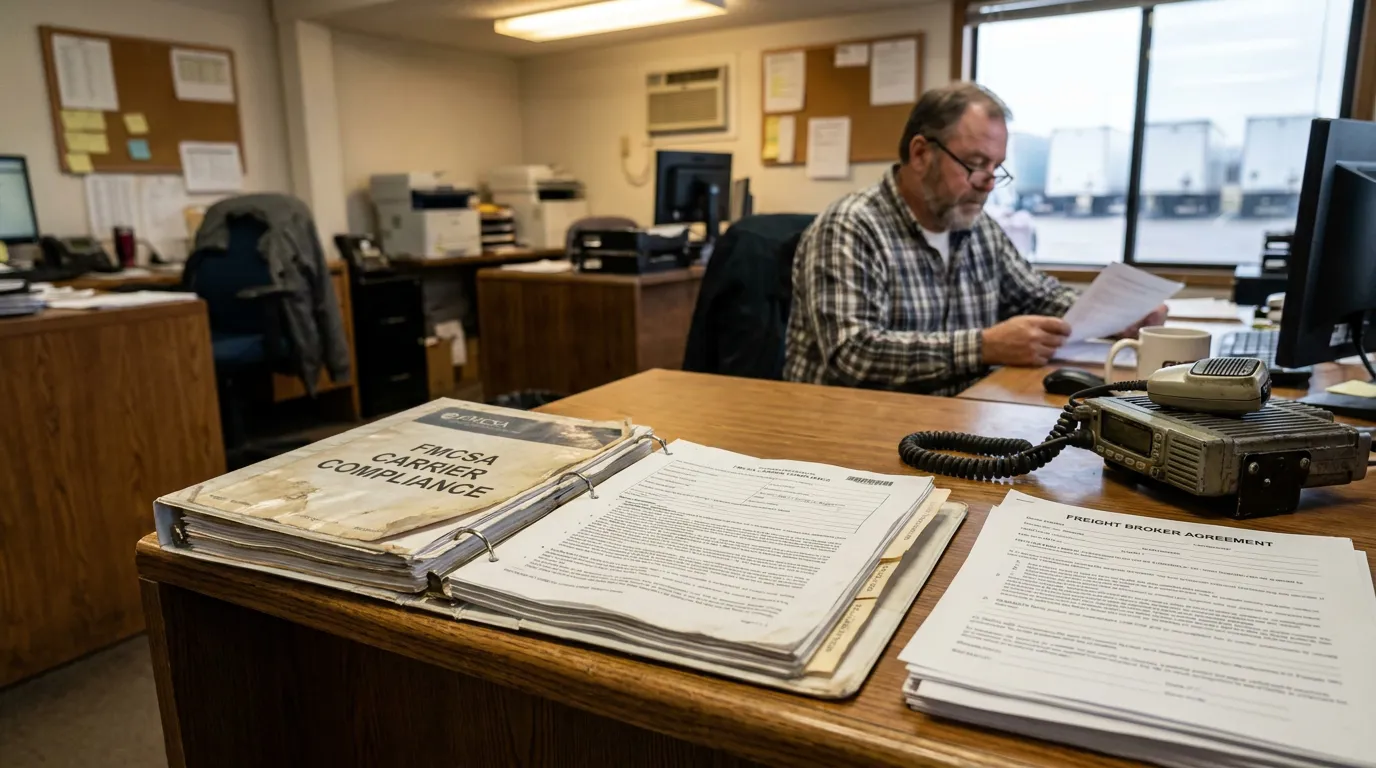
Freight brokers act as intermediaries, matching shippers with motor carriers, and traditionally they argued they owed no duty for on-the-road safety. That position has weakened as courts examine whether a broker negligently selected an unsafe carrier. The theory, often called negligent carrier selection, asks whether the broker knew or should have known that the carrier posed an unreasonable risk to the public.
Washington law provides the framework that makes these claims viable when the facts support them. The state generally applies proportionate, several liability under RCW 4.22.070, so each at-fault party is typically responsible only for its own allocated share of the damages; joint and several liability is retained only in limited exceptions, such as when the injured claimant is found to be free of fault or the defendants acted in concert or through an agency relationship. This structure still allows negligent-selection theories, where plaintiffs seek to hold brokers accountable alongside motor carriers for the same harm.
Montgomery V. Caribe Transport And The Negligent Selection Theory
Montgomery v. Caribe Transport is the case that pushed broker negligence claims into sharper focus for trucking groups. In a unanimous 2026 decision, the U.S. Supreme Court held that the Federal Aviation Administration Authorization Act (FAAAA) does not preempt state-law negligent-selection claims against freight brokers, removing a preemption defense the industry had relied on to exit such cases early. That ruling has encouraged plaintiffs to argue that brokers can owe a duty of reasonable care in choosing carriers, which is precisely why industry organizations are now pressing federal regulators for a uniform standard. For Washington victims, a related discussion of how courts have opened these claims appears in this analysis of how the ruling affects Kennewick truck victims: read about the broker negligence claims decision.
It is important to describe the holding narrowly rather than overstate it. The Court resolved only whether federal law preempts such claims; it did not itself create a duty or decide any broker’s liability, and it expressly left open questions such as the constitutionality of FAAAA subsection (b), which purports to preempt state regulation of purely intrastate broker activities. Whether a broker faces liability in any given case generally depends on what the broker knew about the carrier’s safety history and whether that selection was a proximate cause of the crash. Courts may consider the carrier’s inspection record, prior violations, and available safety data, but the analysis remains fact-dependent and unsettled in many respects.
How Washington Anchors Carrier Safety To Federal Rules
Washington does not simply defer to federal law; it affirmatively adopts state safety rules that mirror the federal regulations. The Washington State Patrol, working with the Department of Licensing, must adopt commercial motor vehicle safety rules at least as rigorous as the FMCSA safety standard found at 49 C.F.R. Parts 40 and 380 through 397. These rules cover driver qualifications, drug and alcohol testing, hours of service, equipment, hazardous materials, financial responsibility, and vehicle inspection.
The statute also requires the State Patrol to keep amending these rules and report yearly to the legislature. That ongoing alignment is why FMCSA standards remain the benchmark plaintiffs point to when arguing that a carrier, and by extension the broker who selected it, failed to meet the safety duties the law expects. This is the connective tissue between federal regulation and a Washington state courtroom.
A Richland Family’s Story: When The Carrier Vanishes
Imagine a Richland parent driving home on Interstate 182 when a loaded tractor-trailer fails to brake in time, causing a devastating rear-end collision. The injuries are catastrophic, requiring multiple surgeries, ongoing rehabilitation, and years of future care. The family soon learns that the motor carrier carried minimal insurance and has few recoverable assets.
In a scenario like this, the broker who arranged the load may become a focus of the investigation. If records show the broker selected a carrier with a documented pattern of safety violations, a broker negligence claim may allow the family to pursue additional accountability. This hypothetical is illustrative only, and any real outcome would depend on the specific evidence, the applicable duty, and the causal link between the broker’s decision and the crash.
Who Can Be Held Liable After A Semi-Truck Crash
Identifying every potentially liable party is one of the most important early steps in a truck crash case. Because Washington allocates fault proportionately among multiple at-fault parties and provides a right of contribution where joint and several liability applies, more than one defendant may share responsibility. A thorough investigation often examines several layers of the freight relationship.
- The truck driver, for negligent operation such as speeding, fatigue, or distraction.
- The motor carrier, for negligent hiring, training, supervision, or maintenance failures.
- The freight broker, where the facts support a negligent carrier selection or broker negligence claim.
- Maintenance contractors or equipment providers, when defective repairs or parts contributed.
- Other motorists, whose conduct may be assessed under comparative fault principles.
Determining these truck crash liable parties requires prompt preservation of records. Driver logs, electronic control module data, inspection histories, and the broker’s carrier-vetting file can be central to establishing negligence and proximate cause. A knowledgeable Washington truck accident lawyer generally moves quickly to send preservation letters before that evidence is lost or overwritten.
Sharing Fault Under Washington’s Comparative System
Washington follows a pure comparative fault regime, so a claimant’s own fault reduces but does not eliminate recovery. Under this rule, any contributory fault chargeable to the claimant proportionately diminishes compensatory damages but does not bar recovery altogether. This matters in broker liability suits because damages are generally apportioned among multiple parties according to each party’s share of fault.
The state also defines fault broadly to include negligent and reckless conduct, as well as certain strict-liability and product-liability claims. That breadth can be relevant when a case involves both a negligent driver and a defective component. How fault ultimately gets allocated is a fact-intensive question that courts and juries decide based on the evidence presented.
What Injured Victims Should Do Now
Time is often the single most important factor in a serious truck injury case. Washington generally imposes a three-year filing deadline for negligence and personal-injury lawsuits, which would typically govern a negligence-based claim against a freight broker or carrier. Courts interpret exceptions to that deadline narrowly, and tolling or discovery-rule extensions do not apply automatically.
Because deadlines and evidence preservation move on parallel tracks, early action tends to protect your options. Documenting current and future medical needs, lost earning capacity, and the full scope of harm supports a claim for complete damages, including future care, pain and suffering, and loss of consortium. These are general principles, not individualized advice, and your specific circumstances may involve different deadlines or considerations.
How Does This Impact Me?
What Does The Broker Liability Ruling Mean For My Case?
It may expand the parties you can pursue after a crash. If a broker negligently selected an unsafe carrier, that broker could face liability alongside the carrier and driver. Whether this applies depends heavily on the facts and the evidence developed during investigation.
Does This Change My Deadline To File?
Generally, no; the standard three-year personal-injury limitations period still applies to most negligence claims. Administrative or government claim deadlines, where relevant, can differ and are often shorter. You should confirm the applicable deadline for your situation as early as possible, because missing it can end a claim entirely.
What Evidence Should I Try To Preserve?
Focus on records that document safety history and crash mechanics. Driver logs, FMCSA inspection data, maintenance files, and the broker’s carrier-selection records can be pivotal. Prompt legal action helps ensure preservation letters reach the right parties before data is deleted.
Can I Still Recover If I Was Partly At Fault?
In many cases, yes, because Washington applies comparative fault. Your recovery may be reduced in proportion to your share of fault, but partial fault does not necessarily bar a claim. The precise reduction depends on how a court or jury allocates responsibility.
Protecting Your Rights After A Devastating Truck Crash
The pressure trucking groups are placing on the FMCSA underscores how much is at stake in broker liability law right now. For injured families in Richland and throughout Southeast Washington, these developments may broaden accountability, but the path to full compensation still depends on timely action, careful evidence preservation, and accurate application of Washington statutes. Every case turns on its own facts, and nothing here guarantees a particular result.
If a semi-truck crash has upended your family, informed guidance can help you understand your options. Telaré Law works with injured victims across the Tri-Cities and welcomes your questions about this evolving area of law. Call 509-736-3160 or reach out for a consultation to discuss how these changes may affect your situation.