Understanding Who Pays After a Commercial Truck Collision
Key Takeaways: Identifying every liable party after a Richland truck crash is essential to recovering full compensation. Responsibility rarely rests with the driver alone. Under Washington law, the truck driver, trucking company, cargo loader, and parts manufacturer may each share blame through negligence, vicarious liability, strict liability, or product liability. Federal and state safety rules under RCW 46.32.085 and RCW 46.52.130 help prove negligence by exposing logbook falsification, skipped inspections, and dangerous driving histories. Washington’s pure comparative fault rule means partial fault reduces but does not bar recovery. Injured victims generally have three years from the crash date to file suit under RCW 4.16.080. Acting quickly to preserve evidence and consult a Richland truck crash attorney protects your claim.
Identifying every liable party after a Richland truck crash is the foundation of a successful injury claim. When a tractor-trailer collides with a passenger vehicle, responsibility rarely rests with a single person. The driver, trucking company, cargo loader, or parts manufacturer may each carry a share of the blame. Pinpointing each one early protects your ability to recover full compensation.
If you were hurt on Southeast Washington’s freight corridors, the team at Telaré Law is ready to help. Call us at 509-736-3160 or reach out through our confidential case review form to discuss your options.
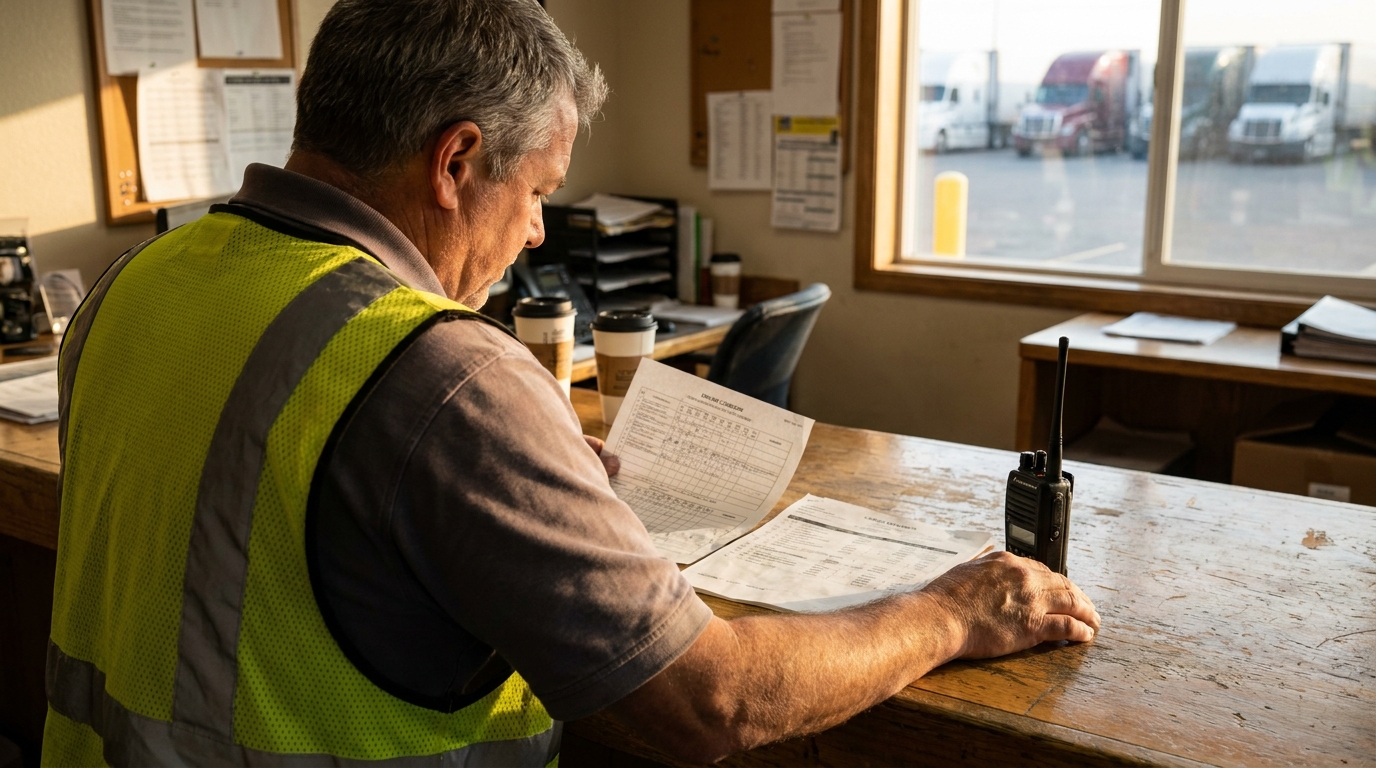
Why the Most Dangerous Highway in Washington State Demands a Careful Liability Investigation
Heavy commercial traffic on Interstate 82, Highway 395, and Interstate 84 makes the Tri-Cities region a corridor where serious truck wrecks happen. The physics of an 80,000-pound truck striking a car produce devastating results. These collisions often involve multiple vehicles and several potentially responsible businesses.
A thorough investigation looks past the obvious driver and asks who else contributed. Determining fault requires proving negligence through records, regulatory data, and physical evidence that a knowledgeable attorney knows how to preserve.
💡 Pro Tip: Photograph the scene, vehicles, and any visible cargo if you can safely do so. These images help reconstruct how the collision occurred and who may bear truck accident liability in Richland.
The Parties Who May Share Fault in a Richland Truck Crash
Liability after a semi-truck wreck can extend far beyond the person behind the wheel. Washington recognizes a broad concept of fault that allows several entities to be held accountable.
The Truck Driver and Their Employer
The driver’s conduct is usually the starting point for any truck driver negligence claim.
In all actions involving fault of more than one entity, the trier of fact shall determine the percentage of the total fault which is attributable to every entity which caused the claimant’s damages. A party shall be responsible for the fault of another person where a person was acting as an agent or servant of the party.
This principle, found in RCW 4.22.070, is the basis for holding a company answerable for its driver’s actions.
Classification matters when assessing trucking company liability in Richland. Trucking companies are often held liable for their employees’ negligence. If a truck driver is an independent contractor, he or she can be held personally responsible. Companies sometimes misclassify employees as contractors to avoid liability. However, federal regulations can still make a motor carrier vicariously liable for a driver it leases or engages as an independent contractor through the “statutory employee” doctrine. For a deeper discussion, our overview of trucking company liability in Richland explains when an employer can be drawn into a case.
Manufacturers, Cargo Loaders, and Other Businesses
Companies that never touched the steering wheel can still be defendants. If a defective part contributes to a crash, the manufacturer may be sued. Similarly, a cargo loader may be held responsible if improperly loaded cargo causes an accident. A blown tire, failed brake system, or shifting load can each point to a separate liable party.
Washington’s statutory definition of fault is intentionally expansive.
“Fault” includes acts or omissions, including misuse of a product, that are in any measure negligent or reckless toward the person or property of the actor or others, or that subject a person to strict tort liability or liability on a product liability claim, and the term also includes breach of warranty, unreasonable assumption of risk, and unreasonable failure to avoid an injury or to mitigate damages.
That breadth, set out in RCW 4.22.015, means a cargo company under strict liability and a manufacturer under product liability can both be named alongside a negligent driver.
Common Negligent Acts That Create Liability
Many truck crashes trace back to preventable conduct. Common causes include:
- Speeding and careless driving
- Driver fatigue and impairment
- Distracted driving
- Poor vehicle maintenance and equipment failure
- Improperly loaded cargo
💡 Pro Tip: Request that the trucking company preserve the driver’s logs, electronic control module data, and maintenance records in writing immediately. A formal preservation letter helps prevent routine deletion of evidence relevant to semi-truck negligence in Richland, WA.
How Federal and State Safety Rules Help Prove Negligence
Violations of commercial trucking safety standards can serve as powerful evidence of fault. Washington requires the State Patrol to adopt rules as rigorous as the federal standard.
The Washington State Patrol shall adopt rules to regulate vehicle safety requirements for motor carriers who own, control, manage, or operate a commercial motor vehicle within this state, and the rules adopted must be as rigorous as federal regulations at 49 C.F.R. Parts 40 and 380 through 397, which cover commercial motor carrier driver training, controlled substance and alcohol use and testing, compliance with federal driver’s license requirements and penalties, vehicle equipment and safety standards, hazardous material practices, financial responsibility, driver qualifications, hours of service, vehicle inspection and corrective actions, and assessed penalties for noncompliance.
That mandate appears in RCW 46.32.085.
When a driver or carrier breaks these rules, that breach can establish negligence. Review the underlying standards through the federal motor carrier safety regulations published by the FMCSA. Logbook falsification, skipped inspections, and ignored maintenance schedules frequently surface in investigations.
The driver’s history can also support a negligent hiring or retention theory. Washington law allows insurance carriers and employers to access a driver’s abstract of driving record for up to three years. This record can reveal prior negligent driving convictions, supporting claims against a trucking company if they knew or should have known of the driver’s dangerous history. RCW 46.52.130 governs that access.
💡 Pro Tip: A pattern of prior violations on a driver’s abstract may strengthen a claim that the company should never have kept that driver on the road. Ask your attorney whether negligent hiring fits your case.
Evidence and Insurance That Shape a Richland Truck Injury Claim
Knowing how much insurance coverage exists is part of identifying truck crash fault. Washington and federal law set minimum coverage levels for different kinds of commercial vehicles. For prearranged commercial transportation (rideshare), Washington requires substantial coverage.
For vehicles providing prearranged commercial transportation, coverage must include at least one million dollars in combined single limit liability for death, personal injury, and property damage during active service periods.
That requirement, set out in RCW 46.72B.180, applies to transportation network companies. Most commercial freight trucks are subject to federal financial-responsibility minimums under 49 C.F.R. Part 387, commonly requiring at least $750,000 in liability coverage and substantially more for vehicles hauling hazardous materials.
A driver who flees the scene leaves behind evidence of fault.
Under Washington law, a driver of any vehicle involved in an accident resulting in the injury to or death of any person shall immediately stop such vehicle at the scene of such accident.
Failing to stop is a class B felony in case of death and a class C felony in case of injury. A hit-and-run violation under RCW 46.52.020 can itself support a finding of liability.
Even partial fault on your part does not end your claim. Washington follows a pure comparative fault rule. Any contributory fault chargeable to the claimant diminishes proportionately the amount awarded as compensatory damages, but does not bar recovery. Because RCW 4.22.005 reduces rather than eliminates recovery, identifying every responsible party still matters for maximizing compensation.
Time Limits That Can End a Richland Truck Crash Attorney Case
Washington generally gives injured victims three years from the crash date to file suit. This limitations period comes from RCW 4.16.080. Missing this deadline typically bars recovery entirely, making it urgent to promptly consult a Richland truck crash attorney.
Limited exceptions sometimes apply, but courts interpret them narrowly. Doctrines like the discovery rule may extend a deadline in certain circumstances, yet they do not apply automatically. Government administrative claim deadlines may be much shorter when a public entity is involved. Because the consequences of waiting are severe, prompt legal review is essential.
| Potential Defendant | Common Legal Theory |
|---|---|
| Truck driver | Negligence |
| Trucking company | Vicarious liability, negligent hiring |
| Cargo loader | Strict liability |
| Parts manufacturer | Product liability |
For a broader picture of how these claims proceed, our semi-truck injury attorneys in Richland Washington can walk you through the process.
Frequently Asked Questions
1. How many parties can be held liable after one truck crash?
Several parties can share responsibility for a single collision. Because Washington’s definition of fault is broad, a driver, employer, cargo loader, and manufacturer may all be named. The number depends on the cause of the crash.
2. What if the truck driver was an independent contractor?
Classification affects who pays, but it does not automatically protect a company. An independent contractor may bear personal responsibility, yet companies sometimes misclassify workers, and federal trucking regulations can still make a motor carrier vicariously liable for an independent-contractor driver.
3. Can I still recover if I was partly at fault?
Yes, under Washington’s pure comparative fault system. Your recovery is reduced by your percentage of fault but is not eliminated. Identifying every other liable party helps offset your share.
4. How long do I have to file a truck injury claim?
Generally three years from the date of the crash under RCW 4.16.080. Narrow exceptions may apply in limited circumstances. Acting quickly protects both evidence and your filing rights.
5. What evidence helps prove truck driver negligence in Washington?
Driver logs, maintenance records, the driving abstract, and safety-rule violations are central. These documents can reveal fatigue, equipment failure, or a history of dangerous driving. Preserving them early is essential.
Protecting Your Right to Full Compensation
Identifying liable parties after a Richland truck crash takes diligence, regulatory knowledge, and swift action. From the driver and trucking company to cargo loaders and manufacturers, each potentially responsible entity affects the strength and value of your claim. Washington’s fault and limitations statutes reward those who investigate promptly and thoroughly.
If you are facing serious injuries and unanswered questions, the attorneys at Telaré Law are here to help you pursue the full recovery you deserve. Call 509-736-3160 today or send us your details through our online contact page to protect your claim before the deadline runs.