How Federal Hours-of-Service Rules Protect Bend, Oregon Drivers and Families
When a fatigued truck driver causes a collision on Highway 97 or along the Bend Parkway, the consequences can be catastrophic. Federal hours-of-service (HOS) regulations prevent trucker fatigue by limiting how long commercial motor vehicle (CMV) operators can drive before resting. These rules, codified at 49 CFR Part 395 and enforced by the Federal Motor Carrier Safety Administration (FMCSA), define maximum on-duty time, including driving time, and specify required rest periods. For injured victims and their families in Bend, Oregon, understanding these regulations is critical to building a strong negligence claim after a semi-truck collision.
If you or a loved one suffered injuries in a commercial truck crash, Telaré Law is ready to help. Call 509-736-3160 or reach out online to discuss your case.
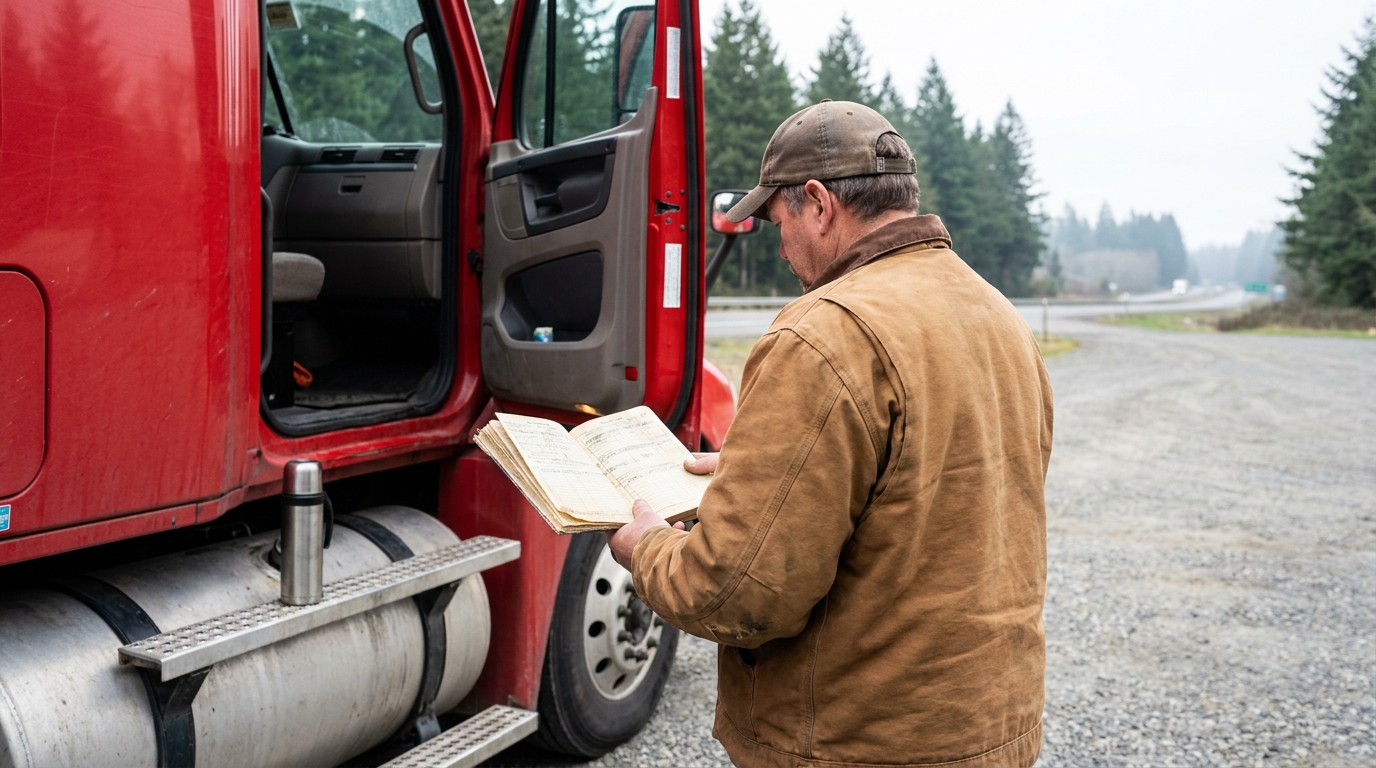
Core FMCSA Driving Limits Every Bend Resident Should Know
The FMCSA regulates hours that long-haul truck drivers may work, and these limits apply to every interstate CMV operator traveling through Central Oregon. Under 49 CFR § 395.3, interstate truck drivers are limited to 11 hours of driving within a 14-hour work day after 10 consecutive hours off duty. Once that 14-hour window opens, it cannot be paused or extended under standard rules.
Beyond daily caps, weekly limits add another layer of protection. Drivers are prohibited from driving after being on duty 60 hours in seven days, or 70 hours in eight days. A driver may “restart” the 60- or 70-hour clock by taking 34 consecutive hours off duty. These stacked limits mean that even if a driver stays within daily boundaries, accumulated fatigue across a week can still trigger a violation.
The 30-Minute Break Requirement
Drivers using logbooks must take a mandatory rest break to stay compliant. Drivers may not operate a CMV if more than 8 cumulative hours of driving time have passed without at least a consecutive 30-minute interruption in driving status. This interruption may be satisfied by off-duty time, sleeper berth time, on-duty not-driving time, or any combination of these, so long as the total is at least 30 consecutive minutes without driving.
💡 Pro Tip: If you were hit by a truck driver in Bend, ask your attorney to obtain the driver’s electronic logging device (ELD) data immediately. ELD records can reveal whether the driver exceeded the 11-hour driving limit or skipped the required 30-minute interruption in driving status before the crash.
Key HOS Exceptions That May Affect a Bend Truck Injury Claim
Not every truck driver operates under the standard HOS framework, and certain exceptions can complicate liability analysis. The FMCSA revised several provisions in its June 2020 final rule, effective September 29, 2020.
Short-Haul Exception
The short-haul exception was expanded to 150 air-miles with a 14-hour work shift. Drivers operating within this radius who return to their reporting location each day are generally exempt from maintaining a logbook. This exception may apply to local delivery drivers operating around Bend and Deschutes County.
Adverse Driving Conditions Exception
When a driver encounters unexpected weather or road hazards, such as ice on the Santiam Pass, the adverse driving conditions exception expands the driving window by up to 2 additional hours. This means a driver could potentially drive up to 13 hours within a 16-hour window. Trucking companies sometimes misuse this exception to push drivers beyond safe limits.
Sleeper Berth Provision
The sleeper berth provision allows drivers to split their required 10-hour off-duty period. A driver may satisfy this requirement by spending at least 7 consecutive hours in the sleeper berth combined with a separate off-duty period of at least 2 consecutive hours, totaling at least 10 hours. This allows either a 7/3 or 8/2 split, with neither period counting against the 14-hour driving window.
| HOS Rule | Standard Limit | Key Detail |
|---|---|---|
| Daily driving cap | 11 hours | Must follow 10 consecutive hours off duty |
| On-duty window | 14 hours | Cannot be paused under standard rules |
| Weekly limit (7-day) | 60 hours | 34-hour restart available |
| Weekly limit (8-day) | 70 hours | 34-hour restart available |
| Mandatory break | 30 minutes | Required after 8 cumulative driving hours |
| Sleeper berth split | 7/3 or 8/2 | Both periods must total at least 10 hours; neither counts against 14-hour window |
💡 Pro Tip: Trucking companies may argue that an exception applied to justify extra driving time. An experienced attorney can review the driver’s logs to determine whether the exception was legitimately triggered or improperly claimed.
2026 FMCSA Pilot Programs and What They Mean for Oregon
The FMCSA is developing new flexibility measures that could reshape HOS enforcement nationwide. The Flexible Sleeper Berth (FSB) pilot program would expand rest options to include 6/4 and 5/5 splits beyond existing 8/2 and 7/3 arrangements. The Split Duty Period (SDP) pilot program would allow participating drivers to pause their 14-hour window for up to 3 hours of qualifying non-driving time. As of spring 2026, FMCSA is conducting limited pre-tests before launching full pilot programs.
For victims of semi-truck crashes in Bend, it is important to identify which version of the rules applied at the time of the collision. A truck accident attorney in Bend can investigate whether a driver was enrolled in a pilot program and whether the carrier complied with all participation requirements.
💡 Pro Tip: Oregon also maintains its own state-level hours-of-service rule under OAR 740-100-0010, which may apply to intrastate carriers. Your attorney should evaluate both federal and Oregon-specific regulations when building your case.
Oregon’s Trucking Industry and Fatigue Risks on Bend Roads
Oregon employed approximately 41,000 truck drivers in 2023, with about 27,100 working as heavy and tractor-trailer truck drivers. Roughly 66% of the state’s commercial drivers operate the largest, most dangerous vehicles on roads like US-97 and US-20 that intersect in Bend. Job growth projections show a 6.9% increase for heavy truck drivers and a 13.9% rise for light truck drivers according to Oregon employment data.
A Commercial Driver’s License (CDL) is required to operate heavy tractor-trailer trucks, generally for vehicles over 26,001 pounds gross vehicle weight. Oregon’s Department of Transportation provides commercial driver resources covering CDL requirements, safety regulations, and enforcement contacts. Despite these requirements, research shows that most semi-truck crashes stem from driver errors, including fatigue-related mistakes tied to HOS violations.
How Hours-of-Service Violations Strengthen Injury Claims
When a truck driver violates HOS rules and causes a crash, that violation can serve as powerful evidence of negligence. Under Oregon law, a plaintiff may present regulatory violations to help establish that the driver or carrier breached the applicable standard of care. An HOS violation does not automatically prove liability, but it can significantly strengthen a Bend truck injury claim by showing the driver was operating beyond safe legal limits.
Preserving evidence quickly is essential. ELD data, dispatch records, fuel receipts, and bills of lading can confirm whether a driver exceeded hours. Federal regulations require carriers to retain records of duty status (RODS) and supporting documents, including ELD data, for six months under 49 CFR 395.8(k)(1). Carriers must also maintain a backup copy of ELD records on a separate device for six months under 49 CFR 395.22(i), and federal law prohibits the alteration or erasure of original ELD data under 49 CFR 395.30(f). Acting promptly to send a spoliation letter helps ensure critical evidence is not lost. As studies confirm, driver errors cause most truck crashes, making log and compliance records central to many claims.
💡 Pro Tip: Document everything after a truck accident in Bend. Photograph the scene, collect witness information, and seek medical attention immediately. These steps protect both your health and your legal rights.
What Damages Can You Pursue After a Trucker Fatigue Crash in Bend?
Victims of commercial truck accidents caused by fatigued or HOS-noncompliant drivers may pursue several categories of damages under Oregon law:
- Current and future medical expenses, including surgeries, rehabilitation, and long-term care
- Lost wages and diminished future earning capacity
- Pain and suffering and emotional distress
- Loss of consortium for affected family members
- Property damage to your vehicle and personal belongings
The value of each claim depends on the specific facts, injury severity, and strength of evidence linking the driver’s HOS violation to the collision. Oregon’s statute of limitations for personal injury claims is generally two years under ORS § 12.110. Courts interpret tolling exceptions narrowly, so prompt legal action is strongly advisable.
💡 Pro Tip: Keep a detailed journal of your symptoms, medical visits, and how your injuries affect daily life. This record can help document pain and suffering damages that may not appear in medical charts alone.
Frequently Asked Questions
1. How many hours can a truck driver legally drive in one day under FMCSA rules?
Daily Driving Limits Under Federal Law
Interstate truck drivers are limited to 11 hours of driving within a 14-hour on-duty window after taking 10 consecutive hours off duty. Drivers are prohibited from operating a CMV if more than 8 cumulative hours of driving time have passed without at least a consecutive 30-minute interruption in driving status. Violations of these limits may constitute evidence of negligence in a truck accident case.
2. What is the difference between federal and Oregon hours-of-service rules?
Federal vs. State HOS Regulations
Federal FMCSA rules under 49 CFR Part 395 govern most interstate trucking, while Oregon maintains its own HOS rule under OAR 740-100-0010 for certain intrastate operations. Your attorney should evaluate which regulations were in effect at the time of the crash.
3. How can HOS violations help my truck accident case in Bend?
Using Regulatory Violations as Evidence
An HOS violation can demonstrate that a truck driver breached the standard of care by operating beyond legally permitted hours. While a violation alone does not guarantee liability, it can be compelling evidence of trucker fatigue and negligence when combined with ELD data and dispatch records.
4. What should I do immediately after a semi-truck collision in Bend?
Steps to Protect Your Claim
Seek medical attention first, then document the scene with photographs, collect witness contact information, and report the crash to law enforcement. Avoid giving recorded statements to the trucking company’s insurer before consulting an attorney. Early legal involvement helps preserve ELD logs and other time-sensitive evidence.
5. How long do I have to file a truck accident lawsuit in Oregon?
Oregon’s Filing Deadline
Oregon generally imposes a two-year statute of limitations for personal injury claims under ORS § 12.110. Certain limited exceptions may apply, but courts interpret these narrowly. Consulting an attorney promptly ensures you do not forfeit your right to pursue compensation.
Protecting Your Rights After a Bend Truck Crash
FMCSA hours-of-service rules exist to keep fatigued drivers off the road, and when trucking companies or drivers cut corners, innocent people in Bend pay the price. Understanding these regulations, from the 11-hour driving cap to sleeper berth splits and the latest pilot programs, can help you recognize when a violation may have contributed to your crash. The strength of your claim depends on swift evidence preservation and thorough investigation of driver and carrier compliance records.
If you or a family member suffered injuries in a semi-truck crash in Bend, Telaré Law can help you investigate the driver’s compliance records and pursue the compensation you deserve. Call 509-736-3160 or contact us today for a confidential case evaluation.