Understanding the Road From Demand Letter to Settlement in Richland
Key Takeaways: After a demand letter is sent in Richland, most auto accident settlements resolve within weeks to several months, with clear-liability claims often settling in 30 to 90 days and serious injury cases taking six months or longer. The timeline depends on medical record completeness, whether liability is contested, injury severity, and the insurer’s review process. A strong demand letter with a clear response window, typically 30 days, keeps negotiations moving. Washington’s statute of limitations under RCW 4.16.080(2) gives injured victims three years from the crash date to file suit. You should not feel pressured to accept a first offer, as a documented counteroffer can meaningfully improve the outcome.
If you are wondering how long after demand letter can I expect settlement, the honest answer is that it depends on the facts of your case, the insurer’s response, and the legal deadlines that govern your claim. Most auto accident settlements in Richland resolve within weeks to several months after a demand letter is sent, though complex injury cases can take longer. The key is understanding the Washington statutes that frame the process and how negotiations unfold once your demand reaches the insurance company.
If you were injured in a Tri-Cities crash and are weighing a settlement offer, the team at Telaré Law can help you understand your rights. Call us at 509-736-3160 or reach out through our online case review form to discuss your situation today.
What a Demand Letter Does and Why Timing Matters
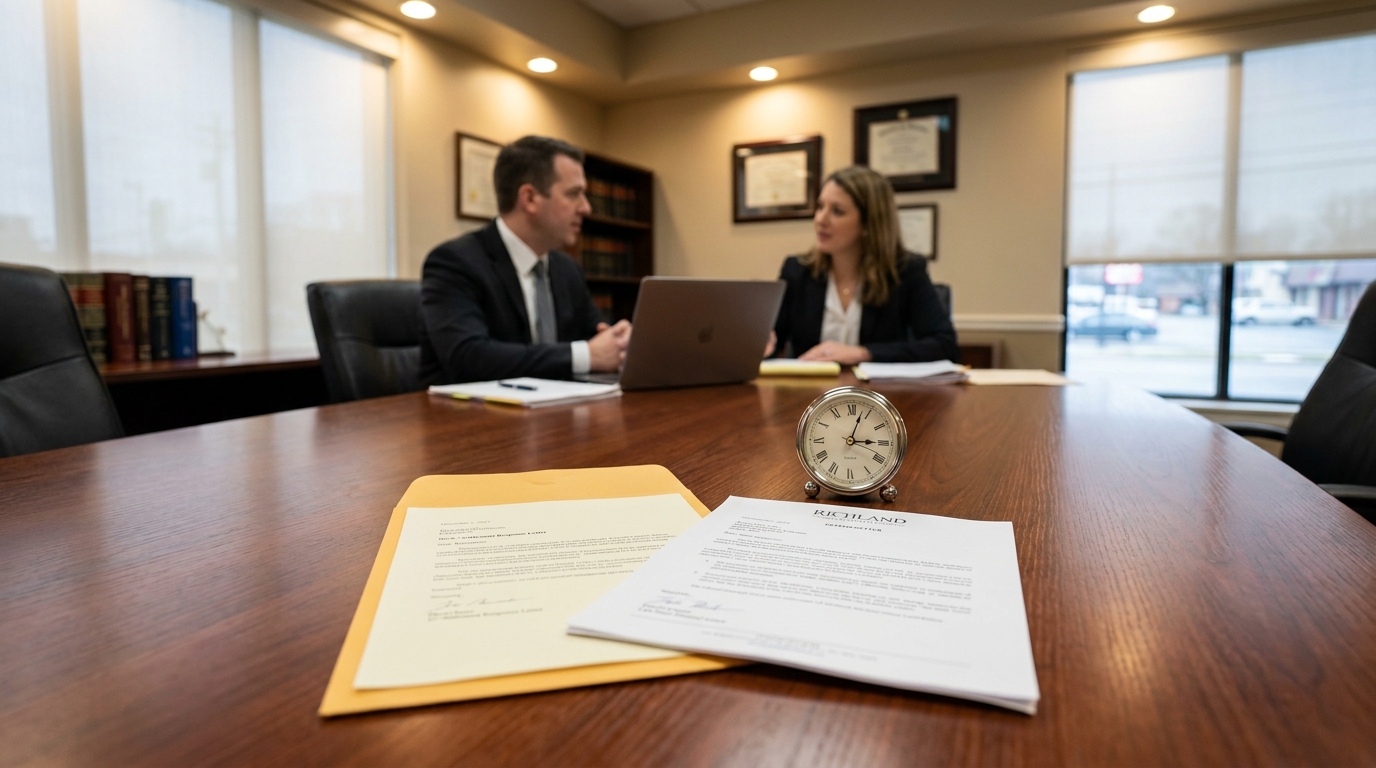
A demand letter formally notifies the at-fault party or their insurer of your injuries, your damages, and the compensation you are seeking. It opens settlement negotiations and sets the tone for the entire claim. According to legal resource Justia, you can often resolve a dispute without going to court by simply sending a demand letter to the opposing party.
A strong demand letter should include a clear deadline for the other party to respond. Setting a response window keeps negotiations moving and signals that you are prepared to act if the insurer delays. In many Richland claims, a 30-day response period is common, though insurers may request extensions to review medical records.
💡 Pro Tip: Keep a dated copy of your demand letter and proof of delivery. A documented timeline strengthens your position if the insurer later claims it never received your demand or disputes the response time.
How Long After Demand Letter Can I Expect Settlement in a Richland Auto Case
The realistic demand letter settlement timeline in Richland varies based on liability disputes, the severity of your injuries, and whether your medical treatment is complete. Straightforward claims with clear fault may settle within 30 to 90 days of the demand. More serious cases involving traumatic brain injury, spinal cord damage, or multi-vehicle collisions often take six months or longer because the full extent of damages must be documented.
Several practical factors influence how long after demand letter settlement negotiations continue. These include:
- Completeness of medical records and proof of lost wages
- Whether liability is admitted or contested
- Injury complexity and need for future medical care
- Internal authority limits requiring supervisor approval
- Insurance company backlogs or staffing delays
Partial progress can move your case toward resolution even if the insurer does not accept every demand. Justia notes that even if the other side does not agree to all of your demands, sending a demand letter may be the first step in working out an acceptable compromise. A reasonable counteroffer often shortens the overall car crash settlement process in Richland.
💡 Pro Tip: Do not feel pressured to accept the first offer. Initial responses from insurers are frequently lower than the claim’s true value, and a measured counter backed by documentation can meaningfully improve the outcome.
The Statute of Limitations Behind Every Settlement Deadline
Washington law places a firm outer boundary on how long settlement talks can continue before you must file suit. Under RCW 4.16.005, actions can only be commenced within the periods provided by statute after the cause of action has accrued. For auto accident injuries, RCW 4.16.080(2) gives injured victims three years from the date of the crash to file a lawsuit.
This three-year window directly shapes your negotiating leverage. If demand letter negotiations stall or fail, you must file suit before the deadline expires or risk losing the right to recover damages entirely. You can review the full text of the three-year limitation rule in the Washington statute on actions limited to three years.
Different claim types carry different deadlines. Washington provides six years for written contracts under RCW 4.16.040, three years for personal injury and property damage under RCW 4.16.080, two years for certain actions such as libel, slander, assault, and false imprisonment under RCW 4.16.100, and one year for specific claims under RCW 4.16.110.
| Claim Type | Governing Statute | General Limitations Period |
|---|---|---|
| Personal injury / property damage | RCW 4.16.080 | 3 years |
| Written contracts | RCW 4.16.040 | 6 years |
| Certain other actions | RCW 4.16.100 | 2 years |
| Specific enumerated claims | RCW 4.16.110 | 1 year |
In limited circumstances, the statute of limitations may be paused, or tolled. Under RCW 4.16.180, the clock can be tolled by the defendant’s absence from the state or concealment. Courts generally interpret these exceptions narrowly, so you should never assume tolling applies automatically.
💡 Pro Tip: Calculate your deadline from the date of the crash and build in a safety margin. Waiting until the final weeks of a three-year period to file leaves little room to respond if negotiations break down unexpectedly.
Structured Settlements and Litigation-Phase Timing
Washington law allows auto accident claimants to accept a structured settlement that pays compensation over time rather than as a single lump sum. Washington’s Structured Settlement Protection Act, Chapter 19.205 RCW, governs any later transfer of structured settlement payment rights and builds in safeguards such as advance written disclosures and court approval. These protections matter for Richland residents weighing a long-term payout for catastrophic injuries.
If pre-suit demand letter negotiations fail and a lawsuit is filed, separate timing rules take over. Under RCW 4.84.280, offers in cases where pleaded damages are $10,000 or less must be served at least 10 days before trial and cannot be served until 30 days after the summons and complaint have been served and filed.
Whether you accept a settlement or pursue judgment can also affect cost recovery. Under RCW 4.84.015, a plaintiff may be considered the prevailing party for costs if a defendant makes payment before judgment, provided the plaintiff gave prior written notice. That provision does not apply when a claim is resolved through a negotiated settlement.
💡 Pro Tip: Before agreeing to a structured settlement, consult with your own legal and financial advisors. Once signed, these agreements are binding, so reviewing the long-term financial picture protects your future medical needs.
Practical Steps to Keep Your Richland Claim on Track
Staying organized and responsive is one of the most effective ways to shorten your settlement timeline. Insurers move faster when they receive complete documentation the first time. Gathering your records early and communicating clearly can reduce the back-and-forth that often delays an insurance demand letter in Richland WA.
Working with a knowledgeable advocate can help you avoid common pitfalls that stall negotiations. A firm respected for handling auto accident claims can present your damages persuasively and push back against lowball offers. Learn more about how a dedicated auto accident lawyer in Richland Washington approaches negotiation, evidence, and trial preparation.
Educating yourself on the process puts you in a stronger position. Understanding deadlines, demand letter response time in Richland, and your options for resolution helps you make confident decisions. Our regularly updated Telaré Law resource articles cover topics relevant to Tri-Cities crash victims.
Frequently Asked Questions
-
How long after a demand letter does a settlement usually take in Richland?
Most auto accident settlements resolve within weeks to several months after the demand letter is sent. Simple, clear-liability claims may settle in 30 to 90 days, while serious injury cases involving extensive treatment often take longer.
-
What is the deadline to file a car accident lawsuit in Washington?
Washington gives injured victims three years from the date of the crash to file suit under RCW 4.16.080(2). If demand letter negotiations fail, you must file before this period expires or you may lose your right to recover damages.
-
Can the statute of limitations be extended for my claim?
In limited circumstances, the deadline may be tolled under RCW 4.16.180, such as when the defendant is absent from the state. Courts interpret these exceptions narrowly, so you should not assume tolling applies automatically.
-
Should I accept the insurance company’s first settlement offer?
Not necessarily, because initial offers are frequently lower than the true value of a claim. A documented counteroffer supported by medical records and proof of losses often improves the result.
-
What happens if my demand letter negotiations do not resolve the claim?
If pre-suit talks fail, the next step is filing a lawsuit before the statute of limitations expires. Once litigation begins, formal settlement offers may follow separate timing rules, such as the offer-of-settlement procedure under RCW 4.84.280 in smaller-damages cases.
Putting the Timeline in Perspective
The path from demand letter to settlement in Richland is shaped by your injuries, the insurer’s response, and the statutory deadlines that govern your claim. While many auto accident claims settle within months, the three-year personal injury limitation under RCW 4.16.080 sets the outer limit on negotiations. Understanding these rules, along with structured settlement protections and litigation-phase timing, helps you make informed choices and avoid losing valuable rights.
If you are navigating a settlement offer or facing a looming deadline after a Tri-Cities crash, the dedicated team at Telaré Law is ready to help you pursue fair compensation. Call 509-736-3160 or contact us through our confidential consultation request to protect your rights and keep your claim on track.